The Secrets to Retaining Top Talent and Building Company Culture | Drew Harden
Download MP3we've gotten this idea that work is bad, that Fridays are good, Mondays are bad, that the
weekends are good, the weekdays are bad.
Work should be fun, that if you can have joy in the office, that's really powerful.
Welcome back.
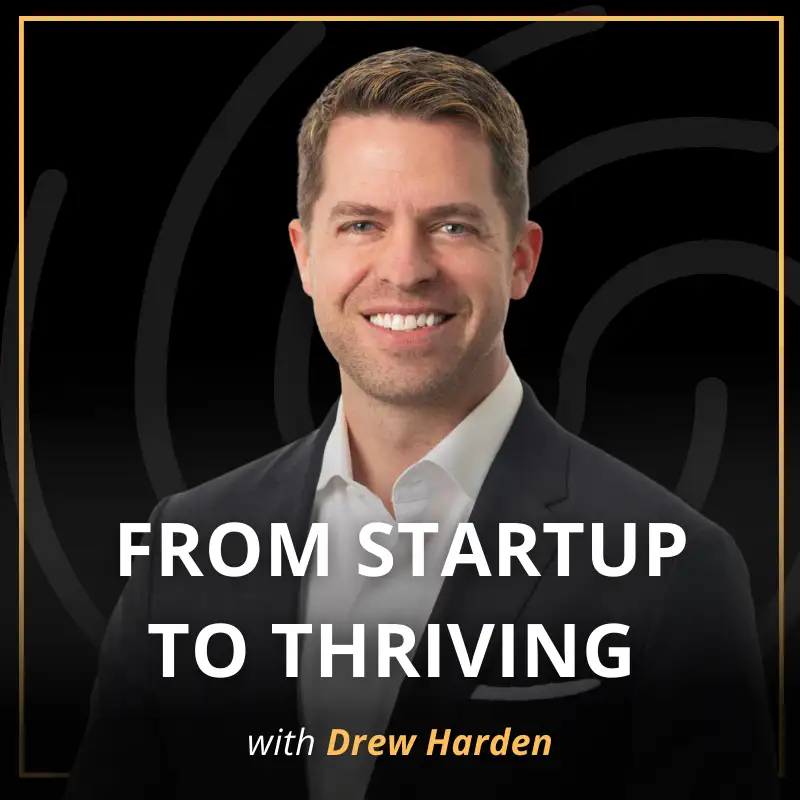
Today we are joined by Drew Harden, the CEO and founder of Blue Compass, a nationally
acclaimed Midwest marketing agency known for its outstanding company culture and
innovative business approach.
A thought leader in entrepreneurship and workplace culture, Drew's expertise has been
featured in major publications like USA Today, and he's worked with very high profile
clients, including Spalding Sports, Napa Auto Parts, and the NFL.
Drew is the author of two influential books, including his latest Retain, which offers
actionable strategies for leaders to cultivate a thriving company culture that talented
employees are reluctant to leave.
If you're new to our podcast, welcome to our community.
We are thrilled that you've taken time out of your day to learn and grow with us.
Before you forget, take a moment to click that subscribe button to ensure you stay
connected with the Badass Leaders community.
So join me, Angela Gill, now.
on today's episode of the Badass Leaders Podcast, where I'm joined each week by industry
experts for intimate and eye-opening discussions about the challenges and joys facing the
leaders of today.
Listen in and get ready to scale your company, grow your brand, and unlock your full
badass potential.
Well, listeners, welcome to the Badass Leaders podcast.
I have Drew Harden with me, who is the CEO of Blue Compass, that he started with two
people and he's grown tremendously.
And most important for this podcast, he's grown it in the way that I view a badass leader
would do it with amazing culture and innovative things that he's really used to spread to
the world.
And today we're here to talk about him.
We're going to talk about his book, Retain, and also maybe share some vulnerable moments,
some opportunities for growth, that kind of stuff.
So Drew, do you want to kick us off and tell us about yourself and why you're here today?
Yeah, I'm an author, a speaker, and like you said, I'm a CEO of Blue Compass.
So Blue Compass is a digital marketing agency.
We're based here in the Midwest.
you know, I think one of the reasons I'm here is I've spent a lot of years, you know,
doing digital marketing, building websites, search engine optimization, things like that.
But as we grew over the years, I realized that, you know, I was really passionate about
leadership and just the company culture that we have.
And that has really impacted me.
And so, you know, I wrote, retain this book all about how to have an incredible company
culture that no one wants to leave.
And I just, you know, there are a lot of bad cultures out there.
There are a lot of leaders who struggle and cultures that aren't fantastic.
And so I wanted to share some of the things we've learned here that have really helped us,
you know, win national awards for our culture and have great retention and things like
that.
And that's one of things I just absolutely love doing.
I love that.
the point of this conversation, other conversations on badass leaders is those individuals
such as yourself who really want to help make all companies great, not just keep it to
yourself, but really kind of change the world that we live in, in that so many employees
hate to go to work.
because they have horrible bosses and horrible cultures.
And so I want to start off with a reminder to everyone, your company has a culture,
whether you like it or not.
Every company has a culture.
It is just how disciplined and deliberate have you been to create one where team members
can thrive?
So my first question to you, Drew, is how would you define the difference between a shitty
culture and a great culture?
Like, what are those characteristics that stand out?
I think a lot of people get confused about the definition of culture and what that is.
And you can go to the website of just about any corporation and they'll talk about their
culture and they'll say how tremendous their culture is.
I've never met anyone who says they have a bad culture, any organization that says their
culture is lousy, right?
but then they'll show pictures of ping pong tables and maybe events that their team
members are doing.
Maybe there's beer on Fridays, but.
Culture is not a ping pong table.
Culture is the sum of the leadership and the values and the interactions that we have in
the workplace every day.
It's how we feel when we go home or when we log off at night.
So it's something that permeates every moment of every day.
It's all about the interactions, the feelings and the leaderships.
It's not just one thing or event.
And I think that's what a lot of organizations get confused about, you know, and
So sometimes people will have like a chief cultural officer or someone whose emphasis is
that and I suppose that's fine, but really, you know, it comes down to how people treat
each other and the leaders of an organization's, know, the managers really have to do a
great job at living out, you know, the values of the organization.
I think that's one of the keys and the best way to get a behavior from someone is to model
it yourselves.
So for me as CEO of this company, over the years I've learned that my number one purpose
here is to make our mission and our values known to our team members, to live them out
myself and then to help them do the same.
love that.
so I want to clarify, Drew, does this mean that we cannot buy culture on Amazon and have
it delivered with free prime delivery?
Correct, you cannot buy culture on Amazon.
You can buy things that might enhance the culture to some degree, know, adding things to
your culture or, you know, giving bonuses or tangible things can help a culture, but it's
deeper than that.
Yeah, exactly.
And I think that's oftentimes when I work with leaders and when you go back to the idea of
the ping pong, which you talked about in your book, like I think that's chapter one.
A ping pong table is there.
Your introduction is not what culture is.
I think it's important to remind people it's not something that can happen overnight.
Bad culture can happen overnight very easily because you can make a really big mistake and
have a huge impact on your team.
However, excellent culture.
does not happen overnight.
is not, it's not discounted on Black Friday.
You can't order it from some online service.
It takes actually a lot of disciplined hard work and modeling it from every single team
member that you have there, which is why it's so important during hiring to hire for
culture.
And why don't we skip direct?
I wasn't intending to skip all the way towards the end of your book.
but maybe we'll ping pong back and forth in your book just a little bit.
So we talk about hiring and I was thinking, one, I loved the glass door example that you
used in your book about hiring someone and she came in and ran into the glass door, that
pristine.
Okay, I was laughing at that.
because I was remembering when I was raising money for one of my companies, we were in
Silicon Valley, we're at this super nice VC office, right?
And they also had a glass door like that.
I completely ran into it.
And my reaction was I stumbled back and then I just laughed like.
What you know, and I was thinking about that kind of thing, Ascinda's reactions.
I think you kind of want the employee or the potential new hire who has enough
self-confidence in themselves to laugh at those types of moments instead of run away.
So I loved that example that you're sharing and I want to hear more from you on how you
use questions and techniques and strategy when you're hiring to identify whether or not
that individual is a good culture fit.
well first of all, I like what you're saying about the glass door and running into it.
And I think the best leaders and probably the best people don't take themselves too
seriously.
A lot of leaders do that.
So just having the ability to laugh at yourself is really, really powerful for anyone, but
especially leaders.
And then I also think that the best leaders don't just allow fun, they cause it.
And we're big believers in that here.
And for some reason over the years, you know, we've gotten this idea that work is bad.
that Fridays are good, Mondays are bad, that the weekends are good, the weekdays are bad.
And we're just big believers here.
Work should be fun.
If you can have joy in the office, that's really powerful.
There's no reason you can't play a prank on someone, a nice prank.
So here, we do a lot of fun, crazy things, jump out and scare people and things like that.
And I just think taking yourself too seriously at work can be really negative, and a lot
of people do that.
But when it comes to
Interviewing I mean one of the greatest things that you can do to affect your culture is
add someone to it and so when you hire it's really really important to take that seriously
and there's a lot of organizations out there that rely very much on the resume and You
know, it's all about a bulleted list.
What can this person?
What is their skill set?
hate resumes.
am just like, seriously, get me past, get me past the resume, get me past all of the
things that you somehow Googled that you should put as bullet points for the things that
you do.
Get me to who the human is.
Yes, and you know, there is some purpose for resumes, but I tend to agree with you.
And so I'm a big believer, you know, you can teach skills, but you can't teach
personality.
So when we hire someone here, it's essential that we hire someone who first believes in
our core company values, and we have five of them here.
And then second, know, someone who we like, someone who we're gonna get along with.
You know, I think we have a tremendous culture here at Blue Compass.
I think it's incredible, but not every culture is right for every person.
doesn't matter how good your culture is in your eyes.
It's not always right for everyone.
You know, some people like this type of culture.
Some people like that type of culture.
So it's really important when you're interviewing have to set the right expectations.
Both parties have to do so.
The worst interview is when both parties are sitting lying about how great they are.
You know, it's
Right.
Have to have as much honesty as possible, set the right expectations, because hiring
someone who thinks it's going to be a better or different job than it is, is just asking
for trouble.
So that's really important, but we have to hire people who are going to fit in, who are
going to enjoy, who are big believers in our five company values.
And so when we interview, we do ask questions based on our company values.
We are positive.
support one another.
We give clients our best.
We grow our expertise and we reject drama and gossip.
Those are our five core values.
So we'll ask, you know, which of those core values is your favorite?
Which one's the least important?
Which one's the most important?
Can you give us an example in the past where you've, you know, fulfilled that in a certain
behavior or something like that, you know, asking questions like that.
In my book, and maybe you read this too, another
Example, give an example and I was talking about this yesterday with someone, but I give
an example.
We were interviewing someone and we, she had the skill set.
She was tremendous.
This was years ago, but just didn't seem to be quite the culture fit.
She's didn't smile a lot.
She wasn't particularly outgoing and there's nothing wrong with that, but that's not the
best fit for our culture.
We're very social.
Sometimes it's really loud here.
And so.
while we were interviewing her, a couple people pushed each other across the room behind
her.
It's a big glass wall so she could easily see them in this cart and they're just being
kind of ridiculous.
And that seems unprofessional and that seems silly, but that is a good representation of
our culture.
Sometimes we do things like that to have fun around the office.
And she was extremely unimpressed.
And that's probably a sign that
She's not gonna enjoy it here.
She's not quite the right fit.
Exactly.
Like, thank you.
Thank you for sharing that.
yeah, I have like so many.
I also love a very fun environment and I love, I love to do pranks that are safe pranks.
I had a developer when we were building Florence and he, he loved to, when he was really
thinking hard about the code, he would flip his poker chips in his hand.
And it would drive me insane.
And so for April Fool's day, I taped all of the poker chips together so that when he
picked it up, he couldn't flip them.
And then I was so annoyed because all day long I'm like, pick them up, Kevin, pick them
up, pick them up.
And he didn't pick them up.
And finally, I was like, dude, are you going to pick up your poker chips?
Like, seriously, you're messing up the price.
Or, you know, a team member- Joke's on you.
Exactly.
A team member of my last company.
He, we were doing some work near Mobile, Alabama and he loves to fish.
And he was just like, Oh, I just, you know, I, I want to just stay down here.
I was like, no, no, no, you can't stay out there.
You gotta go back to Atlanta.
Right.
And he was like, well, maybe if you buy me a boat.
So I went on Amazon, I did buy some culture on Amazon.
I went to Amazon and I bought him this little.
Jeep because several of us have Jeep Wranglers, myself included.
So I bought him this Jeep and that had a John boat attached to it and put it on his desk.
Like here's your boat that I have provided for you.
But things like that, you know, just a one, knowing the human being and being willing to
have fun and have that playful banter is so powerful.
I love that.
So I'm curious though, you listed your five values.
I mean,
Which one of those is appropriate to say they're the least favorite?
I don't know if there's a right or wrong answer for the least favorite, but I do think
that's a good interview question because it will reveal something about that person and
which one is the most favorite.
So yeah, all five of our core values, I think are fantastic, obviously.
And you know, those core values probably aren't right for every organization, but they are
right for us.
So it's just a really interesting question to see.
That's a difficult question too, I think, but it's interesting to see, you know, how
someone would respond and, know, maybe they would say, okay,
you know, this one is my least favorite and here's why and give a really fantastic answer.
Or maybe they would say, one's my least favorite because it really doesn't matter.
And then that would probably be a more problematic answer because it does matter.
Maybe it doesn't matter the most, but it still matters.
So it's just a interesting question to ask people.
And I think, you know, in interviews to Angela, I think interviews need to go both ways.
And you know, the person who is being interviewed,
Needs to interview the organization to and feel empowered to ask tough questions.
My 17 year old son had an interview the other day and I was talking to him about you great
questions to ask the person you are being interviewed by and that's one of the things that
I'm impressed most by when I interview someone is what questions they asked best back to
me and this needs to be a good fit and I think when someone's being interviewed they
shouldn't.
know, feel all the stress and pressure on themselves.
Like that person needs to ensure that this is going to be a good fit for them too.
Absolutely, interviews are two-way.
interviews.
They are not one way.
And I was thinking about that.
Like I now am thinking, wow, in the future, if I'm interviewing for something, I may
actually ask the person who is interviewing me, which of your values is most important to
you?
Cause I would love to see our first value of our values at the AGM group is people first
and people before profit, people before everything else, people first.
And that to me is if we had no
other values, seeing humans as humans and people first, that is the core of who we are.
And so that one went away, then the rest of them kind of go away.
And so if someone were asking me and my company, would say that, Drew, are you going to
share how you would answer your own question?
that's a really tough question.
No, I've never been asked that question.
So I would fold under pressure.
Sometimes I'm great at answering, asking questions, but not great at answering them.
So, all of our, all of them are so great.
My favorite one is we support one another, just because I think that's absolutely crucial.
We want a team where people have each other's backs.
We want a team where no one is taking credit for, you know, what someone else does.
That happens a lot.
People have to look over their shoulders because other people are going to take their
credit.
But what if you could form an organization where people are giving credit more than
they're taking credit?
And we're not perfect, but I feel like we've done that here.
You know, every organization has its heads, its ups and downs and negative.
We're not perfect, but we do have a culture where people give credit more than take it.
And I'm really proud of that.
So, that's a hard one to ask.
No, you nailed it.
I would hire you.
People first.
think whenever...
you.
Yep.
Yep.
So kudos to you.
but of course you're a bad-ass leader cause you're on this podcast.
So I would expect you to nail it.
Okay.
So what let's dig into in your book, you talk about, have five keys that every workplace
needs to have in order to have a great culture.
Can you walk maybe introduce what the five keys are?
secondly, listeners, like your podcast is only an hour long.
The book is much longer than that.
So we're going to give you some tips, but you definitely want to go and get the book and
read.
it because one of the things Drew I also love about the book is you don't just introduce
ideas, you actually introduce strategies to implement those ideas.
And I've read a gazillion leadership team books.
I'm obsessed with that.
And there are times I'll read something and I walk away and I think, well, that sounds
great in a book.
but how do I actually put that into practice?
And in your each chapter, you walk through how to put that into practice.
So now I'll shut up, you actually share what the five tips are and give us a little teaser
for that.
I appreciate you saying that, Angela.
I'm not just a consultant who's doing this every day.
I have to do these things to keep a good culture.
So hopefully they are actionable and useful tips.
But yeah, the first one is visible values.
I talked about that a little bit.
But the key number one to have a great culture, you have to have visible values.
So many organizations have values.
Maybe they're on the wall, but people don't talk about them.
People don't live them out.
So we found you have to have to be really visible.
So here at Blue Compass, they're on the wall.
We have our values, but then they're also in our proposals.
I did a presentation the other day for some new business to a prospect.
And the first slide I had was our values, which seems like kind of a weird thing to do
when you're in business with a client, but that's who we are.
And I think it's
And we want to work with organizations too that also believe in positivity and supporting
their team.
No drama, no gossip, things like that.
That's really important.
So that's who we are.
We have them on our internet and our website.
And we have team meetings where I lead the team meetings, but I'll go through our values
every single month.
All five of those people probably get tired of hearing me talk about it.
But then I ask someone, hey, can you give me
An example, a little story of how you've seen someone on our team living that out over the
past month.
I give them a heads up ahead of time so they're not blindsided, but the stories are
powerful.
But I think the number one way you can make your values visible as a leader is to live
them out yourself.
You have to have a leadership team who will do it too.
So I'm not perfect.
We're not perfect, but you know, our first value is we are positive.
So if I'm going around complaining and frowning and you know, I'm not living that out and.
it's gonna be difficult to expect others to do the same.
So I have to be positive.
That's really important.
So visible values, that's the first one.
So, visible values is the first one.
a comment that I wanted to, or question I wanted to ask you, because now I think I'm
starting to collect these responses from badass leaders of examples of firing customers
who don't align.
So, in episode two, Chow gave, who's a former CEO of AT &T Business, she, in her book,
Lead Bigger, talks about a customer she fired.
Episode five, Mark and I talk about...
firing some customers.
And you also talked about firing customers in your book.
So why don't you, give us your thoughts on the fact that not all customers align with
their values and therefore should not remain customers.
Tell us a story.
This was over a decade ago, a long time ago when I was a really young leader and I didn't
really know what I was doing.
And we had an organization we worked with and it was, I forget our first or second most
profitable client.
It was a huge client.
And the problem was they weren't treating our team members very well.
They were so difficult to work with.
And it's great for a client to challenge an agency here or there.
but it has to be a partnership.
has to be a relationship that's so important.
And I could tell, man, it was just seeping the life out of our team members and they were
just struggled to work with this client.
And we had never fired a client before and that sounded like such a scary thing.
But you know, we talked about it and I remember going out to the team and saying, Hey,
we've made the decision to let this client go.
And it was just like a wave of gratitude and thankfulness came over the team.
And I don't remember what percentage of our income this client was back then, but it was
probably just a huge amount.
It was probably like 30 % or something like that.
It was just really big too.
It was unhealthy.
It was such a high percentage.
So we called up the client and said, Hey, you know, it's just not working out.
it's not you, it's us.
No, but we, we said, you know, we, appreciate you, you know, let's let's, you know, work
for the next.
a month or so together and then finish things up.
And they were really shocked about it and they didn't want us to do it, but we did.
And, you know, it was like right after that, Angela, we ended up getting that same day we
had a client call us and want a bunch of new business.
And then we got another call from a prospect and we ended up working with them.
So we were really blessed.
I mean, we were able to fill up that business soon, but the most valuable thing that
taught me was that, you know, when you have your teams back, then they're going to have
your back.
people want leaders that care and people appreciated that so much on our team that we
would put people over profits like you were saying.
that taught me a lot.
you know, we don't have to do that a lot, but nowadays, you know, I'm very willing to do
that if necessary because we care so much about the experience of our team members.
And, you know, there's no perfect clients or relationships or anything like that, but you
still have to work with people and work with clients that treat you well.
I love it.
love it.
Okay.
So key one is visible values, which listeners does not just mean
putting them on the wall or putting them on signs or putting them on your website or even
putting them in a slide deck.
All of those things are great as reminders.
mean, I have motivational quotes all throughout my house, right?
And they're reminders to me to actually act on those quotes, right?
And so visible values are you actually see them in the work you're doing every day.
You see them in the team members.
You see them in everything that they produce.
They produce excellent quality.
They're learning.
growing, they're doing all of these things.
That's what visible values are.
Okay, what is the second key?
Okay, so the second one is appreciative acknowledgement.
So we as humans deeply desire to know that what we do matters.
Everyone feels like that.
And so you have to be as a leader, someone who recognizes and acknowledges people.
Just simply saying thank you to someone can change their whole day.
That's really important.
But taking the time to find people doing things right, not just finding people doing
things wrong, to point out the good behavior, to put emphasis.
Put emphasis on that.
You you get what you focus on in life.
You get what you focus on.
So acknowledging people, what they're doing, where they are is absolutely crucial.
You know, there's a study that I saw recently and it said 79 % of people who have recently
left their jobs in the United States left because of a lack of acknowledgement.
And that makes sense.
think that's true.
And it's really, really easy as a leader to forget that it's really easy to
you know, focus on your to-do list and the bottom line.
It's easy to acknowledge people, but it's also easy not to.
And so that's something that I always have to remind myself of as well.
I think that if you create a culture where you're always looking for the good, and you say
something about that several times in your book, like expecting the good, going into
things and looking at everything and trying to find the positive perspective on it, Having
that, and you said we're positive, right?
So these are folding into what your values are, right?
One of your values is we're positive, and part of being positive is looking for the good
in people.
But just seeing it isn't enough, right?
Recognizing it.
And one of the things that I love to do, and several of my companies have used the
software lattice.
And when you give kudos to people, it allows you to tie the kudos to the actual value.
And I love that because it gives an opportunity in real life to when you're giving someone
credit, like, wow, you crushed this and you're really highlighting, you're showing, you're
making visible this value that we have.
love that.
You know, we do team meetings here, like I mentioned, and we always have shout outs at the
end.
And it gives people an opportunity to shout out, you know, and we ran into a problem
because these were running so long, we would go like, yeah, over time.
And, and, our I think our COO was getting a little perturbed at me because it was taking
so much time.
But that's probably a good problem to have, you know, because people were so anxious here
to
give other shout outs on the team and praise them.
you know, not just in team meetings, but throughout every moment of every day.
And again, this is something for leaders to do if leaders are acknowledging people and
thanking them and giving others the credit and not the blame, you know, a good leader
gives others more of the credit and takes more of the blame on themselves.
You know, that's something that leaders have to do.
Love it, love it.
Okay, what is the third key?
Third key is jovial joy.
And I mentioned this before, but I think really good leaders cause fun in the office.
They don't just allow it.
so work should be a place where, you know, we work really hard.
We're productive, but we also enjoy our time and have fun and things like that.
So that's why it's important to hire people who fit in who with your values, who
appreciate one another, who are good fit for your culture.
It's nice to get people who aren't opposed to fun to maybe playing a prank in the office.
but
That's important.
And so again, as leaders, you gotta enforce that.
You gotta live that out yourself and you just have to simply smile more.
An example I think I give in the book is we try to do things spontaneously here.
And one of the things I've found Angela over the years that can really enhance fun in the
office or acknowledgement in the office is the element of surprise.
And the reason is
When you add surprise to anything, it enhances the experience, whether the experience is
negative or positives.
So we add that to positive experiences.
I love.
probably, yeah, yeah, probably a year or two ago, we decided to put a basketball hoop out
in our parking lot.
And we just randomly, we didn't tell anyone, but we had people come up to the roof and
everyone got a couple shots and
We told people, hey, if anyone can make it, we'll give everyone a bonus.
And we filmed it too.
This is on our YouTube account.
And I assumed someone would make it.
So I thought this would probably be a good video.
And everyone was, this is a weird thing to do.
Why are you doing this?
But everyone really loved it and enjoyed it.
And so we had everyone, we have dozens of team members, everyone on our team shot and no
one was making it.
So I thought this was going to be kind of a sad video.
don't know how to end this if no one makes this shot, but
Jeff, one of our VPs here, he took the very last shot and he actually made it and everyone
just went wild.
It was so much fun.
so everyone got bonuses and it was so much fun.
And it's something that people talk about today.
So, but just doing stuff like that is really important.
Another example I give them the book is that we created giant 10 foot by 20 foot gratitude
banners.
So we had an image of one of our team members, for all our team members, and an image of
one of our team members and then a personalized message to them.
And then we got on different buildings around town and we came up with a fake client
meeting, a reason for them to be there.
And then we, my CFO and I unveiled the sign over the building.
We have a video of this on our YouTube account as well.
And that took like a lot of time and effort and it is a really weird thing to do, but it
surprised people.
They really appreciated it.
And they still talk about it today.
So taking the time and energy to do things like that, you you don't have to do big stunts
like that, but just taking the time and energy to be spontaneous, to, you know, bring a
coffee to someone on their desk or send them a gift card in the mail, but not tell them
about it beforehand.
So they're anticipating it.
I think it could make it even more special.
No, I love that.
And I love what you ended with at the end because all of these special moments do not have
to be expensive.
think a lot of times, especially startups, we're both entrepreneurs.
In my day job, I run an entrepreneur program at Georgia Tech in Emory.
I'm all about starting your company with a great culture from the beginning.
And some individuals think, I wrote a blog post about this years ago about
why a lot of times for startups and entrepreneurs, they're really so focused on whatever
their widget is and getting the first revenue in so that they can go to their board and
they can go to their investors and say, we're actually making money.
That's their focus that they skip.
They're like, we're going to worry about culture and all these other things later.
However, it is much harder to turn around a fast moving train.
than it is to put the train in the right direction from the very beginning.
So if you're a young entrepreneur and you want to add fun and surprise like you mentioned,
I mean, even a $5 gift card to Starbucks or whatever, know, something that is not just
isn't the exact same thing.
So they know it's coming something that points to an actual action or event or something
like that.
So it's very purposeful.
Okay, I have to pause for a second.
am my eye is watering.
So listeners, if you're just listening to this, you're not seeing me completely dab my
eye.
I'm not crying.
Well, I maybe I'm crying joy because I love talking about culture, but okay.
So now that I've had that.
adding an element of surprise to the conversation.
There go, there you go, there you go.
I'm crying with joy and that's why I keep wiping it off of my...
So you can do these tiny things.
It's really more about being disciplined and thoughtful and thinking about it proactively
and making it happen.
And I think also a couple of thoughts that I had was we've all had the boss that when they
come into the room, everyone puts their guard up and everyone starts talking quieter.
And whatever jokes were happening, you don't say them out loud anymore.
You know that the tension in the room immediately goes up.
That's not what we're looking for here.
And I think I have one of my dear friends in Atlanta.
Her name is Karine Canty.
She Karine Canty, she runs a company that's called Shift to Play and she goes in and does
team building play sessions with organizations and companies because there's so much
science.
behind how doing those fun things together, oftentimes that have nothing to do with work,
the bonding relationships you get from those are so huge, which you talk about in your
book as well.
Absolutely.
I do.
I give the example in the movie Top Gun Maverick where he's supposed to be training for
this important mission and he's training all these young pilots and instead they go out to
the beach and they play football.
And then Maverick's superior officer comes over and he says, what are you doing?
You're messing around.
You only have a week to the mission.
And he says, you wanted a team.
Here's your team.
And like you said, Angela, mean, one of the best ways to have a
an incredible team is to have people with great relationships with one another who
actually care about one another.
If you have people who care about one another, they're willing to go out of their way to
help one another.
They're more supportive.
Everything is better.
And one of the best ways to have good relationships is to bond with one another.
And one of the best ways to bond with one another is to have fun with one another.
Exactly to your point.
Yeah.
Yeah.
One of my favorite, most recent team building things is I like to blacksmith.
So I took my team and we went blacksmithing and made railroad spike knives together.
And it was so much fun.
Like it was just a blast to see everyone.
So add that to your, bucket list, Drew.
you and your team and do that, but it was fun and it was, it was just great.
Also the thing about this blacksmithing experience was there were, I think
five of us there and I was the only one who'd ever blacksmithed before and it was amazing
to see we're all different shape, sizes, male, female, like we're very diverse group and
part of the work that we were doing we had to like spot for each other and help each other
out and it was like this really seeing how
people can be there to, yes, I will support you because I will hold this hot piece of
metal while you drive a metal hammer into it.
I will be here for you.
It was really, really a great experience, but it is one of those things that when you have
those opportunities, you should take them.
Okay, what is key number four?
Number four is constant connection.
So my wife works at an agency as well, and this was years ago.
She was going to have a one-on-one with her manager and the manager was about 15 minutes
late.
He showed up and he said, do you even have anything for me?
You know, I'm really busy today.
That's a great example of what not to do.
Yes.
So leaders have to have really great connections with their team.
That's so important.
They have to listen to their teams.
So in our office, when we build out our office, we decided to not put any doors on our
offices.
And so there's no doors at Blue Compass other than the front door and the bathrooms too, I
must say that's probably important, but like my office doesn't have a door on it.
And the reason we did that is we didn't just want an open door policy.
We wanted a no door policy.
And I think one of the biggest issues today in business Angela is that so many people
listen to reply.
They don't listen.
to understand and us leaders are probably guilty of that more than we should be.
So just listening to your team members, appreciating them, hearing them and connecting
with them.
It's all about the relationship.
So creating that relationship where they trust you and they can tell you care, that's
absolutely one of the keys.
Yeah, no, I love that.
think a couple of ways if leaders are thinking about how to do this, because I struggle
with, think energetic people or often struggle with this or people that really don't care
about what other people say, struggle with this.
Lots of people struggle with this.
So if you struggle with this, it doesn't mean you're a bad human.
It means you're human.
And one of the things, a couple of thoughts that I have is one technique that I use is I
try when I hear someone say something,
I try and pause and say, okay, so tell me if I heard this right.
What I heard you say was da da da.
Is that the message we're working with here?
Say it back to them because also that allows you to also clarify because many times I've
done that and they're like, no, no, no.
Angela, that is not what I meant.
Let me say, and I'm like, great.
Okay.
Now set me straight.
And so that little exercise has helped slow me down because I know I'm going to repeat
back to them.
And so I know I have to listen.
And so it's this little piece of discipline.
The other thing is, and I said this on at least one other episode, I love the conversation
about Nelson Mandela and the fact that he's basically thought of as a great leader by
everyone.
And in interviews, he said one of the ways he learned was that his father taught him in a
room, the leader should always be the last to speak.
And the power of thinking about like, just because you're coming in as the CEO or the VP
or whatever does not mean that you should be dictating the conversation.
Actually means you should be more quiet and listen to your team.
Absolutely agree and that's very difficult for a lot of leaders to do, myself included.
You know, I'll get into a meeting and I'll want to jump in and say how things should be
and give my opinion and everything, but you're totally right Angela.
You know, I think the best leaders listen and they give everyone else a chance.
to say to give their opinion because sometimes when the leader gives his or her opinion,
then that kind of takes the year out of the room and everyone feels like that's how it
should be.
And also just fostering an environment where people are really comfortable disagreeing
with the leader.
You you don't want the leader just be dictating everything because more ideas are better.
And if you can have a team where, you know, there's not ego and people aren't going with
an idea just because it
comes from a certain person they like, but they're willing to weed through the ideas and
get rid of the bad ones and embrace the good one.
That's really powerful.
I love that.
And I think I'm pretty sure Simon Sinek said this.
First off, I try and like introduce Simon Sinek or Mel Robbins or something.
My podcast is hoping one day I'll be able to be a guest on their podcast.
So you're just a victim in this, but no, the reality is, that Simon also, I believe is in
his podcast or one of the talks that he did.
He said as a leader, it's also important when people are going around and saying their
opinions to not shake your head.
one way or the other during it because everyone's watching you and if they think you've
already set your mind on this then it changes what they're willing to say.
It removes that level of vulnerability and creativity and hearing all the voices in the
room because you're subconsciously muting some of them if they've already seen that they
may say something that's contradictory to what you've already approved of by your body
language.
Yes, that's such a great point.
And as a leader, sometimes we forget people are watching.
People watch you if you're a leader, whether you're a manager, a VP, a CEO, or a teacher,
or whatever you might be.
People watch what you do and your behavior and your attitude matters.
And that's kind of like if you're a parent, it's the same thing.
I mean, your kids watch you and you know, it's that's difficult to realize sometimes
because we're not always our best.
But I think it's it's almost a moral imperative that as leaders, we be
as happy and possible as we can, positive as we can, and that you're your best self.
Don't be someone you're not, but be your best self.
I love that.
think that also ties to the trust part.
In a stat you said in the book, and I can't remember if it was from Harvard Business
Review, but you said that 58 % of people would trust a stranger more than they would trust
their boss.
And I was just like, I think that's the stat.
Maybe I got it wrong, but I was blown away.
And then I thought about it and I thought, you know what?
We are so used to not having that authenticity and that transparency in conversations that
I could see where that would be the case.
Yeah, that's a sad stat and I think that's kind of convicting for us leaders.
know, leaders should be someone who are coaches, who are mentors, who help their team
members develop, not just financially, but also, you know, mentally, personally.
And that's not always how it is.
There's a lot of bad leaders out there and you know, there's no perfect leaders, but it is
a reminder that we need to be better as leaders.
Great.
Okay.
Key six.
What's the fit?
Key five, key five.
I'm creating a new one for you.
So now you have to think of a six later.
I'll do it.
I'll do it.
Number five is genuine growth.
So you can have all these four keys, but if you don't have a workplace where people are
able to grow and develop and get better, then you won't have an absolutely fantastic
culture.
There's something about humans, whether we know it or not, desire to get better, to
improve.
And work is such a wonderful place in which someone can do that.
You know, work has a lot of pressures and challenges, but it also has a lot of
opportunities and you know, a lot of pressure makes diamonds.
And so you have to have an organization that embraces growth for your team members.
So at Blue Compass, one of the ways we do that is to ensure that, you know, managers have
as much of a coaching relationship as possible with team members that were really good
about having regular one-on-ones.
with everyone who reports to us and that we're asking the right questions and that we push
too.
I think that good leaders push us to places we don't necessarily know we need to go.
And so if you want to be a great leader, if you want your team to like you, that's fine,
but you also have to push them.
You have to do with kindness.
You have to do it with empathy and openness, but pushing someone to do something you know
will help them, will make them better is really powerful too.
So in addition to that, I mean, we're a digital marketing company here, so we have to stay
up to date on everything that Google's doing and everything that social media
organizations are doing.
So we do a lot of webinars.
We send our team members to conferences.
We'll do lunch and learns.
Every Friday, we have one of the members of our digital marketing team take some time to
summarize all the big things that happened in big tech.
in digital marketing that week and send an email to everyone on the team.
if someone didn't have time that week, you know, they can kind of stay up to date.
So I think all those things fostering a culture of growth is really important because it
keeps people satisfied and happy and it makes them better.
love that.
One of our values as well at the AGM group is we're lifelong learners.
And I think one of the reasons that it's important as a human being to be a lifelong
learner, to every day be excited about what you're gonna learn new today, right?
But also I strongly believe that if your team members are growing,
and continuing to grow, then why would they want to go somewhere else?
Because people have all, like we've all been at the job that we're stagnant in our
position or heaven forbid, we are so good at our position that we will be in that exact
position forever because they're not gonna let us grow out of it, which is just horrific.
And so I do this program called Five Resume Bullet Points.
And what I do with my, I meet with my team members individually and I'm like, okay, we're
gonna create
five things you want to put on your resume.
And they don't have to be corporate.
It could be, I wanna improve public speaking or I want, and then we're gonna figure out
how do you actually do that.
So let's just say it's public speaking, then, okay, is there a Toastmasters class that you
can attend?
Or there's some, you know, some conference or something like that, okay?
And then as soon as you accomplish it, go ahead and put it on your LinkedIn.
I don't want to be fearful.
they're updating their LinkedIn.
That means they're looking for another job.
No, I want to say they're updating their LinkedIn because they're growing as human beings.
And I have found personally doing those sorts of exercises means that that individual is
also a, they're appreciative because you care about them as a human and you want them to
grow and be there.
Like, I'm not going to get this somewhere else.
So going back to the title of your book, people won't want to quit and they want to stay
with you.
love that.
That's fantastic.
love that you do that, Angela.
That's a great idea.
That's a great idea.
And what are the results from that?
mean, have you seen really positive feedback from that and growth?
Yes, yes.
In fact, one of the challenges, so I started this, came up with this idea when I was at
Florence Healthcare, we were building it.
I was employee number four.
Now I think they have 250 employees.
And one of the things was for, we did our series C, we'd had basically almost zero
turnover.
Now, I want to be very clear.
We had transitioned people out of the company.
that were not good fits.
And so I save the word fire.
I've actually only ever fired one person in my career.
And when I consider the word fire, it's someone who is being fired for malicious reasons.
Okay.
Everyone else who ends up not being a good fit or we've coached them or something like
that.
I think of that we transitioned them out of the company.
We helped them find another opportunity that's a better fit because I also believe
That there's, you know, there's not a science behind it.
It's really like all of us can make poor hiring decisions.
Right.
And so, but one of the things that I found by using this program was that team members
were growing.
So they didn't want to go anywhere else.
And the CEO once told me years later when things changed in the market and they had to
scale back a little bit and they had to do a round of layoffs.
He was like, okay, Angela, be careful at your next company.
Cause you built such a phenomenal culture that people wanted to work here for the rest of
their lives.
And so when we had to make those hard decisions in order, then they were, they were like,
this is my family.
is who I, you know, all of these things.
And so, so I will say, you have to be really careful on that, I never, I'm not gonna be
careful.
I'm just going to continue to build great cultures as you are, but yeah, it's really, and
the other thing it allows you to do is.
There were team members who were in one role and by working with them on their five resume
bullet points, it was suddenly like, wait, the, lot of these align with a different type
of role.
Like, is this something you're aspiring to?
And so I want to know now, because you know, what would be a shame is if I hired someone
external for this other role, that this amazing person who's already vetted, they're
already part of our culture.
They're great.
And they're really excited to grow into.
If I didn't know.
Then that would be traumatic because that happens all the time.
And then what happens is that person who really wanted to grow into that role, they grow
into that role at a different company.
And so I think also it gave transparency into what they want to do.
Absolutely.
So I love that for so many reasons, but you not only are you focusing on their growth,
helping them get better, but they know that you are invested in them and they know you
care about them and that makes such a difference.
Yeah.
Amazing for retention.
Like you said.
Yeah, yeah, yeah, I love it.
Okay, Drew, so now is the vulnerable time.
This is brave hearts, brave conversations, badass leaders.
Share a moment of where you perhaps didn't nail it in the culture world and what did you
learn from this learning lesson?
I won't call it a mistake.
I think it's more or a failure.
I will say it's a learning lesson.
So what was the example and what did you learn from it?
Well, I've made a lot of mistakes, I think, over the years in business and career and
everything.
And I became a leader when I was really, really, really young.
And I just didn't have a lot of experience.
And suddenly all these responsibilities and pressures were upon me.
So I think probably a good example is one that I do talk in the book as well, Angela, is
we got, this was over a decade ago, but we got a really, really big client.
We had eight team members at the time.
And we got this client and I was so excited and we doubled like overnight from eight to 16
people because we needed more team members to support this giant client.
And I simply hired too fast.
our culture had been great up into that point, but that was the first time I ever saw any
drama or gossip creep in to our organization.
And, and when it did, I was like shocked.
I'm like, we're supposed to have a great culture.
Like what happened here?
But it taught me that the power of my personality has not enough to fuel a great culture.
You have to be purposeful about it.
And so we defined our mission and our values.
And that kind of started me on this whole path that I am on now towards leadership and
company culture.
And so we had to release some of those team members to other opportunities.
And I had to take a second look at how I led and what I was doing.
And that was a really difficult time, but it taught me a lot and I'm thankful that I went
through it just because of where it got us to today.
So that's just one example.
I'm sure there's a lot of things I could have done better over the years.
But that's one that I think made a real turning point for me.
I love that example for many reasons.
One, is it such a common example?
Especially in the entrepreneurial world where you close a new round of funding and now
your investors grow fast, grow fast, grow fast and you hire super fast.
And it's really hard to hire super fast and hire well.
Those two aren't really aligned, right?
And so I've seen this many times where you have this influx or like you said, this huge
customer.
So you need to scale up in order to be able to service them.
So you feel like you're in a rush.
And so instead of waiting for the right candidate, you're like, we've already interviewed
10 people.
Hopefully this person is good enough.
And I don't think we ever say that out loud, but we certainly think it in our head.
Like, we can probably overlook these things because they have these great skills, which
you also talk in the book that you would rather choose for personality than for skills.
And I think that is important when you're hiring to say, don't just follow your gut, as
you said in the book.
So is there anything you really hoped we would cover today that we haven't covered?
We could talk for hours.
So.
Yes, we could definitely talk for hours.
Yeah, yeah, I mean, I love talking about this stuff.
I think it's so important and everything.
I would say, you know, one thing, so there's a mentor of mine who says, you know, the best
leaders are comfortable being uncomfortable.
And that's something I've had to learn over the years too, because I don't like being
uncomfortable.
Most of us don't like being uncomfortable.
But being a leader is really different.
Difficult and I think that that's one of one thing we didn't cover that I think is so
important It's it's uncomfortable to have a tough conversation with someone, you know,
it's uncomfortable to Stay late and help someone who needs it when you could easily go
home There's so many things about being a leader that is uncomfortable But if you can get
to the point where you're comfortable being uncomfortable as long as you know, you're
doing the right thing
possibilities really open up for you and your organization.
Okay, so I do want to dig in a little bit.
love this.
I think that one thing I've noticed about myself, I turned 50 this year.
When I was back in my 30s, if I was uncomfortable in something, my level of anxiety and
everything would heat up.
And I'll tell you one example.
I just started this new full-time job running this entrepreneurship, philanthropic
entrepreneur program at Georgia Tech and Emory.
I found out my very first week we're doing mid-year reviews on Thursday and I'm just like,
well, I don't know anything about any of the projects, right?
This is going to be really uncomfortable.
And I was talking to someone in the program and they were assuring me and I was like, no,
no, no, it's okay.
I am totally fine.
I have no problem going in and saying, this is going to be an Angela absorb everything
moment and learn and really go outside my comfort zone.
But I'm good with that.
love that growth only happens outside your comfort zone.
So wish me luck.
So true.
It's absolutely true.
I do wish you luck.
think you'll do fantastic.
Yeah.
And that's one thing to Angela that I think a lot about, you know, there's so many,
there's so many pressures on leaders today that we didn't have a generation ago.
You know, we're expected to manage people who are in different states or different
countries with remote work.
There's social media now, everything you do, every decision you make is more transparent.
People can easily look at someone else's
social media account and think, wow, that's a way better place to work.
The global marketplace, the constant up and down of economics, there's so many pressures
on leaders today.
And I was reading actually yesterday about how now there's more people than ever before
are saying no to managerial roles because they don't want to have to deal with all these
pressures and issues.
And therefore, the talent pool for leadership is diminishing, which
isn't good, you we want people to become great leaders.
And so I think because of that, you know, it's so important as a leader to be able to
handle pressure well and not let it turn into stress or at least manage that stress really
well.
And being comfortable being uncomfortable is part of that.
just being really healthy, you know, mentally with what you're thinking with what you're
dwelling on is so important.
I think a lot about that.
sometimes people ask me, know, what's the number one thing you've learned over all these
years doing this?
And I usually say it's probably that you become what you think about.
And that sounds really simple, but it's, it's absolutely true.
Yeah.
You become what you think about and it's just human nature to dwell on the negatives, to
focus on what's going wrong and not what's going right.
So I think that's such a big, big takeaway, that I've learned over the years.
And that's been a blessing to me.
I've become a lot more disciplined with what I think about and I still have negative
thoughts just like anyone from time to time, but I'm a lot better at just kind of letting
them pass.
And just because a negative thought enters your mind doesn't mean you have to dwell on it.
Just because a negative thought enters your mind doesn't mean it's reality.
Thoughts are just images and words and pictures in your brain.
It doesn't mean it's real.
So that's helped me as well.
Well, and I love in the book, you talk about the level of vulnerability about being able
to talk about things that didn't go well.
You don't need to overshare.
You don't need to say everything.
But I found as a leader that I actually look for opportunities to point out some mistakes
or when I was wrong and something and say it out loud to the team because I want them to
know it's okay.
to say, nevermind, I thought that was a great idea and it was absolutely not a great idea.
Now we're gonna experiment with something else because I think also if you're growing a
leader and they see a leader behaving this way, then they might think, okay, it's okay to
be a leader because I don't have to be perfect.
And I think in the past, earlier in my career, I saw a lot of leaders that wanted to put a
front up, myself included, of being perfect and not making mistakes because we felt as if
those couple of mistakes would ruin your whole career.
First off, that does not happen unless it's a malicious mistake, right?
A genuine mistake does not ruin your career.
So if you're listening, you're an entrepreneur and you're listening to this, trust me, it
does not.
But I think what it...
What the extra power is in being able to own up and speak and say this is what I've
learned from it and this is our new direction as a team.
Let's dig in that extra step add so much power.
Being vulnerable isn't a weakness, it's a strength.
You're absolutely right.
when no one is, you're not fooling anyone if you're trying to cover up your mistakes or
your weaknesses.
Like authenticity is such a big word.
We talk about that a lot here at Blue Compass because people really want authentic
marketing now, especially younger people.
People want authenticity and you're not fooling anyone.
You might as well be authentic, be real, own your mistakes, know, take the blame and you
know, learn from them and do better.
And I totally agree with that.
I love that.
love it.
So a couple of things.
One, I'm dying to know where you got the name Blue Compass.
Is there a meaning behind it?
Well yeah so we were founded in 2007 I co-founded it with my business partner who is our
CFO now and back then we know we just wanted to give people a really clear direction for
their online presence I mean that's still what we want that's still what we do and
especially back then it was really confusing you know websites and digital marketing and
all this sort of thing and so we like the name compass just because we wanted to give
people a clear direction the URL compass.com not available and so we put
We have a bunch of different adjectives in front of it.
We just like the sound of blue.
We felt like it sounded more creative and everything.
And so it was actually owned by a travel agency back then, bluecompass.com.
So, Kerry, my business partner, called the guy who owned this travel agency and said, hey,
we're interested in buying the URL.
And the guy said, well, you're not going to be able to afford it.
I'm sorry.
They talked a little bit and it turned out that this guy was in the army with Kerry's
grandfather.
And they went to war together and it was an amazing, amazing blessing.
You know, I think, I don't think there's any coincidences.
I think everything happens for a reason.
And, so we felt really excited about that.
And he said, you know, I'll sell it you for a thousand dollars.
Wow.
So again, coincidentally, the very first project we ever got with blue compass was a web
design we did for $1,000.
So we got that money, wrote him a check and got the URL.
Okay, I am so glad I asked this question.
That is amazing story.
There's so many nuggets in it, right?
Like the answer is always no if you don't ask.
Call and the worst they can do is say no.
The best that can happen is you get an amazing story out of it.
I love that story.
That totally made my day, Drew.
Thank you.
Okay, so the last two things are one, I want you to tell the listeners how they can learn
more about both you as an individual, your speaking and all the work that you do as well
as the company.
And then we'll finish with your favorite motivational quote.
Okay so if you want to learn more about me my website is drewhardin.com the last name is H
A R D E N and yeah I do a lot of speaking interviews on podcasts like this and I love to
speak about leadership and company culture things like that you can check out my book blue
compass is our organization or digital marketing company we serve clients all over the
country building websites search engine optimization things like that it's just blue
compass dot com I.
I'm all over social media as is Blue Compass.
And so one of my favorite quotes I would say, and we've really touched on this already,
Angela, is a quote by John Maxwell, who is a wonderful leadership expert.
And he says that the best leaders take a little more of the blame and a little less of the
credit.
And I always remember that.
And that's really the type of leader I hopefully strive to be.
I love that.
And also, I need you to send me the links to the YouTube videos of the basketball and the
other YouTube video that you mentioned.
will.
The one with the signs going down or whatever.
need that.
Yeah,
Yes, the Gratitude banner.
Listeners, we will put those in the show notes.
So make sure you check out the show notes for the links to those YouTube videos.
I can't wait.
Like, I really need to go Google it now.
I cannot wait.
But thank you, Drew, for putting the badass in this podcast.
This is amazing.
Thank you so much, Angel.
I appreciate it.
It's been awesome.
Thanks for joining me for today's episode of the Badass Leaders Podcast.
to hear more interviews with industry experts and learn how to grow your career and
leadership potential, be sure to like, subscribe and turn on notifications to ensure you
do not miss future episodes.
This podcast is a production of the AGN Group.
To learn more about the AGN Group, visit our website at theagngroup.com.
There you can discover more about our services, which include hosting workshops,
management consulting,
brand strategy, keynote speaking, and more.
Follow us on all social media channels shown on the screen and displayed in the show
notes.
And until next week, be brave and be badass.
Creators and Guests