Prison to Purpose: How 30-Years of Incarceration Turned Into an AWS Career | Brian Rowe
Download MP3they ran the verdict, read the verdict, I kind of dropped my head and took a deep breath
and was like, okay, let's go.
Let's go because I know, I knew that I was going to overcome that at that moment.
I knew that.
Welcome back.
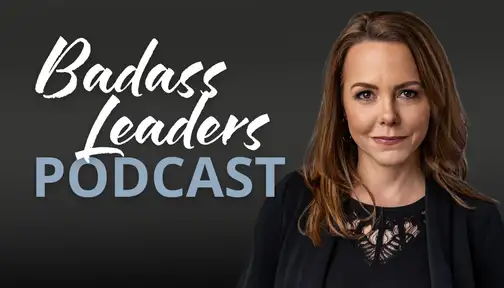
to the Badass Leaders podcast.
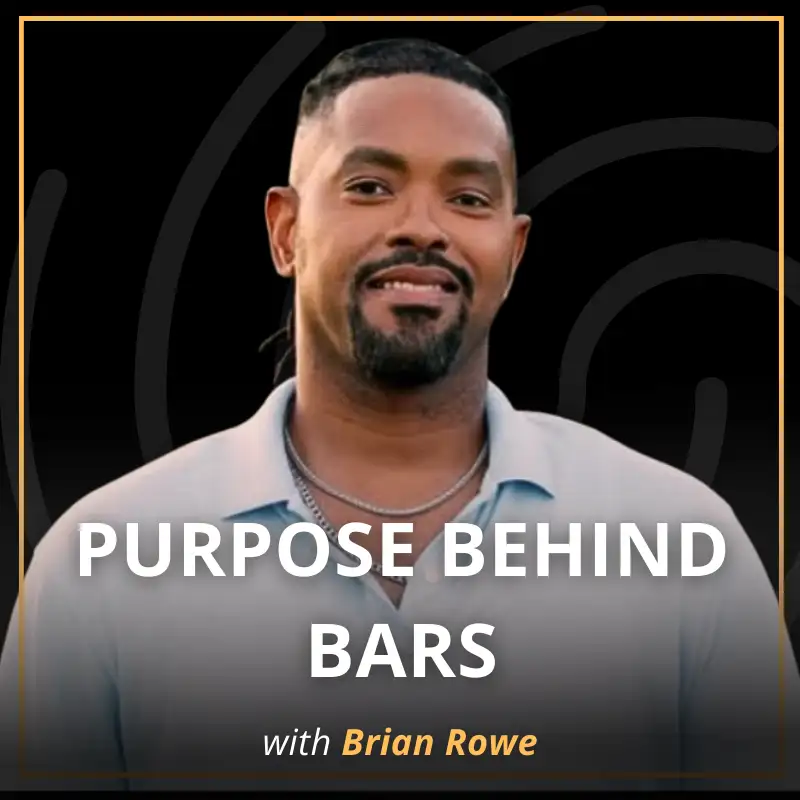
And today we are joined in studio by Brian Rowe.
Brian embodies purpose-driven leadership, innovation, and unwavering resilience.
You, like literally this episode the whole time, I was on the edge of my seat.
Like, I can't wait.
Okay, what happened next, Brian?
What happened next, Brian?
We're gonna talk about his childhood, growing up as the son of a single mom in South
Alabama.
We're gonna talk about his his journey living feeling really alone in solitude as a child
We're also gonna then talk about when he was in an area where he was kind of very much
alone and that was when he was a convicted felon in prison and about all the things that
he did to not just save his life but save the lives of everyone around him and if you can
tell now while he had a 30-year sentence
a lot happened along the way and created the man he is today and he was actually sitting
in my home studio.
What a blessing.
I'm telling you, you're gonna love this episode.
You're also really gonna want to share it with other people.
I was so motivated during this episode and I know that there are people that they need to
hear Brian's story.
First off, I also can't wait for there to be a documentary one day or something like that.
I told him I wanna be the audience because I wanna participate.
I know you will too.
And now is your opportunity to hear his story.
So let's do this.
Welcome to this week's episode of the Badass Leaders podcast, where I Angela Gilnell sit
down with industry experts for candid conversations about the challenges and joys of
leadership.
Now let's dive in.
Get ready to scale your company, grow your brand and unlock your full badass potential.
and also be incredibly motivated to go out and just kick some ass.
Let's do this.
So, Badass Leaders community, I will tell you this.
I'm not telling you all the secrets in the beginning about Brian.
I will tell you, I have between my three podcasts, interviewed probably about 30 book
authors and no one has sent me a book that they've edited and collaborated with that's
more beautiful than this.
When I received it in the mail, I was just like, this is like coffee table.
worthy art.
Okay, so community, I'm gonna read you something that Brian wrote in this book and you're
probably wondering like, what's the deal with the book?
What's crisis?
Why is Brian here to talk about being a badass leader and a badass human?
You're gonna find out, so keep watching.
But I am gonna read the one that's Imagineering is the title of it.
And I'm not sure.
can see this, Katie, but this is what I'm reading from.
And it says, am a wealthy, successful family and businessman revitalizing the person and
community, bring life back to those things others have given up on, shining a light in the
dark areas of their lives, ultimately making a mark that cannot be erased.
I got chills when I read that piece.
I am a giver of all good gifts generously given to me from above.
I am a world changer making a mark in other people's lives that can never be erased.
Brian, welcome to Badass Leaders podcast.
Welcome.
Thank you so much.
It's good to be here.
It is really good to be here.
Well, we're going to like, OK, what's the hook that we want to make sure people were going
to tease them a little?
We're going to talk about your why you edited this book, the collaborations you've done.
We're going to talk about the amazing work that you're doing right now.
Your amazing visit yesterday, which we won't tell the listeners yet because you got to
listen to.
But what I want to start with is most people define success by their job title or
paycheck.
You've defined it.
by transformation of yourself, your career, and others.
So tell us, what's the hardest or most chaotic moment in your journey, and how did you
turn it into a launching pad rather than a dead end?
And before you answer that, I am gonna give a teaser that in 2010, your life took a turn
that most people would consider a dead end, a nonviolent drug conviction.
Fast forward over a decade, so 15 years later.
And not only have you received clemency, but you've also built a career as a tech leader
and community catalyst.
So let's start there.
When you were facing that darkest chapter, what was going through your mind and how did
you begin to see a path forward instead of just hitting rock bottom?
Wow.
So the hardest thing that I have experienced was being sentenced to 30 years or 360 months
in federal prison.
And it felt like the end of my life.
It was like a dead end feeling.
And I said to myself, how can I turn this pain into passion?
How can I turn that passion into purpose?
And so that was a hard part of my
That was one of the hardest things that I've ever experienced in my life.
Yeah, okay.
So, and going back to the beginning was the initial question that I started off with was,
you what's the hardest, most chaotic moment?
Well, that was it.
Now let's talk about how you turned it into a launching pad rather than a dead end.
So you've talked about you sat there and you're like, I'm going to turn this horrible
situation into something that's going to make an impact in the world.
What does that look like?
It first, had in order for me to turn this, this chaotic and in the hardest moment in my
life and into a launching pad, had to, I had to like look within myself and change my
perception of this 360 month sentence, because I believe if you can change your
perception, you can help influence your outcome.
And so I did that.
I had to look real deep inside of me.
And I discovered this person or I awakened this person that said, Hey, Brian, you, this
is, this is a place where you can really make an impact and it looked chaotic.
So I thought about something and we mentioned the book earlier crisis.
And I started thinking about what is a crisis.
And I discovered in the Greek, it meant a turning point and
One of my favorite quotes is the Chinese used to write crisis with two symbols.
And one symbol meant beware of the danger.
The other symbol meant also look for an opportunity in a crisis.
And so that was the pivotal moment.
There was an aha moment that helped me to understand like in this crisis, don't just focus
on the bad things.
Find some of the opportunities.
that's there.
Okay, so now why don't we just talk about you as a human?
I'm really passionate about one of the things that I think that, why actually we met on a
Atlanta podcast community.
And you were sharing a piece of your story and I was like, oh my gosh, I need to talk to
this human.
I'm gonna try and not cry during this episode, but I will tell you this.
I have done a uh lot of research into things like the Innocence Project and have donated
for years the Innocence Project.
And I've also I have this huge passion for seeing
really the core of the person and not necessarily the things that have happened to them or
all of this stuff, but who they are.
So what I want to do is first, I want to dig back into your childhood because that impacts
who we are as an adult, right?
So tell me a bit about what growing up looked like for you, where you were raised, and who
in your family, school, or community helped shape who you are today.
I am a son of a single parent.
I was raised by my mom.
My father and my mother got a divorce like just before I was born.
I was born three months before my mother's expected.
So I was an immature baby.
I learned how to fight before I even took my first breath because at the time that I was
born, my mother had to have an emergency c-section and the doctors told her that maybe you
might die if you don't, if we don't take the baby.
And also the baby might die.
because of the birth complications.
eh So growing up, I learned to fight at an early age.
And of course, I have four other I have four other brothers and sisters.
um One with my mother on my mother's side, the other one on my the other three is on my
other three is on my father's side.
But growing up, it was just me, my mother and my brother.
And it was it was tough.
It was really it was really tough.
I find myself
alone a lot.
find myself in this place as a kid.
As an adult, now I understand, but as a kid, you don't think about that.
You just go on with life and you figure things out.
And I had to figure things out early without really knowing what to figure out.
And what I mean by that is I remember playing as a kid catch by myself.
And how did I do that?
We lived in a brick house and so I would throw the baseball and hit the brick wall and let
it come back to me.
You know, I figuring things out.
so resilience to me, and I know we haven't talked about it yet, but resilience to me, I
learned this at an early age.
Like coming out of my mother's womb, I had to fight for my life and I had to learn how to
overcome and be a winner.
And so, yeah.
That's growing up was really interesting.
It was really hard for me.
I was always alone.
My brother was, I love my brother, by the way.
My brother's a fantastic guy, my brother was working.
He played sports a lot.
And so he wasn't there.
My father had moved back to New York, which I grew up in.
I was the only one.
to ask where did you grow up?
Because we're in Atlanta right now.
So I grew, I was the only one of my siblings that grew up in Alabama.
Okay, where in Alabama?
In Elba, Alabama.
Where is that?
Elba is south Alabama near Troy.
Troy State.
yeah, so it's near Troy State.
It's a place where it had about 3000 people, the population, very small, but we won a
championship in football.
So I learned how to be a champion.
Nice.
You were on the team.
I was on the team.
What position?
I was a DB, defensive back.
Oh love it.
And at that time I was in the ninth grade, but I was pulled up to the varsity because I
was, apparently I was good enough to play and I played in a championship game.
had a couple of tackles and so What an experience.
It was an amazing experience.
So from there I learned how to be a champion.
I learned what it, I learned how, what it takes to do and get things done on a high level.
you because I think of the being alone piece a lot and I that a couple of things resonate
with me.
One, I am the only daughter.
I have three brothers, but also was very abused as a child.
My brothers weren't.
And so I also had those super alone moments.
In fact, at 13, I attempted suicide.
It didn't work.
Thank goodness.
But I
I just remember also having to figure out how to conquer things from the day I was born as
well.
That really resonates with me.
also the closest that I've been to Elba is when I was in ninth grade in marching band, we
had band camp at Troy State University.
oh
I went to Troy State.
Yeah, I to college there.
So what I'm thinking of though, what's interesting is both you and I are great leaders and
yet we started our lives very much in a solitude space.
So can you walk through it and especially let's talk about in high school because you had
to go from being an individual where you were playing catch off the brick, which that's an
amazing story, to being on a team and being a part of the team and being an amazing
athlete on that team.
What did that transition, did anyone, first off, did anyone really mentor you and help you
through that journey?
Are there any things that really say this was a turning moment at that stage?
To look back, I didn't really have anyone to mentor me.
But to look back, the janitor, his name is Bobby, Bobby Gully.
First off, I love anyone who knows the names of people like, like, like I know at Emory,
my office, Mohammed cleans my office.
He's amazing.
He cleans the floor.
I know all about when he used to work at the pie place and all this.
I love people who get to know people as people.
So I just want to say you got kudos from me right there.
Tell me about Bobby.
But Bobby Gully, was a janitor at our high school.
And one summer I was able to work at the school.
And I was able to work with Bobby and I discovered that he knew how to paint.
That's where I got my painting skills and desire to paint from Bobby Gully.
And so he was somewhat mentoring me without me knowing that.
And I didn't think about it until later.
He also...
you will see Bobby running around like exercising.
He will run around town.
And one day he asked me if I wanted to do go and just run and exercise with him.
And we will have these talks and he would just mentor me and talk about basketball.
He would talk about sports.
And I told him that I was interested in painting and he kind of, brushed it off, but he
just, he just started showing me like his paintings and I was at awe.
So that was one of the persons that helped
As I think back, like this guy really poured into me and Bobby took time to show me the
ropes.
And we spent a lot of time on the basketball court and just playing basketball.
But he was one of the guys that I look back.
Another person, his name is Tim Williams.
He was the, he was the manager for the football team and he will always talk about God.
And I'm like, I don't, nobody want to hear that.
Who wants to hear that all the time?
But Tim Williams was, as I look back, he is now the leader of the Shiloh community, which
has garnered a lot of support for some environmental justice initiatives that's going on
out there.
And so...
I took note of that and I took note of his leadership and still today he called me and he
impart things and I tell him, you know what, even though I was kind of ignoring you and
pushing you away, now I understand why you were saying the things that you were saying and
I appreciate it.
So growing up, those two guys, um as well as my brother, now my brother has been an
inspiration to me.
He has been an amazing person.
He is a leader.
He is a badass leader as well.
Okay, so we need to do an interview with him is what I'm hearing.
Yes, my brother is, uh he's been in the military.
He's retired, of course.
He was a high ranking military official and he had some really good credentials.
He has really, really inspired me, to say the least.
He also won a championship playing football in 89.
A bunch of underachievers, I see.
Yes.
So one of the, as though you just made my day highlighting those specific individuals
because one of my goals with this podcast is to help the community realize that if you
just have the, if you just spend time with one person and make an impact on that one
person, that butterfly or that ripple effect can be so huge.
Cause we're going to talk about all the work that you're doing, how passionate you are,
the change that you're making in communities that are really important.
and those people planted seeds.
How cool is that?
That's really cool.
And that's what I mean.
They planted seeds and I didn't even know.
And that's one thing with my life.
I want people to, who feel like they don't have anybody to just think for a moment.
Don't conclude that.
Just think about, just think back and think about those times when someone planted seeds
like Bobby Gully and Tim Williams and my brother, DeWayne.
a planet sees in my life and they begin to grow and nurture and look where we are now.
And it was because of that, that love and that attention.
And those are the little things that makes the greatest difference in people's life.
And I appreciate that.
I don't think they know that to that.
They don't hopefully they'll listen to this podcast.
will listen to it and they will hear it and they'll appreciate it.
And I hope it brings some fulfillment to them knowing that they help make the impact that
they're seeing in me today.
Yeah, I also want to remind everyone I'm getting to your items.
I have so much emotions about this.
I'm so excited to talk to you because I have so many things to talk about.
But I also want the community to remember how important it is to tell these people.
had someone who when I went back, I went back to school at Georgia Tech as a 29 year old
single mom to get my engineering degree.
when so I was older than the other students because tech is a traditional Georgia Tech is
a traditional school.
And I just found out last year.
that one of my schoolmates who I just adore, he was doing the Morehouse-Georgiatech dual
degree program.
he showed up at Georgia Tech.
So he just told me this last year.
He said, I showed up at Georgia Tech in biomedical engineering.
He said, I looked around, I didn't know what I was doing.
And then I looked at Angela and she looked like she knew what she was doing.
So I hung out with Angela and stuck with her.
And he told me how much of an impact I made in his life.
I never knew that.
And it just brought me so much joy.
And it also encouraged me to continue to do those things.
So I want the community to hear these things.
maybe if they just go and talk to one person today and say, thank you, you planted that
seed and here is what's
happening because it really, I mean really the snowball effect of that is something that
can't even be described.
Right.
The little moments, those little seeds that's been planted in other people's life, it
makes a huge difference, like I said, in um those moments that you experience.
Okay, let's I want to tease a little bit in this because I don't want to tell everyone
everything up front.
But we have mentioned about being in prison.
So first off, walk us through your emotions when you were I'm just assuming because I
don't know your story this piece yet, but you're in court, I assume.
Yeah.
And I was there a jury or?
Yes, I I went to trial.
So went to trial and you're looking at the people on the jury who are going to convict you
and then the jury foreman reads the result of it.
Walk us through maybe those emotions and then maybe your first couple of days in prison
and how, walk us through what that journey looks like.
And then if there was one moment in prison that you were just like, you know what, screw
everyone.
I'm going to make a positive impact out of this.
Yes.
So during my trial, the day that they read the verdict and they found me guilty, the jury
found me guilty.
It hurt because I knew that I was going to leave my son, Jaden, who was nine years old.
And I knew that I was going to leave my mother who had battle cancer and had a kidney
removed.
And I was a breadwinner.
I was there to help my mom.
And that day really, really
hurt me.
And I have my best friend behind me, standing, literally standing behind me when they read
the verdict.
His name is Dominique and he, we went to Detroit State together.
He's the reason why I moved to Atlanta in the beginning, but he was there that day.
And so when they ran the verdict, read the verdict, I just, I kind of dropped my head and
took a deep breath and was like, okay, let's go.
Let's go because I knew that I was going to overcome that at that moment.
I knew that.
I took my jury off and I turned around and I gave it to Dominique.
And well, I went back to the county jail and I remember going into my cell and I got down
on my knees and prayed and I was like, Lord, I don't want to do this sentence, but if
you're with me.
I'll do it.
And I heard a voice whisper to me and it was like, you won't have to do it.
And so I got up, I was ready to go home then.
I'm like, okay, well, let's, we'll, I'll peace out.
They're calling my name and lo and behold, that didn't happen.
So I went to, I went through the process and I was shipped off to prison.
The first place that I ever bloody Beaumont, they call it Beaumont, Texas.
Yeah, they call it Bloody Beaumont.
Because stab, killings and stabbings all the time at Bloody Beaumont.
And this is my first time.
I knew it because someone at the county jail had been to Beaumont and he was talking about
it.
And I was like, Lord, I hope I don't go to this prison.
And lo and behold, they sent me to Bloody Beaumont.
geez.
um
Mind you, this is my first time ever going to prison.
I had no criminal history.
Being sentenced to 30 years was like, what in the world?
But when I got to Beaumont...
That's when my prison, that's when the prison life started.
And I started fighting.
I started going to the law library and I'm like, okay, I heard the word.
It said I wouldn't have to do all of this time.
So I don't know how it's gonna get done, but I'm not just gonna sit around idle.
And so I just started fighting because I'm a fighter.
I'm resilient.
I was persistent and kept fighting.
And in 2013, I stopped fighting.
to come home and started preparing to come home.
And that made all the difference in the world.
Tell me, walk me through that again.
So say that again and walk me through what that emotion is.
So in 2013, I mean, 2010.
I kept fighting.
I lost all of my pills.
And so it got to the point I said, you know what?
I'm going to stop fighting to come home and start preparing myself to come home.
And that initiated a force.
That started something, a firestorm.
And because of my action,
there were people responding to it.
Things started taking place.
Things started taking shape.
And I survived Bloody Beaumont.
I asked for a transfer, and they transferred me to New Hampshire.
What does that look like when you ask for a transfer?
Because I assume you have to give a reason that you're requesting and it has to be, I
mean, they're not just going to move prisoners around the country.
mean, and come on, New Hampshire is a long way from Beaumont, Texas.
let me tell you, when I asked for the transfer, I was actually living in Harlem, New York.
That's where I was arrested.
That was my home.
I was living in Harlem.
So in federal prison, they have to transfer.
They have to place you in a prison within 300 miles of your home.
But the prosecutors put a management variable on me and sent me to Beaumont.
And the management variable was to increase the prison population.
And so they can do that.
So they sent me to Beaumont, which was, and to me, it was part of...
Is it a way to because maybe the prison in New Hampshire had a higher population ratio and
the one in Beaumont didn't so they're balancing off the people working there to the beds
or?
No, actually that was a new prison in New Hampshire.
the population, when I got there, New Hampshire can hold 1500 inmates.
When I got there, I was like 391.
Oh wow.
Okay.
Okay.
So when you go to trial, they don't play with you.
They want to make an example out of you.
so part of that sending me to Beaumont was making an example out of me.
So other people will go ahead and...
cop out to a plea and ah perhaps cooperate or whatever.
ever think about copping out for a plea?
I would have signed what they call an open plea.
But because I wouldn't cooperate, the prosecutor said that we will pursue 25 years.
And in the district that I was in, the judge would have went with that 25 year minimum
sentence.
So I'm like, well, I'll just go to trial.
And I went to trial and I got 30.
Of course I would have played guilty, but I was at a point where um I wasn't trying to be
macho, but
I don't believe in taking responsibility quote unquote by blaming other people so that I
can get time cut.
I took responsibility of my own and whatever they had on the next person, that's what they
had.
And the prosecutors don't like that.
So at that point, you know, I chose to go to trial and I was facing a life sentence to be
honest with you.
30 years to me was
How old were you at the time?
I was 31.
I was 32 years old.
so you thought, okay, I can at the worst, I'll get out at 62.
I I turned 50 this year.
So 62 is young, not really to spend your whole life in prison.
So I don't mean to minimize about that.
But I'm thinking about like, yeah, 30 years is better than life in prison.
30 years is better than life in prison.
And the reason why I say that is they scored me out as a level 42.
43 is the highest in the federal prison.
43 is life.
The judge can't sentence you any more than a life sentence, nor can he go below a life
sentence.
At a level 42, the judge can sentence me to a life sentence, but he can't go below 30.
So that was the mandatory.
Minimum.
Minimum.
Minimum.
Okay, so tell me about the scoring mechanism.
Is it that they look at the crimes and they have some kind of matrix they go to and it
says based on these crimes that you're uh being tried for, then if you're found guilty,
they fall into this slot and it's a number system.
So what is murder?
Murder has to be 43.
necessarily.
Murder does not have to be 43.
It can be, depending on your record and it's depending on if they increase it by certain
things that trigger that score to go up.
For instance, I started out at a level 36.
So because at trial, I took the stand and I testified on my behalf.
counted against me because I was found guilty.
So it was an obstruction of justice.
So that gave me a level, a two level increase.
So now we had a level 38.
And so because there was a gun involved and some guys that got caught, I wasn't around,
but because of that gun was involved in a conspiracy and it wasn't a violent crime.
It was just in the vehicle.
So they put that gun on me because I went to trial.
And so they were able to do that.
And so that was another two levels.
We're at 40.
And so now, um, the other one was the drug quantity.
was more than, I believe 50 kilos that they, that they accounted for.
so now I get another level increase, which is 42.
And so it was systematically scored out for that level 42 to get me at 30 years.
And so.
The prosecutor and the probation officer are the ones that come up with your PSI and that
score and they present it to the judge.
And my judge was a senior judge.
He was really hard on crime.
And so he adopted their recommendations, even though I was a first time offender.
But because I didn't take a plea, which would have given me a three level reduction, or if
I would have just played out, he would have considered not necessarily giving me that
three level reduction.
So I was stuck at a level 42, which meant there's a mandatory minimum that the judge have
to go by.
Got it.
And so that was 30 years.
Did your defense attorney advise against you testifying in your own case?
No, he encouraged me to do it.
And so I didn't understand it at the time.
I would not have gotten on the stand and testified on my behalf knowing that it would
possibly jeopardize me and I can get more time if I was found guilty.
So I had no idea.
I didn't have any idea about the conspiracy law.
And so he put me in a position where I did get more time for just...
I wasn't denying stuff.
just wasn't accepting responsibility for something that I didn't actually do.
And in a conspiracy, you don't have to actually distribute drugs, touch the drugs.
You just have to be knowingly involved in that kind of transaction.
Wow.
Wow.
I'm learning so much.
And I'm learning at hearing your story.
You learned it firsthand when really your life was on the line.
Okay, so let's go back to prison.
You're in prison.
And so the conviction happened in 2010.
You were sent to bloody Beaumont.
And then in 2013, or what year was it that you requested the transfer to New Hampshire?
2013.
Okay, and I can see that, was it perhaps your family was there, your son was near there,
that is near your, within the 300 miles of community, and all of those things went into
place and they awarded your transfer.
What was that like?
Yes, I needed to get out of Beaumont.
Number one, there were so many stabbings and killing, we were on lockdown.
And so that quote, what you read out of the book, I did that when we were on lockdown.
It was at a point where my mind was like, I had negative thoughts.
all kinds, I thought about suicide.
And I know that I learned this, that you can't kill a thought with a thought.
So I started, those were...
a hundred words that I wrote about myself.
So every time during lockdown, those negative thoughts came, I will open my mouth and
declare those words that I am a successful family businessman that revitalizes the person
in the community.
And I kept doing that.
I did it because that's who I'm going to become.
That's who I am.
But also I'm becoming that person.
And so doing prison, leaving Beaumont, going to New Hampshire,
was a breath of fresh air because I was fighting, again, I was fighting my sentence and I
couldn't because I was on lockdown.
couldn't so much, I couldn't contact my family.
couldn't, you know, go to the law library.
You couldn't do any of that stuff.
But that's, again, that's when I learned to stop fighting to come home and started
preparing.
And so going to New Hampshire, of course I was around my family again.
I was around my son, my father could come.
My father had remarried his wife Joan.
She was able to come.
My mother will come from Alabama.
My mother has siblings in New York.
My mother lived in New York a lot of her life.
So she will come to New York and then she'll make the drive up to New Hampshire to visit
me.
So it was easy.
It was better for me.
And it was a place where that, that launching path for me, because that was my place of
preparing to come home.
Whoever says a prison in New Hampshire is a launching pad for you, but it was.
It was.
It was a change of atmosphere.
Beaumont is was a swampy area.
It was really.
It was really it was downing, but going to New Hampshire, the mountains, the beautiful,
the moose, the elk.
It was so beautiful.
That's one of the most beautiful place that I've ever seen.
I was in prison and I would go out on a yard and just look around.
And when the seasons change, it was so beautiful.
I've never seen anything like it was like a painting.
And so that's when the painting stuff started kicking in.
And I started thinking about Bobby and I started just being moved and motivated to write
people.
And I started writing letters and I came up with a plan.
I said, you know what?
I'm just gonna, I'm gonna decide to come home.
And I thought about it for a long time before I wrote it down.
But I said, I'm gonna go home 10 years prior.
to that release date, which I had gotten sentence reduction when I was in Berlin.
Let me tell you about that.
Okay.
So as I was putting motions in, doing my preparation to come home, that doesn't mean I
didn't stop fighting to come home, but preparing to come home was my fight to come home.
Okay.
And so I started.
What this mindset shift?
It's a mindset.
It's so big.
It's a mindset shift.
so because of that, things started working for me.
So I put in a motion to the judge to ask for a two level reduction, uh drug minus two, an
amendment had came out.
And I asked the judge to give me that two level reduction.
And lo and behold, I got denied.
I got the letter and I'm like, man.
And so I went in my cell.
I found a mustard to get back up and write another motion to that judge.
A lot of people wouldn't do that because once the judge deny you, you're denied.
And I wouldn't within a week, I sent out another motion asking for that two level
reduction.
And 30 days later, I got a letter back and the judge granted it.
Imagine had I not done that.
Right.
Wow.
I would have just accepted like that first denial.
But I learned to be resilient.
I learned to be persistent.
I learned to believe in myself and never to give up and keep knocking at the door until I
get that answer.
And so the judge gave me a two level reduction, which it knocked my sentence down from I
was set to be released 2036 to 2031.
That was a win.
And a win to me is a motivation.
2025 so much more in the story because you're out here with me.
That's So you're building
So I'm building on that momentum.
so maybe two weeks later, I got another uh motion for my 2255 to come back to court for
evidentiary hearing.
I'm like, 2255 is a constitutional motion that you may challenge the ineffectiveness of
your counsel.
and you may challenge a technicality that went against your constitutional rights.
And so I did that and I got an evidence-wear hearing for ineffective assistance to
counsel.
And when I ended up going back to court and that was so tough.
That was really, really tough going through that because when I got there, the prosecutor
threatened to enhance my sentence again for obstructing.
same prosecutor and same court.
and the same court.
And so now I'm at a place where I have to make a decision because he said, if you continue
with this motion, then if you take that stand again, we're going to ask the judge to give
you a two level reduction, which I just won.
I to take my sentence back.
And I'm like, are you kidding me?
And so that was hard.
I went all the way back to Florida.
you mean they're going to ask the judge to do a two Senate or two Senate increase.
eh
okay.
Had I won, they would have challenged it and because he gave me an obstruction of justice
before, and I know that this judge will adopt recommendations.
Right.
And so it put me at a standstill and I had an attorney came, private investigator came in
and they told me, it's like, Brian, don't do it.
Just sign the refusal to move forward.
And that broke my heart.
broke my mother's heart.
It broke my son's heart because I'm giving back time and it's like, it puts me closer to
home.
So I went to the court and I had to redact my motion and ask the judge to just throw it
out.
And it was tough.
It was really tough.
But I got over it.
I went back to New Hampshire and I began again and I started fighting, writing letters.
And like I said,
I said I was going to come home 10 years prior to my release date, which had moved down
from 2036 to 2031.
So that meant I'll be home in 2021.
This was around 2015 when I was saying this.
so in 2015, I asked for another transfer because my custody level dropped and my custody
level dropped because my time dropped.
Okay.
So it put me in a position where I can go from a medium security prison to a low.
Okay.
Which was Fort Dix, New Jersey.
Okay.
And so in 2015, I asked for the transfer.
They sent me to Fort Dix, New Jersey and...
That's where this book was done through.
I was like, I remember hearing that because honestly, was expecting.
Oh, and before we leave, you have to autograph the book for me.
But I was reading.
Can I can I read this part here about the beginning of of what Fritzi said about this?
So we're going to talk a little bit about the compassion prison project.
But I like this part where he says he or she
See.
She says, We are so quick to decide the limits of what a human is capable of.
When I receive a letter with a poem or a painting from someone from prison, I marvel at
the talent, determination, perspective, and magnificence of the men and women living
behind bars.
This book, Crisis, is a shining sampling of poems, artwork, and essays created by the
extraordinarily talented men living in Fort Dix Prison.
Their remarkable creations serve as a poignant reminder of the boundless potential that
exists within the confines of the correctional facilities and within our own society.
How powerful.
Yes, yes, yes.
That was an amazing opportunity that Fritzi gave me.
I wrote Fritzi a letter and she runs the Compassion Prison Project out in California and
she deal a lot with state prisons, not federal prisons, but I sent her
there for the Compassion Prison Project?
What is their mission value?
I'm guessing, but can you tell me what it is?
Where they go into prisons and they help identify childhood trauma and they help men and
women deal with that trauma and discover it so that they can overcome it and be free from
it.
They go in and give people opportunity to live again and to let people know that they care
for them.
So that's what Pritzy did for me.
I wrote her a letter and she wrote me back.
How'd you find out about her?
mean, because you're in prison in Fort Dix, right?
how did I mean, it's not like you're watching, I don't know, the news or something.
Maybe you are.
don't know.
I stopped watching television.
I didn't watch TV again until I came home because I was so focused on coming home.
I wanted to tell my vision.
okay, so when I got to Fort Dix, em I would look through newspapers.
Okay.
And they had a they had an article about Fritzy and I reached out to my cousin.
I said, listen, find her address.
And I send it to me because we were able to email each other back and forth.
And my cousin found her address and I wrote her.
So I found out about her through a newspaper article and took it from there.
Fritzie is a film producer out in L.A.
She did oh Dr.
Dre and Jimmy's I've been documentary.
OK.
And but she also had a passion to help.
Inmates or people returning home from prison.
And so I wrote her and she wrote me back and we kind of dialogue.
She sent me her email.
So I put it in a computer.
Now we're emailing each other back and forth.
And she asked me, do you mind helping me doing a survey in federal prison, which has never
been done.
It was always done in state prisons.
And I said, sure.
And it was the ACE program.
so I
adverse childhood experiences.
Adverse childhood experience.
sent me the package.
So I went around asking people in prison, my other inmates or whatever you want to call
them.
I call them people.
I don't like to call them inmates, but I went around.
And so what happened that helped me to get closer to people.
People started believing in me because the questions you had to answer truthfully and that
opened up the door for me to be able to mentor to.
these people, these, these my brothers.
And, and so, um, yeah, that took place and it changed the perception of who Brian was from
other people.
Because they could see you really wanted to see them as a human being, not someone who's
in cell 3A or I'm making up numbers, right?
Not that, but tell me your story, tell me your journey, tell me your, because the ACE is
all about those with someone in your household in prison, was there addictions, what type
of abuse?
What type of abuse, all of that stuff.
So you had to open up.
So I went to people to these guys and I asked them and they were okay with answering the
questions.
And so that opened up the door for me to help them.
And I knew that they needed help.
And so I would talk to them about our trauma, like talk to me, let's, let's, let's discuss
it.
I'm here to help you.
And that was different because you don't get that in prison.
You don't have other inmates that go around and really want to help you deal with things
like that to make you a better person.
Number one, it opens up wounds.
It makes you feel vulnerable and nobody wants to feel vulnerable in prison.
You always want to be macho and tough.
And if I tell you that I was abused and I'm checking these things off, then you're going
to notice.
And another thing, they knew that I will keep this confidential.
They knew that I wouldn't go around and
talk about, wait, this person was abused, that person was abused.
So it opened a lot of doors for leadership.
Which you know what I think I was thinking about a couple minutes ago is I thought, okay,
the badass community is gonna say Angela, I see that Brian's a badass human, but.
What like he was in prison.
How is he on the badass leaders podcast?
And now we're tied.
And they also don't know that you went to the Capitol yesterday, which that's just another
teaser for them.
We're going to talk about that later.
Yes.
But yeah, this is this is because there's a difference between someone who goes into an
area and fights for themselves and accomplishes great things for themselves.
There a lot of badass humans out there that do that.
But someone who then starts to.
be a force to fight for somebody else and to believe in somebody else and make a change
for somebody else.
That's where you get that leadership piece.
Yes, that's where you get that leadership piece.
Guys begin to see me as a leader.
I wasn't trying to just, I want to be a leader.
No, I was just doing what I love to do.
I wanted to help people, like really help people.
And I wasn't going to wait till I got home.
I can start here because most people leave prison worse than they come to prison.
And I was determined not only to help myself, but help whoever I could actually reach out
a hand to help and wanted to help.
And so I did that.
People like my man, Johnny Boy, Johnny Ambrosio, he was allegedly the Gambino crime family
boss.
He saw that.
um He became, he was like an uncle to me and a guy that led people like respected, really
respected on the outside.
He started to respect me for that, for my leadership, for my caring.
To be honest with you, Johnny Boy was one of the meanest persons I ever met in my life.
But for some reason, he didn't treat me that way.
He treated me like a nephew and he saw the leadership capability in me.
And so that, that went along.
he also saw in you the compassion, the soul, the love for humanity, and the caring and the
empathy and those character traits as well.
And the fact that you went out of your way to get to know him as who he really was and not
the bully or whatever.
Right, exactly.
And he started telling me like things that he wouldn't tell anybody else.
week, I moved across the hall from from Johnny boy and every morning he will come over and
we'll he'll say, on over and we'll we'll sit and have coffee and and just talk.
And he would just tell me things that nobody else would know.
And that meant a lot to me.
But I started to discover you're leader.
because if Johnny Boy can identify you and he's a leader, whether you feel like it was
good or bad, he's still a leader.
I started learning things about Johnny Boy that nobody else knew.
And then when people started seeing Johnny Boy and I hanging together, they started
respecting me as a leader.
And I wasn't trying to be.
So people will come to me and talk to me about things and I will have answers.
They will see me writing letters.
I sent out over 6,500 letters to congressmen, to senators, to...
uh celebrities, anybody that will listen.
And what was the message you had in those letters that you were trying to convey?
The message, we need reform.
We need advocacy.
We need change.
And because these people had influence, people like Fritzi, people like I wrote LeBron
James, and he wrote me a letter back.
And that that is so cool.
To get a letter at me.
I still have it.
I still have that letter from LeBron.
I actually did a painting for him and sent it to him.
But it was amazing to get that letter back from people like LeBron James.
And at Mail Call, people know when you get mail because you circle up and uh everybody
gets mail.
Right.
when I got that letter from LeBron James, people were like, who is this guy?
Who is Brian?
And so I started getting letters from people.
I wrote Jason Flom, which is Jason Flom, if you would Google him, he is responsible for
starting Kid Rock's career.
He's responsible for starting or helping Katy Perry's career.
He is an amazing music executive.
um I wrote him because he works on the Innocence Project and he loves to help people to
get them out of prison.
And I wrote him and a year later, he wrote me back.
And I got, I'm like, and he was like, do you need help?
Do you need an attorney or anything?
And I'm like.
my question.
was thinking about this.
How did you afford to pay for all of your attorneys and stuff?
Let me tell you, learning how to be a badass leader and gaining respect to a point where
people, they start seeing it and they're like, I need to help this guy.
I'm going to help him.
And that's how I ended up, Jason Flohm reached out to an organization and that he was on a
board and told them that I need an attorney.
And that organization reached out to me was like, we'll get you an attorney pro bono.
And so that's how it happened.
Just get chills.
And we started fighting, they started fighting for me.
And I ended up getting denied, but I didn't quit.
I kept going and I kept going.
And Jason was there, he was emailing me.
Another person that helped me was uh Weldon Angelos.
Weldon Angelos is a force within itself when it comes to criminal justice reform and
cannabis reform.
And he and I was reaching out.
or communicating back and forth with one another.
not Jason, but Weldon had 55 years in prison and he was a producer.
He was Snoop Dogg, Dr.
Dre producer.
Back then, and he got arrested for marijuana.
And because he wouldn't testify, they hammered him with 55 years, but he'd never stopped
for marijuana.
Yes.
Because it was a gun, he had a gun.
Okay.
They scored him out of the level.
They wanted to give him a life sentence, but they ended up giving him 55 years.
And I saw how he fought and he really fought.
He got...
He got senators, he got representatives on board with him.
Even his judge was on board with him.
His judge said that he didn't want to sentence him to that amount of time, but he was tied
because of the God because of the mandatory minimum.
And that's where I'm fighting now.
I'm fighting, I'm being a voice to change that, to bring not just reform, but
transformation.
but yeah, Weldon and I start reaching out.
He got
I send him a copy of my clemency that I did on my own and he's
Now for people who don't know, walk us through what a clemency is.
Clemency is a petition to the president to reduce your sentence or commute your sentence.
And that's basically what it does.
It doesn't resolve you of the crime that you committed.
It just commutes your sentence by the president, which means that m like I had 30 years
and I served like 11 and a half years.
And because I got a clemency, I was able to...
to come out of the custody of the BOP, the Bureau of Prisons.
Wow, wow.
Okay, so you're writing this and doing this work and fighting for your clemency.
and I'm fighting for my clemency.
So people started seeing all of that.
And like I said, things just started happening because I prepared myself to come home.
I shift my mindset, my perspective.
People saw that even on the outside, they started getting my letters and I knew I just
need one yes.
So I'm going to write 10, 15 letters, 20 letters a day, just sending letters out, sending
letters out.
I just need one yes.
If you can get that yes from the judge or you can get that yes from the president, that's
all I need.
In the meantime, while I'm writing these people, it's not just to get the one yes, it's to
get to build a relationship and a network of people.
So when I do come home, they will know who I am.
And so all of these letters, I didn't care.
I got a bunch of nos and I got a bunch of, I started troubleshooting because when I say
troubleshooting, because I didn't know what to do or how this process worked because it
was my first time.
So I will write letters to like congressmen or senators or advocacy groups and they will
write me back and tell me that they couldn't help them, but this is where you might want
to write or they might, this organization may help you.
that kind of.
Yeah, and I think that's so vital too because we can't always help.
We don't always have the resources, the ability, the connections to help someone, but we
might be able to refer to someone else or we might be able to give them a nugget that
helps drive them, continue to drive them forward.
what took place with me.
And in the meantime, while all of this was taking place, a framework was being shaped so
people can see the resilience.
Don't stop.
Be persistent.
When, when you get a note, just like I got a note from the judge, I wrote him back.
What was it going to cost me?
And so don't stop, keep going.
Somebody's going to listen eventually.
And so now I got all of these letters out and people are writing and people are, things
are moving.
And when COVID hit in 2020,
They called me and told me that they was going to send me home because at the time I was
diagnosed with diabetes and I would be vulnerable if I would have caught COVID.
It was a high chance that I could die in prison.
And so when COVID hit, CARES Act was signed into law and the CARES Act gave the BOP the
authority to send those home who was vulnerable to COVID.
And so they called me up and they was like, we got to send you home.
me, Johnny Boy, and another um allegedly mobstered Frankie Boy, those were the three that
they called up first at Fort Dix in our unit.
And they told us we're sending him home.
my probation officer started doing his due diligence and he contacted my mother because
that's the address that I would say I was gonna go.
I wanted to go home to be with her if I was gonna go
Alabama.
So I put in a what they call a relocation.
So the probation officer when at the time they weren't going out, so they did a like a
video of the home and they approved the home.
And about three or four days later, they called me back and said that they changed the
guidelines that I needed to have 50 % done 50 % of my time.
And I was at like 48 and a half percent.
For the love of all.
And so they had the discretion.
They could have still sent me home, but they chose not to.
I found out later why they didn't do it because there's so many people at, at Fort Dix,
they didn't want to do all the paperwork that people to send people home.
they just stopped sending people home unless you really were like at a, at a age where
you, and I was what, what 40 something at the time, but at an age that, um, you were, you
would die.
But,
But oh my gosh, you're like, I'm like in this moment thinking you get called and they're
like, Brian, you're going home.
And then you do all the work to video the house and the house is approved.
And then you get the call that says, Brian, you're not going home.
Yes.
Wow.
Let me tell you, I couldn't tell my mom.
It hurt.
I couldn't tell my son.
It really hurt because when she got that call, because I knew my mom wanted me home, my
son wanted me home.
No, my son was still in New York at the time, but he still wanted his dad home.
That was my guy.
So I didn't want to tell my mom.
I was like, I can't call her and tell her.
And it hurt like, it hurt like hell.
It was...
because I was okay, but I wanted to make sure her heart was okay.
And for her to hear this good news and call her back and break her heart again, I couldn't
do that.
It's like, I don't know what to do now.
And so I waited for a while and eventually she got the news that I wasn't gonna come home
like they had said I would.
But I didn't stop.
I kept fighting.
I had a plan.
Remember in 2017, 2015, I I was going to come home 10 years before my release date.
Well, in 2017, I wrote this down, something that write it down so you can see it and you
can just start looking at it and saying it.
And so in 2017, I wrote this, I wrote this declaration down that I will be home.
So that meant 2021.
Remember COVID hit in 2020.
They said it was going to send me home in 2020.
Come back, deny me.
So I knew that I needed to get to that 50%.
If I get to that 50%, I qualify to go home.
So I had to wait a year or so and some change.
So I had to wait it out and persevere.
And people kept telling me, write them up, do a grievance.
And I'm like, no, I'm not gonna do a grievance.
I'm just gonna wait.
Because if I do a grievance, they'll get mad and they'll put a management variable on me
and hold me because...
And say what is a management variable?
A management variable, it's a variable that the administration can put on you to hold you
at that prison for whatever reason, whether um safety concerns or if they just want to put
a variable on you to say, we want to keep him here because we don't
me think of in the psychiatric mental wellness war or world where you get like a 5150 or
something like that that puts you in a psych ward for a required period of time and they
can choose the reasons.
choose the reasons why.
And so I chose to be silent and keep fighting and keep persevering for another year
because I knew that I will qualify to a lower custody level within a year.
I already had a low,
custody level.
Okay yeah.
I was at a low security.
Yes and so I knew that I would qualify for a camp.
Security level and so I wait and I knew at that time that free to percenter kick in so I
asked for another transfer That was my strategy.
And so I had to strategize I have to learn how to Move a certain way to think a certain
way and to persevere in to overcome objectives through that prison
And to maybe not tie these challenges to one individual so you build up this hate and
anger and grievance towards that person, but instead say, okay, now it's time to pivot.
You are like the master of the pivot.
I was right.
You're absolutely right.
I became the master of the pivot.
I had to pivot.
And even today, I've learned how to pivot.
I learned how to thinking, use critical thinking.
That's another component a badass leader needs to have.
Critical thinking, perseverance, resilience, all of those components came out of me going
through what I went through in prison.
And so when it came time for me to put in for uh a lower custody level,
I asked them to move to send me to a camp.
so we put in a, he asked me where I want to go.
My, my, um, my manager, my, my, uh, counselor.
And I said, I want to go to Georgia.
I want to go to Georgia, send me to the camp there.
And so he put me in and about two weeks later, I went and asked him, you know, what's the
update?
He checked it and he said,
they sending you to Alabama.
I don't know why, because I didn't put you in.
And so here again, they put a management variable on me to increase the prison population
in Alabama.
And that's the prison that they were sending people home for COVID.
So you're like, hmm.
So, yes.
So all my plan is working.
All of this stuff is working.
And I started.
know you, I know along this journey you are thinking God is working in every single thing
that's doing and I'm gonna trust in him because he told me I was going home, I heard him
and look what's happening.
look what's happening.
I knew that he was really ordering my steps.
He was really, I knew that I was prepared to come home.
didn't want, honestly, let me be honest with you.
I didn't want to come home until I was prepared because I knew that when I came home, I
was going to live in purpose.
I wasn't going to fight to win W-I-N-D, but I was going to fight to win W-I-N.
And when I got home, I know I needed to.
to be ready to do the things that I need to do, to be a voice for my community, to have
the gall to go to Washington, D.C., to talk to senators and congressmen, to have the gall
to go to CEOs and talk to CEOs and just be honest and get support.
So that's when all of this started taking shape when I went to Montgomery, Maxwell.
There's a camp on Maxwell Air Force.
oh
really the...
So I understand that a camp is...
Is a camp the lowest level of security?
So it's like you have high, medium, low, and then low, low camp.
Does it look like the difference between what you can and can't do between a camp and a
low security?
Like what additional rights or freedoms or change does it feel like for you?
So the USP, which is the high, it has a wall around it.
Okay.
Okay.
So the medium has a fence around it.
Okay.
A low has of course a fence, but there's a lot of other things that you can do in movement
that you can have in a low.
But a camp, of course a camp, some camp have fence, some doesn't have fence.
But in a camp you can go out like I worked on the Air Force base.
every day.
I went out on the Air Force base and I worked for Unicor out on the Air Force base.
And so you can go in and out the fence.
They need to know where you're going and how long you're going to be there.
But you can't just you just can't roam free.
Right.
In other words, but you have a lot more freedom at a camp.
You don't have movements.
You don't have locked doors.
So at the camp that I was at, I could wake up in the middle of the night and walk outside
if I.
But you know, it's a little bit more freedom.
You still have rules.
You still have structure.
You still have to answer to authority and all that stuff.
But at a camp, you got a lot more freedom, but it still wouldn't help.
So when you were working, for example, at the Air Force base, were you getting paid?
Like, what does that look like in a mechanism where you're still technically an inmate,
but you're working this job?
Was it a volunteer job or was it a paid job?
It was a paid job.
I was getting about 30 cents an hour.
Yes, it was.
I'm so glad I asked this question.
Yes, it was unnecessary labor.
But I did it.
I'm like, whatever.
oh To me, it was more ethical, like my working ethics and getting up on time.
even though I was getting 30 cents an hour, I was working like I was getting $100 an hour.
I did what I needed to do for my life.
You know, I was developing a mentality that because I was for real about coming home.
So when I came home, I wanted that mentality.
I wanted to pour my best in anything that I did, no matter if I was getting paid for it or
not.
And so I was doing that and they started seeing that and I started going up.
Like you can be in charge of this.
And so with that, it gives you a little bit more freedom.
But I wasn't doing it for that.
I was doing it because I knew that I was really gonna go home when nobody else knew this.
And to be honest with you, when I left Fort Dix, I knew I was going home.
Nobody else knew this.
I knew it in my heart.
It just looked like I was being transferred to another prison, but it was that door, that
back door.
Sometimes success, doing success, you may not be able to come through the front door, but
success oftentimes has a back door.
And I've learned that no matter what door it is, as long as I get to get to that place of
success, then I'll take it.
And so I went through that motion and
I ended up asking my counselor, are you going to put me in for home confinement cares at
home confinement or do I need to put in a request?
He said, put it in a request and I'll take a look at it.
And I'm like, okay, cool.
Oh, so the CARES Act, you didn't just get out of prison.
mean, now this is, I'm piecing this together.
You didn't just get out of prison, but you were, those individuals would then be in home
confinement, would the home confinement for the period to finish their sentence?
Yes, the CARES Act allowed the BOP to put those who were vulnerable to COVID on home
confinement to do the remainder of this sentence.
And I just so happened to have a long sentence, which not many people was able
still had how many years at this stage?
years.
Ten years of home confinement.
So Bureau of Prisons is like, okay, you're have ten years of home confinement.
Like, I can't even wrap my head around how do you actually make money to pay the rent that
you're gonna have to be in in the home to have home confinement, right?
Yes, all of those variables, uh like how, why, what, but let me point you back to this,
being a badass leader, preparing yourself to come home.
like I said, I stopped fighting to come home and I started preparing yourself.
And so that's what I say about leaders, start preparing, start like founders.
You got to sometimes learn to work backwards and create a vision for yourself.
and start working on that vision and start working in that vision and your vision will
start working for you.
And that's what I did.
I wrote that down in 2017 and I started writing down plans.
I'm going to write senators.
I'm going to write celebrities.
I'm going to do all of this and I just need one yes.
And I'm just going to go, I'm going to go crazy doing it.
I started working numbers instead of people.
Just like I said, the more letters that I write, the more possibility it will that I'll
get a yes from someone.
And so I started doing that and started writing letters.
and back to Maxwell Air Force Base, my counselor, I got a yes from him.
He said, yeah, I'll put you in.
And I'm like, good.
And I scored out low enough that I didn't have to have the warden to look over that
paperwork because I had so much time.
To me, that was like a...
So this is an instance where depending on where your score is, the counselor can make the
recommendation.
But if your score is a little higher, then the counselor would submit it to the warden and
the warden would then give the recommendation.
Yes.
And so I scored out at a minimum and this score came into place.
I believe it was during the cares that where it was actually a law that the BOP scored you
out at a minimum, medium or high.
And I scored out at a minimum.
And so I didn't have to go through the warden's review.
And so the home confinement, the residential uh center, they accepted me and
Okay.
I've been through this before.
Right.
Like I've been accepted.
I've been given that.
Yes.
So I want to get excited.
I don't know.
Wait, like, wait a minute.
And so I've learned to stand firm.
Like no matter what comes my way, I'm going to keep digging.
I'm going to keep fighting.
And so I think it was around October when he told me that I was not October, November that
he said, you'll be, I'll give you a date.
Your date is, uh, December the 15th.
And I'm like, and I didn't my 2021, which would have been 10 years prior to my release
date, which I wrote down.
That's why I said, write that plan, write the vision, make it plain, run with it, keep
going, never give up, have a plan, have something in place and work backwards.
And that's what I did.
I started working.
This is my goal.
2021 I'm going home.
And I started, how am I going to do that?
You know, I started at the beginning and work my self.
my work my way back to the finish line.
And so I didn't know that I was becoming the leader that I am today.
And so I went, I came home December the 15th, my mother and my brother picked me up at the
gate and I had to go get a monitor.
And so I didn't stop because I wasn't satisfied.
Who wants to be on home confinement to 2031?
No.
And so when I got home,
My plan was to get back in college.
All of my brothers and sisters have degrees.
I was the only one that did not.
Dropped out of uh CIS major, which is computer information systems.
I wanted to be a computer scientist.
I love computers.
And back then it wasn't popular because computers was not really out like that.
26, I graduated.
yeah, because we're about the same age.
I remember, here's my computer story, because I, you know, we were growing up, we're in
elementary school, you had the DOS computers, you learned the programming.
And then for graduation, I got my very first computer as a gift from my grandparents.
And my parents gave me a printer.
And so when I first went off to school at U of E,
I in the dorm, I was the only person on my floor who had a computer and a printer.
I was the, I was a popular kid.
I got a lot of ice house beers in exchange for you.
But we forget those days were thinking about a career in this field wasn't really a big
thing.
really a big thing.
It wasn't popular and it was very, it was challenging, but I ended up purchasing a
computer, my first computer, and I had no clue what computer, like how to be a computer
scientist, but I wanted to know.
And so when I came home,
Wait, first, why did you drop out?
yes, so listen, I ended up, my father contacted me, my father was a general contractor up
in New York and he was going through uh tough times in business.
He contacted me and asked me if I would come up and we could start a business, a cleaning
business.
And the contract will be with Corning Incorporated.
And I'm like, he was like, son, you'll make a lot of money.
I know it's not what you.
plan on doing or what you're going to school, but it's going to require you to drop out
and you can start back in Corning or up here.
my father had friends at Cornell and I visited Cornell and thought about going to Cornell.
And so I'm like, okay, dad, I'll come up and I help out.
I want to do that because it's going to actually help me.
It's going to help the family.
And so I ended up dropping out.
It was a hard decision to be honest with you, but I knew it was necessary at the time.
And I dropped out and I went up and I started my cleaning business in New York, total
maintenance.
And I was making a lot of money at a young age, but it was a lot of work that I really
didn't like to do.
But I learned how to be a leader.
I learned how to be an owner.
All of those things I started learning from my father and him giving me the opportunity to
own my own business at a young age, at a high level.
Because like I said, we had contracts with Quentin Incorporated.
We had contracts, em larger contracts with Watkins Glen, the Raceway, and we had contracts
with Alfred Technology Resources.
that gave me the ability to go in as I'm cleaning.
I'm with scientists.
Like these people developing, this is when they were developing the fiber optics.
So the fiber that we use for internet now.
that's when it was first being developed.
And I was actually the one that's helping in the clean rooms.
And so I'm striking conversations with these scientists and all of these program managers
and project managers, and I'm loving it, but I'm still not doing what I really love to do.
I did what was necessary to do at the time.
And so that's why I dropped out of Troy.
So fast forward, then you're coming back, you're gonna be in home confinement and you
wanna go back to school at this date.
So first off, you're gonna be in home confinement.
Where do we go next with that?
So I'm at home confinement.
am in Alabama.
I started applying for college again.
knew, I'm like, this is my opportunity to go back and finish and.
So in this instance would have been like online college.
was online.
I could have gone out, but I chose to do online.
It was more convenient at the time.
So I did, I enrolled in the University of Phoenix, information technology with a
concentration in cybersecurity.
And so my first semester, oh I made the president's list with a 4.0.
So I'm doing better now than I was before.
before I went to prison.
And so I kept digging and kept digging.
Second semester, another president's list.
I get an email, another 4.0.
So I'm doing it.
I'm doing everything that I need to do, learning what I need to learn.
And I'm excited.
I started working for a retail store.
I was working as a assistant manager.
So I'm doing all the right things, but I'm not satisfied.
I'm content.
but there's more.
And so I kept fighting.
What's the difference between being content and satisfied in your mind?
Content to me is having the necessary tools that I have to work with, but I'm not
complacent with that.
There's got to be more.
So I'm not like complaining about what I don't have.
I'm taking what I do have and I'm doing the best with it because I'm working for something
to get more.
And so that's the...
That's where I was.
That's my definition of being content.
Taking what I have and doing the best that I can with it without complaining about it.
Yeah, yeah.
And by not being satisfied meant you wanted more and you were going to work hard to get
the
I was wanted more.
Right.
And so I kept, you know, I kept going and I kept going.
I wanted to declare my degree and I did it.
And it was an associate's degree.
And I wanted to do that strategically because I wanted something in my hand.
I didn't have to, but I said, I want to just get this associate's out of the way.
And I got something because I can look at that and it builds momentum mentally.
Like, okay, look what I've gotten now.
And so I did that.
And I started searching for other educational opportunities, which I found one through
AWS, which is Amazon Web Services.
uh it was AI.
It was an AI badge.
I took a course and I posted it on my LinkedIn and lo and behold, the marketing uh
department, they reached out to me on LinkedIn and was like, we want to talk to you about
your...
your life.
We see that you're these things and we want to know more about it.
And at this time I had gotten an executive leadership certification through the National
Society of Leadership and Success.
So they're seeing all of this.
And so they reached out to me and we ended up doing a commercial um for AWS Educate.
That's amazing, right?
Yeah.
And so when I did the commercial for AWS Educate, our Amazon partner
saw that commercial and they reached out to me and they was like, we want to talk to you
about what you're doing and we want to interview you.
So I went through that interview with GDNA.
Thank God for Randy, Randy Bostic, he reached out to Global Digital Needs Agency, which is
a partner of Amazon and the CEO of that company was an executive for Amazon at one time
and he went and started his own company.
and they reached out to me and I did an interview with them and they offered me an
internship.
And I'm like, yes, this is what I'm talking about.
I love this.
This is why I work the way I work for these opportunities because when people see me do
it, I hope that they see themselves in me and say, I can do it too.
He can do that, he can do that, right.
Yes, no matter what it is, no matter what the adversity is and you don't have to go to
prison.
It could be something you're going through as a student in college.
Look at the perseverance, the resilience, the hurdles that I had to overcome to be
successful.
My definition of success has to do everything with purpose and values.
So my values help me to be successful, the things that I value the most.
You could successfully fail.
And that could be considered success.
But to me, depending on what I value, which is love, my faith, boldness, contribution,
imagination, those are the things that I value.
And from there, it helps me to be successful in my goals and my purpose.
does that make sense?
absolutely.
So they asked you to be an intern and you're like, yes.
And I'm like, yes.
I didn't have to quit my job, but I did so I can really focus and do my best.
I was in a really good situation where I could quit my job and still live.
I always put like six months to a year worth of income up just in case I have to live off
of, you know, no matter what.
That's just my thought process.
And I did that.
So I'm like, well, I quit.
and I'll do the best that I can with this internship.
I did 90 days and they offered me a position as a business catalyst.
And I'm like, absolutely, let's go.
So have a quick question here because when you got your conviction, is this a felony
conviction?
It's felony conviction.
So what was that like in your head as you're applying for these jobs and things?
And I know so many of them have the background checks.
They have that question on there.
That's how you walked through that.
I had to overcome that with my, with my, it was always like my thinking.
I had to, I had to face that.
And I know that like in my mind, they're gonna, they're gonna be looking at my background,
especially with a degree in cybersecurity.
There's a lot of government that you hurdles that you gotta overcome and clearances that
you have to overcome.
But I was to nasty, the tenacity and tenacious enough to say, no matter what I'm going to.
I'm going to go for it.
And just like that sentence that I had to overcome, like there were hurdles that I had to
overcome.
I just went ahead and did it.
I just did it and just let God do the rest.
Like turn the heart of people.
And so again, before we started the interview, we started talking about just grabbing each
other hand and jump out the plane.
I had to do that.
Like, because I knew that the felony that that will come up, but I had what
What overshadowed that felony was my work ethic.
People started seeing the resilience.
They started hearing about my story and what I had to overcome.
So that overshadowed all of the felony, the negative, and they started looking at the
good.
And so it wasn't a question to them.
Even today, they never mention it.
You know, I get emotional sometimes talking about it because it's real.
oh
Having that past, having that stain and having to live with it, it's a real feeling and it
can stop you in your tracks.
It could prevent you from being your best because in your mind, you might think people
will see that and say, no, and you're defeated already in your mind.
I wouldn't allow that to defeat me.
I will just take it and run with it.
I'll grab it and I said, you know what?
When I finish, everybody gonna want to be felons because of what I'm going to do.
And I don't want people to go out and commit crime.
That's not what I mean.
It means that if this dude can do what he's done uh with a felony record, then it doesn't
matter.
And I want people to overcome those thoughts.
because we hold ourselves back so much.
We think we tell these stories in our head.
We're not smart enough.
We didn't, you know, we don't have the right degree.
We don't have the right pedigree.
You know, we're not, we're not the right color.
We're not the right race.
We're not, you know, the right gender.
We tell all these things in our heads to ourselves.
they hold that.
That's so much of what Be Brave, Be Badass is, is that I strongly believe every individual
has every individual team, company, organization, country, world has their badass.
That's the absolute best they can be.
But so many of us are not brave enough to do that.
And people like you embodying that being really throughout every step of your journey,
it's how brave you were to shut down the naysayer in your head.
Yes.
And just be badass in every step.
just be badass in every step.
That's why I love coming to this podcast, Badass Leaders, because you got to be like that.
You got to be tenacious.
You got to have your mind made up.
You can't allow hurdles.
You can't allow what people say, think or feel about you.
Stop you.
can't allow even your record, your background.
If you decide that you want to be
a cybersecurity analyst and you have a felony, don't let them tell you no.
And if they tell you no, you keep going and you prove them wrong.
Because now you start to change.
You start breaking stigmas and overcoming hurdles.
When I came home, that was my goal to break stigmas and overcoming hurdles because and I
do that through my sharing my love to the world.
Like I don't care what color you are, what gender you are, what background you have.
I appreciate you.
I'm going to express my love to you.
I'm going to reach out a hand to help you.
You tell me what you need.
If I can help you or direct you to the right place, that's what I want to do.
And I knew I had to be resourceful.
So I use all of this prison thing, the negativity that comes from it to reach out to
people and garner resources so that I can help people.
And so I knew that I didn't have that when I was growing up, but I knew that that's what I
wanted to be to other people, what I didn't have.
And so it's like, order to be, I made up in my mind to be the change that I desire to see.
And that's what I'm doing now.
And so when I got that, when I got that job or a position, I don't like to call it a job.
It's a position, that leadership position.
I was really respected and people started just embracing me.
Nobody ever mentioned about Brian being a felon.
They just look at my...
work ethics, they see that I go over and above.
They see that I don't try to prove anything to them, but to myself.
And as a result, they get the product and it's a very good product.
That's a powerful statement.
Not trying to prove anything to them, but to yourself.
Because I see that a lot in individuals who are really struggling with their career and
then they come from entering or coaching and they're like, I just want them to see that
I'm good at that.
I want them to do all these things.
And that's outside of our locus of control.
You can't help what they see, what they what they believe in.
Right.
All you can do is be the best for yourself.
To be the best version of you that you can be.
And that's what I want people to do, to be the best version of yourself that you can be.
I don't like judging people.
I want to help people.
I'll conjecture from what's right and wrong, but as far as judging you, telling you what
you can't be and how you need to do this, if you decide oh to be a musician, I want you to
be the best version of yourself that you can possibly be.
And because somebody...
There's over 8 billion people in the world.
Somebody is going to appreciate you and like you.
Just be you without trying to please everybody.
you'll see, I see that for myself.
And it's not an easy thing, but it's necessary for me.
it's produced so much because like I said, once I came home, I got the position as a
business catalyst.
Then I got asked to be an AWS meetup host.
in Charleston, South Carolina.
yeah, so that was an amazing uh opportunity to go to Charleston every month and lead a
meetup where I have entrepreneurs, uh business owners, startups and medium sized business,
even enterprises come to this meetup and we all just talk.
We talk about tech stuff.
We talk about how to build things faster and better.
We talk about how to use AI ethically and
different uh ways to help each other's businesses.
it's an amazing life that I'm living now.
So I have a question.
skipped something, right?
Like how are you not on house arrest?
What happened?
Yes.
Let's go back to that.
So let me tell you.
so, and no, and two, so, and right.
So I kept fighting.
Like I said, I kept reaching out and I kept getting on, um, like doing interviews with
people at the time, to be honest with you, I'm not supposed to, to, I wasn't supposed to
do that.
I wasn't even supposed to have a social media page, but those was calculated risks that I
knew I needed to take.
wasn't getting on social media to just
bad things.
I was actually fighting and helping the community.
People were reaching out to me, reporters were reaching out to me.
They wanted to help me and to highlight my story.
And so I did an interview with New York Times.
No kids here?
Yes.
And so from all of this, I ended up getting somehow a clemency through President Biden in
2020.
for December 12th, I think it was.
Wow, so not even a year ago.
Not even a year ago, I got a call and said the president has given me a clemency.
And so it didn't actually execute until April of this year.
So that was okay with me because I knew I'm like, this is what I wanted.
So it started, I started preparing.
So, okay, now I got to shift gears.
What am I going to do in April?
So all of this stuff is taking place.
I'm doing that time, but that's how I got to.
I to know this, if I have to be stranded on a desert island with someone, I want you there
with me because I know that we are getting off that island or we're gonna make that island
the best island that there is on planet.
gonna tame the sharks to work for.
We're gonna go out, let's do it.
That's my mentality.
I really adopted that mentality.
I'm going to overcome.
I'm gonna figure out how to solve problems.
And that translated into me coming home solving problems in this world.
And that's what I'm here for.
Like in my community, in Charleston, here in Atlanta, I'm connected with organizations.
I've been, like I said, I went to Washington DC and I spent.
Let's do the spoiler.
Yes, what did you do?
So I had an opportunity, I was invited to come to Washington DC for a community event.
And this was yesterday.
No, this was last week.
Okay, week.
This was last week.
So FAM invited me to come to Lobby Day and FAM is Family Against Mandatory Minimums.
Okay.
That's a lobbying organization's advocacy group and lobbying organization in Washington,
DC.
They're very powerful.
They invited me to come to their Lobby Day and to talk to Congress about laws.
the law, their home confinement to codify, to make it a law that that's in place because I
believe they let like 13 people out on home confinement, federal home confinement.
And only about 20 people went back to prison or committed a new crime or violated.
So when you think about that and translate that into how much money over 13,000.
and only 20.
only 20 recidivates.
And so that number, the US or the government can save a lot of money, hundreds of
millions, if not billions of dollars, if they codify that law and bring it into
legislation.
So they brought me there to talk about it because of the success that I've had.
I was kind of like the poster child.
And so when I got there, they set me at the table with the president.
and the founder of FAM and also with Congressman Bobby Scott.
I sat next to him and I sat next to the White House counselors that went through and
picked me for clemency.
They were all at this table.
And so it was an amazing opportunity.
I knew then that I was I was becoming that leader, that badass leader that I said that I
was going to do when I was in prison, when they put me there to talk and actually
They had me to do a speaking engagement there.
So that was like, wow, look at, look at all of this.
And so now, you know, I take it in, but there's more work to do.
There is, there's, there's a lot more work.
It's, it's, it's more than just me going to DC, going to Congress and just say, look, I
went there.
What can I do now?
What, what can I take back into community?
So.
It's coming and I know it's coming.
The opportunities are endless for me.
When I was there, I went to Senator, Honorable Senator John Ossoff.
I met a few other congressmen and women from Georgia and was able to speak with their
staff.
Surprisingly, did get his number, um Senator John Ossoff gave me his cell phone number and
I'm gonna use it.
Yep.
I'm gonna I'm gonna use it for the good.
But yeah.
Okay, so, and I'm thinking about this, the difference of.
what we see externally from someone versus who a human really is.
Digging into the curiosity of humans as humans because externally you might see at some
point a couple of things.
Someone might see you right now and the success that you're doing and not know your story
and think, he had a great childhood.
He came from you know a family that was together forever.
He had got an education.
They may think that because the level of success, how eloquent you are, your passion,
those types of things.
Other people might say,
Well, this is a uh black man from South Alabama who went to prison and has a felon and da
da da da da that piece of it.
But actually, neither one of those mean anything because what you are is a badass human, a
badass leader who understands that you were put on this planet to change the world.
And you're doing that every single day.
I mean, that's powerful.
Yes, I was put on this planet to change this world one person at a time.
And I do that every single day.
I start with myself to make sure I'm in a mental state, in a position to go out and just
spread love to people and encourage people and tell them to keep going.
It doesn't matter.
I talk to CEOs and CTOs all the time, every day.
That's my job.
And I encourage them and I find out that they look to me to find solutions for their
businesses.
And a lot of people don't know that.
Like there's a lot of major companies that I deal with on a daily basis that people buy
and wear their products that I'm behind the scenes helping them come up with solutions to
innovate their companies today.
But that's what bad asses do.
We do that and we don't, I don't need a name for it.
I can be behind the scenes and do that.
As long as I'm able to help someone and change this world for the good, I'm going to do
it.
And I don't need a front stage or a stage to do it.
You know, there is during my day job, I do commercialization for medical technologies out
of Georgia Tech and Emory.
And I was working with one individual who's talking about a VC fund and they like to fund
first generation immigrants because the amount of grit and determination they have, then
they know those are like your entrepreneurs.
And I see the same thing is for you, right?
Is because I'm hearing the number of times you refuse to give up, the number of times that
you actually saw no as
It a word.
It was it.
Not the end of the story.
That's right.
It was just a word.
You ended up you you didn't say, oh, I'm just going to send a couple letters.
You sent over sixty thousand.
sixty five hundred.
OK, well, still, you know, sixty five hundred letters.
I mean, just even the, I mean, my hand is tired thinking about that, or maybe my fingers
from typing.
You did that.
You refused to let anyone define you and you defined yourself.
And by doing that, you're such a huge role model to anyone to see.
And so I'm curious now where you're at right now, who do you look up to?
Like who do you admire and why?
First of all, I did not let prison define me.
I allowed it to refine me.
And so now I look up to my brother, my brother, DeWayne.
He's an amazing guy.
I recently got married.
And thank you, in February, to Kimberly.
And if you're watching, I love you.
But...
My brother's been married over 30 something years.
And so he's doing something right.
I look up to him for that because I want my wife to have the best husband that any person
would ever have.
And so I get a lot of inspiration from watching my brother and his success and the things
that he's accomplished.
And again, I look up to
Timothy Williams.
Timothy Williams is a leader.
He's leading the charge behind shallow community for environmental justice.
And he's gone through so much.
I've seen him do it, but he's never stopped.
He keeps going.
He's getting knows, but he's not allowing those knows to define him, to stop him.
He just left Massachusetts and speaking up there.
So it's amazing to see people like him.
keep going and overcome hurdles.
Also look up to the CEO of the company that I work for, Will Horne, because he saw
something in me and he knew that if he gave me this opportunity, I wouldn't let him down.
It wasn't a gamble to him.
He saw something in Brian Rowe that said, this guy has overcome so much in the qualities
and character that he's had.
I want him working for me to other businesses solve problems.
So I look up those three.
I this, I love this.
Now, one of the things that I'm thinking about is, you know, in August of 2020, I was the
victim of a kidnapping hostage situation that totally changed my life.
And I will say that when I talk to people about it, I have this conversation to where I'm
not happy it happened.
However, the impact I'm able to make on the world now, the insight I have into just
humanity and these things is so amazing.
It's like, I'm not glad that it happened, but I'm grateful for the journey where I'm at
now.
And I'm thinking about the same thing for you.
Like, where do think your life would be if you'd never gone to prison?
Wow.
You know what?
I think about that too, because I don't know.
Going through that helps shape and define and identify my purpose in life.
I don't know if I would have discovered my purpose and be the person that I am today,
because like I said, it refined me.
It was that cauldron that forged the most priceless character that one could...
could have by going down in that heat, that pain and coming out forged, ready to fight,
ready to use as a weapon to fight poverty, to fight bigotry, to fight all of these
negative things and to be loved.
So I don't know where I would be had I not gone through that.
And I didn't live a really terrible life, but going through that really helped shape who I
am today.
You know what I want the community to hear from both of our stories and what we just said
is not that we want anything horrible to happen to them, but that they shouldn't be afraid
of taking someone's hand and jumping out of the plane.
Because even if something awful happens, if you have that mindset that you're on this
planet to make the world a better place and to be your absolute best self, even if you
jump out of the plane and something horrible does happen, then it's an opportunity.
that then you can have that mindset that we talked about earlier and you can decide I'm
gonna use this and I'm gonna use this as an opportunity.
It's gonna build that resilience, that grit.
I'm gonna show the world that I am a force to be reckoned with.
And it's just another opportunity.
So that fear that's holding us back from jumping out of that plane, just...
Just jump.
know, I'll overcome.
When you overcome fear, you overcome life.
And going through all of that, a faith that can't be tested, can't be trusted.
A love that can't be tested, can't be trusted.
A weapon that can't be tested, can't be trusted.
And I went through that testing.
Like, can you trust me to go out and be honest?
Can you trust me to go out and change this world?
And I went through that test.
Prison is an unlovable environment and I learned how to love in an unlovable environment
so that now I can come out into this world and not just tell you that and hug you in the
church, but I can go to homeless camps and go in and spread my love and appreciate them
just like I'm in that church.
I learned how to do that in prison.
didn't know how to church didn't teach me.
It didn't teach me how to do that.
But I did it, I learned those, that character to love in an unlovable environment through
prison and to shape who I am today.
But yeah, that's quite interesting.
Yeah, so tell me this.
So when you go and you're rallying, you're at the Capitol and you're talking to Jon Ossoff
or you're talking to any of these other individuals, what is the key message that you're
sending to them?
Be a voice for change.
Because the change that you're looking for is working and it worked through me because
they passed the CARES Act, which was a temporary law that allowed us to come home.
That worked because look at me, I'm one of them.
And there are more Brian Rhoades that's in there that need to come home to their family.
I'm not telling them to, that people who do crime just let everybody out.
but people who positioned themselves and prepared themselves to come home, they're ready
to come home because look at me.
And so to be an advocate for justice, a drum major for justice, and they're in a position
to do it because they can vote on laws that can change people's life for the better and
for the good.
So that was my message to them.
Look at me.
And there's more Brian Rose in prison that need to come.
So what's the future look like for you, Brian?
my God, I am so excited about the future.
You know, I want to own my own tech company.
I'm doing so much.
I'm started doing my artwork again.
My future is looking amazing.
We are having a hackathon in Charleston this coming week.
So I get to go down to the College of Charleston with the students and present and host a
hackathon with them.
So my future is.
It's amazing.
It's exactly what I want it to be.
And I know that I'll help a lot of people.
I know I'm going to affect a lot of people's life in a good way by what I'm doing and
using education, using love, using my life experiences to demonstrate and to be that
canvas to paint the most beautiful picture that anyone has ever seen in their
This is amazing.
Okay, so tell me what made you to decide to be the editor of this book and help so many
amazing stories and so much amazing artwork and so much emotion.
Like when I flipped through it, literally, Brian, I could not read it all.
Like I had to pause.
and read things because I'm just, so passionate because I truly believe that the
individuals who are in prison are almost like a lost society that most people just want to
forget about.
And they don't realize that there are amazing people that can do amazing work.
You're proof of that.
But when I read through this, it pulls into, you know, it's crisis, rage, reflection,
reality, all of this.
What made you decide to be the editor of this book and tell these stories for these
individuals?
There was so much, but one thing I want to point out is social capital.
wanted people to see that, or I wanted the guys that contributed their artwork to see that
they are valuable and to let the world know that they have value.
My motivation behind being an editor is
was just to help someone else, not say, OK, I'm an editor.
That's just that's that's what it is.
But I wanted to the opportunity to express my love through my artwork and allow those guys
to express who they are and to give them value through their artwork.
And so we came.
Freezy Horseman asked me if I wanted it.
One day she wrote me a letter and asked me if I wanted to do an art book.
And that was for me.
And I'm like.
I wrote her back and was like, can I invite some other guys to contribute?
you're gonna bring the rest of the community around with you.
I got to.
That's what leaders do.
Yes.
It's not about yourself.
And so I had an opportunity to do this book just with my artwork.
But I'm like, no, this is an opportunity to showcase other people's artwork and allow them
to contribute to it so that the world can kind of see and humanize them that again,
breaking stigmas and overcoming barriers.
That's the reason.
And so I came up with the title.
crisis of course Look for the danger but also Look for the opportunity in a crisis.
It means turning point.
It means pivot and so and it deals with trauma and sometimes in trauma before you conclude
you have to stop and even all of the tragedy and the things that's going on in your life
or or have gone on in your life before you make a conclusion
come to a conclusion, look for the positivity, look for the opportunity in that crisis.
And when COVID hit, the whole world went through a crisis.
So everybody can relate to a crisis.
And so that's where it gets your attention.
Like, let's look at the opportunity in a crisis, because now you're changing your
perspective.
And when you change your perspective, you can influence and change your outcome.
And so during that time of trauma,
You go through a whole lot.
So we came up with three themes, which is rage, reflection, and reality.
And so in a crisis, sometimes that rage comes.
And I started telling the guys, look at rage as neutral.
It comes, anger.
Look at it as neutral.
And I started giving them examples.
You can burn down a house with fire, or you can cook and feed your family with that same
fire.
It's neutral until you act upon it.
You can get angry enough to kill someone or you can be angry enough to do something about
a bad situation and make it positive.
And so now my action.
So in a crisis, that means stop pivot.
Don't just look at the bad things.
Look at the opportunity so that now you start leaning on the positivity.
Your actions will determine where you're going.
So now when you start to rage or that anger starts to come or you start thinking about
your abuse that took place during childhood and you start to lash out and it start to get
emotional and I want you to stop.
I want you to reflect.
So if you was abused, be angry about it, but use that anger to do something good and go
help someone else that was abused.
And so that now you can mentor to them.
and tell them, listen, I've been through that too, but this is what I've done and you can
overcome it just like I overcome it.
So where can the community get a copy of this book?
That book is on.
Send us the link and we'll put it in the show notes.
Because I'm telling you everyone, this is like one of the most beautiful books I think
I've ever seen.
I mean, it is just, it is so amazing.
ah I'm just speechless when I go through and I see some of these things.
Yes, that book is amazing.
had an army general, he contributed to it.
He was in federal prison with me.
I had Sal, Salvador Bernetti.
Sal was an influential stock market guy back in the day who happened to be a part of the
mob in Philly.
He actually embraced me and taught me techniques of painting and drawing.
And so he contributed to the book.
I had so many other guys that contributed that they did remarkable things and they deserve
to be valued and appreciated.
I see Michael Proctor has a lot of uh contributions.
Michael Proctor, yes, he was an artist from Maryland.
Yeah, he's done some amazing uh poetry, to say the least, but his contribution is a lot of
poetry.
So what I want to know is when is your Ted talk going to be?
When are they doing a documentary on your life?
Can I be in the audience of either one of these two things?
Yes.
You know, I'm working now as a public speaker.
um Amazon just did a second filming on me.
It's not out yet.
So that'll be in two commercials.
So we talked about doing a documentary.
I don't know when that's gonna come yet, but it's coming.
And I want as many people as possible to be in that documentary and to be in the audience
because...
There's a lot of life.
There's a lot of great things that's going to come out of me.
And I say that with confidence and not arrogance at all.
There's some amazing things that's taking place in my life.
Everything that I wrote down, everything that I meant to be and meant to do, I'm doing it.
It takes oh a lot of grit.
It's not easy, but it's necessary.
And that's where a catalyst come in.
I have to persevere.
have to overcome.
have to set my mind and keep doing the best that I can.
Again, not to please other people, but myself.
And people will see the result of that.
And there's a lot, there's a lot of things that's coming.
And I'm grateful to be here.
I'm grateful for your invitation.
You have an amazing story yourself.
And I appreciate that.
I appreciate you being vulnerable enough to share your story because it helped people like
me out a lot.
It tells me to keep going and I'm doing the right thing.
Tell me this, Brian.
I know that before this interview, you said you were excited but anxious and nervous, and
you're so dynamic and you're so amazing.
What do those two pieces look like?
What advice would you give to someone else who's feeling that?
Aside from, just jump out of the plane, which we've already discussed from, because your
story is so amazing.
And I know that there are other people, just like you were saying, that have this, you
know,
maybe a fear of public speaking, is so common, or some of these other things.
But they have amazing stories, like you have.
What would you want to say to them right now?
I want to say be yourself, just just be yourself and embrace yourself and have confidence
in yourself and just go for it.
You don't have to.
kill your dreams or allow things to kill your dreams or your fears to hinder you from
stepping out there and being the best version of you that you can possibly be.
Because once you do that, you're going to see that people will embrace you.
I've learned that most events that I've been to and spoke at, most of the speakers, they
are nervous.
So that helps me because I'm thinking I'm the only one that's nervous.
And so once they start, it goes away.
It goes away.
so that fear, it just evaporates because your courage overtakes that.
And so be courageous and just go for it and be content, but be intent on what you're
doing.
Amazing.
Okay, now a requirement of the podcast is everyone share their favorite motivational
quote.
So what is your favorite motivational quote?
It's probably hard to
It's hard to pick, but I'm going to go with the crisis quote because it helped me so much
and I'm living my life through that quote.
And I'm learning how to beware of the danger, but also look for the opportunity in a
crisis.
That's my favorite quote.
So every time I face something, even though it may be dangerous, may, that you may hear
bad news.
try to figure out the good in it, the solution.
How can I use this to compliment my purpose?
But that's, yeah, that's my.
So tell the community how they can follow you, how they can support you, how they can
really make sure that we all know that your voice was heard and share this with people
from all around the world.
What can they do?
Well, I'm on Instagram at at BrianRoe777.
You can find me on LinkedIn at BrianRoe.
You can find me on Facebook at BrianRoe.
You can email me at blrowe78 at gmail.com.
But yeah, all of those handles, you can just get at me and show me your support or
support.
Yeah, yeah.
And maybe also like here's my selfish plug, but also share this episode with other people,
because there are people that need to hear this story.
They're in dark times in their lives.
They're they're facing things that maybe they feel are not fair.
Maybe maybe they're facing things that they know they screwed up and they're they're
they're stuck in the shame and misery and not moving forward.
Or, you know, maybe maybe they have lost their job and now they're in a transition period.
But by hearing your story, what I'm hearing is regardless of what those maybes are, they
can still make an impact even if it's just on the person that's right next to them.
Yes, yes.
No matter what that maybe is, you can still make an impact.
You, you, you are more than a conqueror.
You can overcome and, and persevere and, and, just the world is waiting for you to be that
next bad-ass.
Well, I have been so inspired today.
This has been amazing.
Thank you, first off, for coming to downtown Atlanta.
And also thank you for absolutely bringing the badass into this episode.
I am so grateful.
I'm grateful for you and I appreciate it.
Thank you so much for having me.
Thanks for joining me for today's episode of the Badass Leaders podcast.
hear more interviews with industry experts and learn how to grow your career and
leadership potential, be sure to like, subscribe and turn on notifications to ensure you
do not miss future episodes.
This podcast is a production of the AGN Group.
To learn more about the AGN Group, visit our website at theagngroup.com.
There you can discover
more about our services which include hosting workshops, management consulting, brand
strategy, keynote speaking, and more.
Follow us on all social media channels shown on the screen and displayed in the show
notes.
And until next week, be brave and be badass.
Creators and Guests