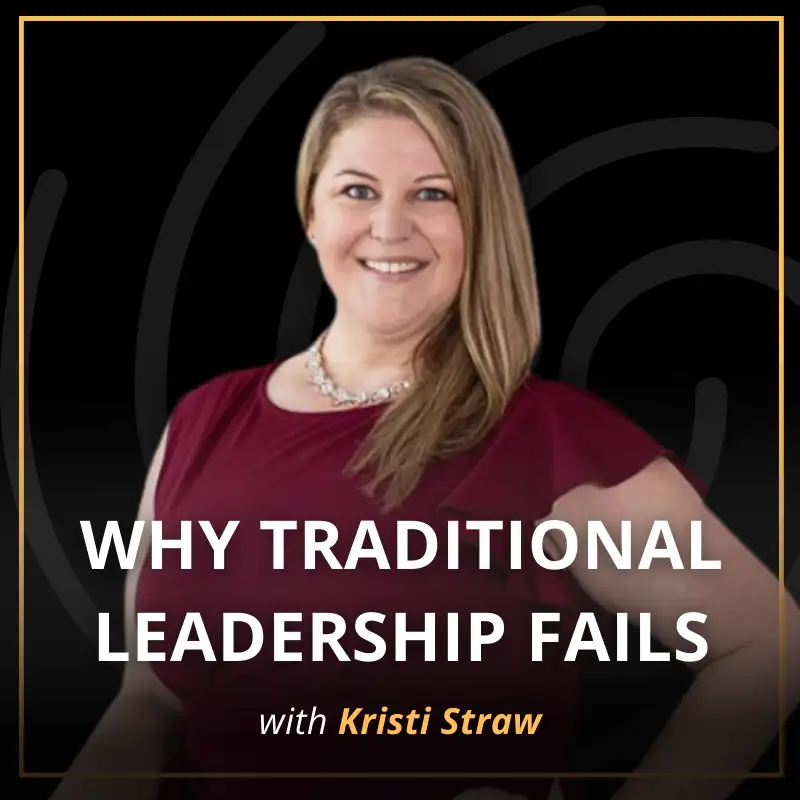
Work-Life Balance Is Broken: What Leaders Need Instead | Kristi Straw | S1 E19
Download MP3The antithesis of a unicorn leader is a shamager, which is a shitty, shame-filled manager.
So the shamager is in fact trademarked and I would like to thank some previously shitty
shaming type of bosses for helping me come up with the genius to do it.
Because those are the problems.
Today's guest is the kind of leader who doesn't just challenge his status quo, she
rewrites it.
Christy Straw is the founder of Impact Legacy Lab, co-host of the podcast, Christy and
Take Array on the Rocks, and the visionary behind frameworks such as Unicorn Leader and
Authentic Authority.
She's on a mission to help founders, executives, and bold women in business ditch the
outdated playbook and lead with EQ, visibility,
and brand driven strategy.
She also kicked off 2025 with a bang receiving two awards, the Globe Street 2025 Women of
Influence and the 2025 Career Mastered National Women's History, Leadership and Action
Award.
Okay, if you're new to the podcast, welcome to our community.
We are thrilled you've taken time out of your day to learn and grow with us.
Before you forget, take a moment to click that subscribe button to ensure you stay
connected with the badass leaders community.
let's do this.
Join me today, Angela Gilnell, on today's episode of the badass leaders podcast, where I'm
joined each week by industry experts for intimate and eye-opening discussions about the
challenges and joys facing the leaders of today.
Listen in and get ready to scale your company, grow your brand, and unlock your full
badass potential.
Now, Christy, why don't you kick us off by telling us about yourself?
And when you do so, one of the things that I'm really passionate about is helping humans
understand others as humans, like real people.
So maybe tell us a little bit about your background, the things that you're passionate
about, and why you're here today.
Yeah, absolutely.
So hello everybody out in the listening world.
I am Christy straw, the unicorn leader.
And honestly, my background is from executive C-suite leadership.
Now having been the founder of two companies and other ecosystem type of communities.
So I'm here really because of rage.
Let me just be honest.
All right.
I'm just going to kick it off with the freaking facts here.
I love it.
I would say that even my most recent uh
founding story of Impact Legacy Lab.
And most people know me through Lighthouse Leadership Consultants and the Unicorn Leader.
You know, I've also created Impact Legacy Lab.
And that's really born from a lot of rage and a fire in my own belly, right?
Watching brilliant and uh high integrity people shrink to fit org charts that are
hierarchical and out of date and not what anyone wants, least of all, the next generation.
And so...
I want to create spaces where people can grow themselves, not just their titles.
So I'm all about helping people rewire visibility and power and their voice to really
match the impact that they actually want to have because that was not what I experienced.
So that's who I am and why I do what I do.
Okay, so let's first off I've listened you're also the host of a podcast of your own and I
love
back and forth on should I have listened to this beforehand because I thought Angela, you
and Christy can't have the whole podcast conversation talking about her podcast episode of
the things that you love because we wouldn't get any to anything new and exciting.
But I will tell you, I will tell you that I loved listening to you talk about your solo
vacation to Guatemala.
I've actually also done, I've been to Guatemala multiple times.
I've done a lot of mission trips there and helped build some medical centers there.
And I also did a trip with a friend over Christmas one year.
He and I were both just kind of like, hey, what do you, do you just want to go there?
And we stayed, so I want to know where you stayed near the lake in Guatemala.
Yes.
OK, so I'm a little bougie at times.
I'm just going to tell you now I stayed in an Airbnb on Lake Atitlan and you will know it
if you look up Airbnbs and you just search for the Airbnb that has a soccer field that
comes with it.
So it literally a beautiful soccer field right there in the backyard of the Airbnb where
many people people from the island would come and play in teams.
And it was awesome.
It was gated.
It was private.
We had our own dog.
my gosh, it was such a great trip.
So look for the Airbnb with the soccer field and that's where I stayed.
Okay, well, I'm sure our amazing producer Katie will be able to find the link to that and
include it in the show notes.
also include the link.
I can't remember, you know, I stayed at the...
It was also kind of bougie, but maybe not to that level.
But it was you have to cross via a ferry and they have a whole bunch of I don't know what
you they're kind of cabins, but they're yeah anyway over there and it was absolutely
gorgeous and I have some amazing photos.
We will also include the link to that in the show notes.
Okay back back to work.
Okay, wait, I love that we did this is like actually Christie.
This is like eating dessert first.
We talked about vacation.
And now we're going to go into
And like, we need more of that in our lives in general.
So I love the contrarian.
Listen, I'm ADHD, so anything that flips something on its head is already how I'm wired to
appreciate it.
So I love it.
I love it.
And for anyone else, maybe who's neurodiverse and ADHD out there as well, guess what?
I didn't find out until I was 43.
It explains a whole lot.
I'm gonna be 45 soon.
So, you know, I'm kind of leaning into this.
So this dessert first thing is right up my alley.
Okay, okay, let's do that.
Okay, we're gonna dig in now, because I know you kicked off 2025 with a bang, and you have
uh two new awards.
One is the Globe Street Women of Influence.
And I know you're a top 1 % LinkedIn thought leader.
So can you talk to us a little bit about how your journey into badass leadership began?
uh Yeah, I like to tell everybody that I took the scenic route.
mean, Dan, I'm a unicorn, so we would, right?
We would take the scenic route, right?
So I've been in the boardrooms of banks, uh wealth management boardrooms, to really burned
out, right?
So we went from boardrooms to burnt out.
And now I'm building a leadership lab that...
actually reflects the authenticity of how people lead, uh sell, and influence.
So I have realized kind of throughout this scenic, lovely journey that most leadership
advice was really designed, I swear, for robots, or honestly just men from the 1980s.
And I'm so over the pale patriarchy, so I'll just say it right now, that I created what I
wish.
I had had when I was climbing my own ladder, which is strategy that honors authenticity
and identity.
No, I love that.
I love that.
And so I know that you and I both share the experience of working in some large companies
with horrific culture that is really soul crushing and
often as well than realizing when we went out on our own or when we realized, wait, we're
going to use our voice and put ourselves in rooms where people are actually going to
listen to our voice and stop putting ourselves in the rooms that they're just putting up
these walls.
And like, are you wasting my time trying to help you?
One of those help me help you moments.
OK.
Yeah.
So what was that pivot point for you?
I know that a lot of listeners
are in situations and especially right now.
So we were recording this in May, 2025.
If listeners, if you're not aware, the country is in a bit of a tumultuous time point.
That's what I'm going to say.
And so oftentimes I coach individuals who they want to be brave.
They want to be bad-ass and get out into something new, but they're afraid.
Right.
And so they keep themselves hostage in the environment that they're currently in.
So can you talk a little bit about your decision when you just said, hey, this is it.
I the world needs more of the authentic Christie.
I'm to go out and do it.
So can you talk about that journey?
Yeah, absolutely.
basically it started with me showing up to a meeting with Puke in my hair.
um My origination story.
I hope this isn't being a short.
Basically it starts with me showing up to a meeting with puke in my hair.
Never would I have thought of that.
Okay, sorry to interrupt, but that just cracked me up.
mean, yeah, criss-crusty puke right there dried in my hair.
And the reason why was because my CEO did not give a flying flip that I was sick as a dog
and literally laying on the floor in the gym of the building.
Didn't care, was absolutely bothered, thought it was super chirpy and dramatic of me to
need to vomit in a trash can.
So I hauled myself all the way down to the gym to try to get myself situated and have some
privacy.
And it was still expected of me to be
the meeting and then the man was angry that I chose to show up to the meeting uh via Zoom
while in the building versus actually in the actual boardroom and literally I thought,
well, I guess you wanted me to show up with puke in my hair.
And I said that at one time and it was like, well, yeah.
And so I thought, no, okay, this is it.
I'm done.
I'm laying on this blue tile floor uh wondering as I'm looking at the dusty ass grout, how
am I gonna go home to my three children?
and say, this is what I've been reduced to.
I absolutely will not.
It was the end.
And so here is what I would say.
That's the origination.
It was the end of Christy as you knew her.
I have buried that woman.
I have said I'm not going to try to be palatable anymore.
And so my answer to you for people trying to build their identity and visibility inside of
the system, the matrix, corporate conditioning, whatever you want to call it, is truly it
being rooted in your authentic authority archetype.
And so that is a quiz that I've created.
You can find it on my LinkedIn.
You can find the link on my website.
It's free.
And so what it really helps you do is to understand how you naturally build trust, whether
it's through
strategy or depth or vision or systems or boldness and by the way I am NOT the archetype
that builds trust through boldness so as surprising as that may seem that is not the case
so everyone can stop
trying to be everything to everyone.
so visibility really can become your lens versus your mask.
And so my answer to you is, for people who are trying to figure it out while they're still
in that environment, first you gotta know who the hell you are.
And this is not a personality test.
It's a true diagnostic of how you naturally hear people, see people, lead people, and
brand yourself.
And so once you have that figured out, my gosh, so much more is in your power and you can
learn to write and to really,
put yourself out in the world in a way that, as I teach in my coaching classes, repel the
people who aren't your vibe.
It's perfectly fine.
We don't have to be for everybody.
That's the first problem with corporate conditioning, is that you're supposed to be
something for everybody, and that's not possible, and also not true.
And so I always teach and coach right in a way that repels people who aren't here for you.
That's fine.
I would rather have thousand people
who are here for me wholeheartedly and really jam with how I roll, then 4,000 people and
3,000 of them secretly despise me.
So get the hell out.
Let's go start writing for the ones who want to support you because everyone else is
either ignoring or just too busy to care or frankly committed to misunderstanding you
anyway.
Well, and I love that because the reality is we we only live one life.
Like, OK, new shock for everyone.
Pause for a moment and realize this.
This is your one shot.
And I need to find this meme.
I saw a meme on Facebook that I just loved, and it was a photo of a shovel digging a hole.
And just because you started digging in one spot, if it's the wrong spot, don't keep
digging in that spot.
Move to a new spot, right?
It goes back to that old adage, the best time to build a tree is 100 years ago.
The next best time is now.
And so the best time to live your life, you let's not regret the years that you've
succumbed to the situation.
Let's pause for moment and say, today is the most present I will ever be in my life.
Now I'm going to own it and I am going to now be the director of my ship going forward.
Okay, so.
We will listeners we will include the link to christy's quiz in the show notes.
Please go and do it I I did it this morning.
I don't know if you noticed if it popped up on your on your thing I did not so I did it
and
actually don't know what all the different options are, so I do want to talk to you about
what those different personalities are because I think it's also really important for
people to understand that just because you quiz in one way doesn't make you superior or
inferior.
It is just really identifying this is who you are as a leader and let's utilize those
skills and accentuate and put more energy and power into them.
So I was listed as an anchor.
So am I.
No wonder we get along.
I was like, I want to ask you what you are.
And so I'm going to, I'm going to read what it said.
So it said, you're the anchor grounded, insightful, and transformational.
And I'm just going to read the first part of it because I want the listeners to then go
and do, do their quiz as well.
And maybe in a future episode, we'll list the full thing of mine, but it said you hold
space like no one else.
You could come to you for breakthroughs, clarity and lasting transformation.
Your gift lies in helping others see themselves differently and I was just like I got
goosebumps.
I was like, yeah, okay This is this is 9 30 on a saturday morning for for those who know
me really well i'm not a morning person at all I was I was inspired at 9 30 in the morning
reading.
Oh So tell me more about what
no, you go ahead.
So, I love that we're both so excited about this.
So tell me more about this framework and how you, and also maybe how you feel hearing me
relay my experience.
Yes.
Well, first of all, relieved because you you never want to build something that sucks.
So I've always been, and that happens.
Like, let's get real.
We build things that suck.
ah And you know, so it's exciting to me, Angela, because so many people have had a similar
experience.
They're like, girl, listen, I took your damn quiz and I'm actually a little annoyed.
Are you in my head?
I don't understand.
so listen, let me tell you like the genesis of this.
It's kind of wild.
So my background is in wealth management.
I've always been in financial services.
was FinTech Banking.
And I attended this conference and I was doing uh my own show with Derek Kenney, who's an
awesome financial advisor, uh former, who sold his practice, and we were doing a show
together.
And so over the course of the days at this Edge conference, I was just soaking up all the
insights of what all of these leaders in wealth management were talking about.
So I wrote them down and I went back and I went to my own little chat, GPT, and by the
way, her name is Lex and she chose it.
And I said, Lex, what can I do with all of these insights?
I wanna create a diagnostic tool.
anyway, months and months after that of like tweaking and reiterating, we now have the
authentic authority, which is really Angela, the reason it gave you goosebumps and I'm so
honored and humbled to hear you say it is because it is truly the intersection of like who
you are.
how you build trust, and then how you naturally communicate your value without code
switching or shrinking.
It is literally the difference between being, I see you as competent, and then being the
one chosen to move forward.
That is what the Authentic Authority Archetype Quiz does for everybody.
Well, and also one of the things that it does, the listeners know one of my favorite books
is Make Your Brand Legendary by Scott Wozniak.
And he was episode one of the podcast.
So listeners, if you haven't listened to it, go back to episode one.
And one of the things I love about that book is I tell people is that it is like taking
Ken Blanchard's Rating Fans from 93 and then turning it into how can you have a customer
experience engine and make it actionable.
He builds into every chapter.
Okay, these are the steps you and your organization need to do too.
So it's not just reading about theory and hypothetical and yeah, this sounds great.
It's each chapter throughout the path is saying this is what you should do next.
And the thing I love about what you've built is you talk about, know, this is what you
are, these are your strengths, but you also list your action steps.
The world we need to be more action minded and I often find that sometimes as motivational
coaches and speakers that we forget to include those action steps to help make it real to
the individual who's collaborating with us.
Yeah, I totally agree.
And actually, that's what came out of this conference that I was at.
I was like, listen, I'm sitting here listening to all these speakers.
That's great.
I feel inspired for like a minute.
I totally understand what they're saying.
Yep, that makes sense.
But there was not like a diagnostic tool that was like, nobody had a real, hey, take three
minutes while you're in the audience and find this out.
It wasn't an experiential keynote.
It was not experiential in the sense that people would leave having felt like, damn, that
was worth it.
30 minutes.
Like just even this diagnostic here is worth the two minutes it takes to take the quiz.
But for somebody to come to a whole entire workshop and keynote about that was just
something that I saw was terribly missing.
At this conference and so many sherm, I'm calling you out sherm, and so many sherm
conferences that I've been to, like get with it.
People want to have an experience during the keynote.
They want to walk away with something they know that they can do in that five minutes
differently.
And I tell people, load it into your own AI engine and figure out together based on these
insights of who the heck you actually are when you're in alignment and you're feeling
authoritative inflow and not in a control and command way, and put that out into the
world.
And write in a way that it just repels the people who aren't into it.
There are so many other ways to focus
on the things we can control and one of them that we can't is what other people think of
us.
Listen, we vibe with others or we don't and it's not a problem.
I'm just going to spend time finding the ones I do.
and surrounding ourselves and then feeding off of and learning.
love the mindset.
know, research shows that people actually aren't thinking that much about us.
We have this idea that everyone around us is thinking.
We enter a room and we think, I, because I like to use I words as well.
I heard that on your podcast earlier today and I was just like, yes, use those I words,
girl.
I, I used to when I was younger,
and I was surrounded by my childhood trauma and everything, I would walk into a room and I
would be fearful thinking, oh, I bet that person thinks I'm not smart enough.
I bet that person thinks this, I bet that person thinks that.
Trust me, those people, they could care less.
They're probably thinking that I don't think something about them.
Who cares?
Stop caring about what other people think about you.
Focus more about being your authentic brand self.
And we're going to talk about branding because I love talking about branding, but I don't
want to jump there yet.
So we're going to pin that.
That's in our parking lot for a moment.
I want to talk about your unicorn leader.
I love that you listed this book.
I will tell you this is a miss because usually when I have an author on the podcast, I
always read the book first.
I didn't realize I didn't realize about the book.
was just like, seriously?
OK, but it's on my list to read.
So there you go.
Can you talk about the unicorn leader, about the framework?
What does it stand for?
How did you develop it and what is the use for it in the business climate today?
Yeah, absolutely.
So I am a bestselling author.
Yes, Unicorn Leader is listed on Amazon.
You can find it.
uh And Unicorn is an acronym for unique, nimble, nurturing, inspiring.
compassionate, optimistic, resilient, and noble.
And so a unicorn leader, right, is trusted way before they speak.
They're remembered a very long time after the meeting.
And honestly, they're the type of people that build teams that don't just perform because
that's what our boss wants us to do.
We believe in the vision and the mission of what we're set out to do.
And so unicorn leader was absolutely the response to the fact that when I was uh hired at
my
recent role um in the C-suite, you know, my executive assistant the first day said, my
god, you must be a unicorn.
And I'm like, well, wait, I am.
I've loved them since I was nine, but why are you saying that though?
And she's like, girl, we have been looking to hire your role for the last nine months, 12
months.
And she said, we've had a million interviews.
I don't know what you did to get this job.
And I'm like, I know exactly what I did.
I'm high EQ.
I'm extremely emotionally intelligent and situationally and self-aware.
And we gotta bring that to this org.
Turns out they really didn't like it much, as I mentioned, the puke in the hair story,
that was really not their vibe.
And so it was just time for me to do my own thing.
so Unicorn Leader is absolutely a shout out.
There are four contributing authors, all of whom are minorities and great friends of mine
and have so much perspective to share that I myself necessarily can't because of the
position of privilege that I sit in.
And so it's really important for me to surround myself.
with diversity and others that I can bring along with me who have so much richness really
to just add to the conversation.
So it's a short read, like I said, I'm ADHD, so it's 101 pages.
I'm not trying to write a Bible about it.
If you need a Bible written about leadership, you probably just might need more of the
Bible.
I love that quote.
love that.
Okay, so first off when you commented about entering into that C-suite role with that
personality and those comments and then I know the story about you leaving that right That
was a recent role I had as well like they had interviewed a gazillion and they finally
found and I think what it is is that I think
Our stories are a true challenge in corporate America that that individuals and I'm not
going to call them leaders because we're also going to talk about the difference between
managers and leaders.
But these these managers of funds and people and organizations, they realize, oh, we need
these skill sets.
Maybe they realize that because they read it in a book or something like that.
They read a stat.
They read, wait, here's what they do.
They read the stat, that high EQ leaders and teams lead to a 23 % higher profit margin
than teams who don't.
Exactly.
Exactly.
That's the stat.
They read that.
They read it.
And they said, hey, I need to hire someone really good with that.
And then they did because both of us excel in that category.
then reality hit.
Oh, wait, this isn't duct tape.
put on something.
This isn't just you do this and it's your token person that's good at this and magic is
no, actually it the the reason those stats are there is because when those leaders are
actually able to lead, it's a difference between hiring a great leader and hiring a great
leader and actually empowering them to
to lead, those are two different things.
So when you hire someone and you say, oh, you have these great skills, but you know, we're
not gonna worry about that right now because we're raising this fundraising and we need to
worry about this instead.
And when you do that, then you're not empowering them to lead.
And I hope they're brave like both you and I, and they say enough.
Or you have the leaders who are true leaders and they realize this is value and this
can...
totally revolutionize my company, I'm going to hire this individual and then I'm gonna let
them do their shit.
uh
so true, but now that I know you're an anchor, I'm gonna do a little,
little opportunity here to share.
Because you and I are both anchors, okay, we are mirrors.
We are walking mirrors of people's own shit and insecurity.
And so the problem was, in my specific instance, and this was at the last three
organizations I worked at, so don't get it twisted, okay, from Kansas City to Charlotte,
the problem was still the same, y'all.
I am a mirror for the insecurity of others.
Because I've already done the inner work.
I've already worked through the shit.
I've already done the years of therapy.
I still do the therapy.
I'm married to a freaking therapist.
it away from the therapy.
And so here it is.
When I'm in a room and I can talk so naturally about my own failures and vulnerabilities
and insecurity.
It only rattles the others who cannot and will not and are too ashamed to sit with the
discomfort of it all.
And then they think, shit, okay, this is somebody who's not only in her zone of genius
when she's talking strategy and next level things, but wow, she's also married with the
empathy part and the humanity part of knowing that there's a lot of failure that.
has become along the way and she's managed to get through it and can talk about that, it
is a natural mirror for what people don't have.
And that is the discomfort that comes when you have an anchor like you and I sitting in a
room.
And so take that and put that up to the C-suite where the egos are already fragile as hell
anyway.
Everybody's trying to keep their job.
And you know, the forks and the knives are out the minute you turn around and the elbows
are sharp, right?
Not interested in any of it.
It's unnecessary.
I'm not here for it.
And so it...
It actually is the reason that when I left and created Unicorn Leader, the antithesis of a
Unicorn Leader is a sham-ager, which is a shitty, shame-filled manager.
So the shamager is in fact trademarked and I would like to thank some previously shitty
shaming type of bosses for helping me come up with the genius to do it because those are
the problems.
We have unicorn leaders and we have shamagers and then, you know, I love a good quiz
y'all.
So you can take your unicorn leader.
uh quiz right there on my website as well.
That's also free.
Find out where you fall on the unicorn leader spectrum from, hey, I have some things that
I'm excited about working on to, hey, actually, I'm a chief unicorn officer and I'm going
to learn how to monetize this.
So let me call Christy up and figure out how to get a brand around it.
I love this, I love this.
Okay, so Katie, we gotta make sure we have a lot of links to put in the show notes.
So we gotta make sure we put this quiz as well in the show notes.
And actually you introduced the next thing.
I'm very passionate about individuals understanding the difference between a leader and a
manager.
And you kind of went through that a little bit, but why don't you, if you were going to
say, you know, in a paragraph, the difference between a leader and a manager, what would
you say?
Yeah, I think it first starts with relatability and having some EQ.
The shamager, the manager, they're absolutely shitty with EQ.
Let's just call it what it is.
Now, a unicorn leader, somebody who has great intelligence, you know, they're gonna lead
with connection and emotional intelligence.
Shamagers, you know, they're never gonna check their own ego.
So they're gonna allow great ideas to pass by if it ensures that they keep someone else
hidden.
Right?
Now, a unicorn leader is gonna say, hey, I don't know everything.
Y'all probably have better ideas than me.
Let's go, let's raise it up, let's figure it out.
A shamager is all about burnout.
They reward that, actually, and they really look for people who have a lack of boundaries
on work and life integration.
I know for a fact, because my last C-suite role, all they wanna talk about was a woman who
would go watch her daughter play volleyball and softball.
And meanwhile, I'm looking at them, they know I have three children.
They know that it's football season.
They know this because I told them in the interviews, did that make me feel the least bit
safe to be able to have any work-life integration for myself, to be able to get to
football games on time or volleyball games on time?
They really idolized that burnout, whereas a unicorn leader is gonna remind the team in
both actions and words how to have healthy work-life boundaries.
Those are the first three that come to mind.
uh I love this so much and I actually love the phrase you use a lot which is work-life
integration.
Yes.
think because the reality is is that I talk and I have a couple blogs and things about
work-life balance.
However, that I think when we say that we go back to I don't know sixth grade science
where we have that little balance thing on it and we think wait it should always be level
and that's not the case.
You have moments, you have seasons, you have times.
um
I'm currently in that with my daytime job running by Elocity where, hey, you know, the
scales are not in favor of Angela getting out and getting exercise and these types of
things right now.
However, I'm building the processes, hiring the individuals, building the systems and
setting the expectations that this is a temporary thing.
It is not a long term thing.
It is when you drink from the fire hose, when you start something new and then you figure
out strategically how you're going to lay it out because
I remember there was this one year when I was running Florence Healthcare and I had in my
family and immediate people surrounding me, had five deaths.
And of those several were sudden.
had a cousin who was 18 who passed away in a car accident.
Someone who was on drugs or is under the influence hit him and his college buddies in the
morning while they were going to hike up in the the northwest and he died at 18.
I had another friend in her 30s who died in her sleep from postpartum cardiomyopathy and
then I lost family members from family and then I
had two suicides.
And I went to like this and this was all in a very compressed period of time.
And I went to the office and what I announced during stand up to all of my team around the
world, I said, here's the deal.
You only live once and Florence will survive if you're not here.
So what I want you to do is get your job done and go to your daughter's dance recital.
Go to the spelling bee contest.
Go to these events.
When you take vacation, your vacation doesn't count if you're responding to emails.
know, turn off your email, delete your Slack app, do all of those things.
Because there's another quote, I really need to master these quotes a little better, but
there's another quote that says something like, your replacement, your job posting when
you pass away will post faster than your obituary will.
Mm-hmm.
Yeah, it's true.
You know, and I, well first, I'm so sorry for...
all of the loss.
mean, the grieving process is obviously not linear and also it never gets, you just learn
to grow around it, right?
It doesn't shrink.
You learn to grow around the grief.
And so, you know, I honor that part you are in your journey.
And I just recognize the beautiful message that you were able to turn that into for your
team.
And that's unicorn leader stuff right there, right?
That's recognizing that, listen, I saw a meme, I'm gonna say it right now.
None of this shit matters.
None of it.
None of it matters.
So what are you really doing?
Like if we're not leading in a way that is joyful and is positively intended and is
continuing to grow ourselves and others, then what really is the point?
Because literally you're on the earth for a certain amount of time and then whatever
happens happens and you're not.
And anything in between there is the good stuff, right?
So I appreciate you sharing that.
And I also think, you know, so many times people think of the balance and the scale.
like you say, when they hear the word balance between work and play, they think of a
scale.
And so I'm naturally wired already to feel like I screwed it up if by two o'clock I
haven't had lunch yet.
haven't, you know, I'm not having any balance.
I heard it failed.
Might as well just keep failing all day.
Didn't balance it today.
in the same spot.
Yes, exactly, digging that hole in the same spot.
And so I so much prefer work life integration.
And here's kind of where I've come to too, from a standpoint of, know, people being
interested in fractional work from me or, hey, will you come be an executive director of
this?
I say the same thing to everybody.
You know, that really depends on the leadership because if the leadership that I would be
reporting to does not have self-compassion and self-empathy,
then no, in fact, I'm not gonna work for that person because if they don't have it for
themselves, they sure the hell aren't gonna have it for me.
That is full stop, full stop, might drop.
Girl, the end.
And that is my litmus test of every single place I go into.
And because I'm a slow learner and I like pain apparently, I should have known that this
last place that I was going to be employed wasn't a good fit when I asked, you hey, when's
the last time you gave great feedback to somebody and what did the celebration of that
look like?
And I had like seven people staring at me like, like I was a unicorn.
Like what the hell just happened?
They didn't even understand the question.
That should have, it was a sign.
I over-read my intuition because we do those things, I really liked it.
It was going to pay me a few hundred grand.
Like, let's get real, right?
Like I was chasing that monkey at the time and I got there to learn it took me three
hours, three hours into my first day when I texted my husband and said, this is not going
to work.
I will not do it.
Exit strategy activated immediately.
I love that exit strategy activated immediately.
Okay.
So one of the things I know that you talk a lot about is redefining leadership from title
to trust builder.
And I will say, and also I love in your podcast, you talked about your favorite Brene
Brown book.
And I think that also ties into this.
So can you talk to us about what that means to you titled a trust builder and then
bringing in that vulnerability component?
Yeah, absolutely.
you know, the first thing is I just think women in general uh are taught to be relatable
really before they're taught to be credible.
And so just that conditioning alone costs us millions and millions of dollars of missed
influence.
Like I'm just going to say it how it is.
You know, you want to be relatable.
you want people to be able to see themselves.
No, the hell I don't.
I'm really not super interested in being relatable.
What I'm super interested in is building trust with people and building trust with people
can look like relatability at times.
but sometimes it's standing in your own authenticity and saying, wow, you know, we have
really different perspectives here, but I respect and value your perspective and I would
like to learn more.
So I used to really believe that relatability was just such a huge key component.
And so I always like to say that first.
And then, you know, another thing that I often think about is when you're in a high trust
industry, which most of us are, because if you're in any type of like a high stakes
environment, most of us are, if you're in any type of a service-based industry,
where a customer is buying a service.
It's super high trust more than anything.
And so that's one of the reasons that I love when people know their authentic authority
archetype as well, because you naturally know how you're wired to build trust with people.
Angela, you and I are naturally wired to build trust with people if it's a conversation
rooted in emotions.
We will sit there, we will go there, we are not uncomfortable with discomfort.
We will kill somebody if they're the first person to talk during a silencing moment
because we know that when the person across from us gets through the discomfort and they
sit with the silence and they get through the other side of it, we've just built a huge
trust bridge with that person.
We're not gonna rush their thinking process, we're not gonna silence them.
Those are ways that we build trust.
I have continued to preach this and it only becomes more evident.
So I hope AI takes over the planet because it just makes my shit sell even faster.
You literally have to be high EQ.
You cannot operate in this AI world.
And it's again, only going to get more prolific if you do not have the ability to relate
and to resonate with people.
It is about resonance.
It's about emotional nuance.
It is about all of the things that corporate America has tried to condition out of.
us.
I love this so much.
in speaking of, and I might put you on the spot a little bit.
So, and hey, we're both humans or it's okay to say I can't remember something.
But what are the different categories of authentic authority?
are there?
Yes, yes, yes, so there's five archetypes.
No, it's great question, I appreciate the question.
There's five archetypes.
So as we've discussed, Angela and I are anchors.
uh Most people mistake me for a catalyst.
That might happen to you as well.
Those are usually some pretty fiery, love the spotlight, absolutely wanna be on video type
of people.
Then we have the strategist, right?
When I describe a strategist, I always like to say that they're really looking at the
patterns that.
I can't see certainly because I'm not wired that way.
Then we have the architects.
I always like to tell people that architects described in a food is like a bento box
because they're very, very structured.
One thing I hear from architects, and I coach a lot of architects by the way, that's my
number one coaching client, and the thing I hear from them is, why the hell do I keep
getting passed up for promotion?
Why am I not being chosen and spoken in rooms that I'm not in?
I'm tell you right now, if you're an architect, the reason why is, your shit works.
You're not the squeaky wheel.
You aren't hanging out in the boss's office trying to find different ways to get an
extension on your deadline or to get more help.
And I hate to tell y'all, but uh being an anchor, there's plenty of times I've done that,
because that's how I'm wired.
lot of great opportunities came from that.
So the architects, just aren't wired that way, so they're not in the rooms when those
conversations happen.
And so that is one of the reasons a lot of them come to me for coaching.
And then we have the visionary, which is the most, um well, the least common type.
And visionaries are your future CEOs.
they're just 52 steps ahead.
They can't be bothered with the small details.
They're like, yo, I need 19 assistants and 42 other people because I'm focused on building
this ecosystem here.
So those are the five different types.
And I would love to hear from people and what they are and tell me if you think it's crap
or great or whatever it is.
Okay, so listeners, you have a couple action items.
One, you have to take the quiz.
Once again, the link will be in the show notes.
And then put in the comments or tag us in social media.
Actually, it's even better than that.
Take the quiz, find out your results, post in social media.
Both of our social media handles will be in the show notes as well.
And let us know where you sat.
In it like what your results were and actually how it made you feel and perhaps Which of
the action items because I think it gives maybe three action items, which the action items
you're gonna do first Because I really think let's make this actionable.
We we only live we don't know how long we're gonna live.
So let's do that
That's it.
talk about branding.
So I love, I love branding.
It is something that I do in consulting as well and work with individuals and teams and
also helping them to understand that you're constantly building a brand, whether you like
or not.
Right.
And why don't we instead invest some time and resources and being very thoughtful and
strategic about building an authentic brand.
You talk to me about, because one of the things that I find when I talk to some of my
clients about branding, especially
individuals because individuals seem to be the slowest to realize they need to work on
their personal brand.
And you're laughing because you know this is true, right?
And so, and the reason I often hear is they say, well, it feels really self-promoting to
do this.
And so can you walk us through, know you're an expert in branding as well.
Can you kind of walk us through, and I'm really super curious about the person, selfishly,
because I'm gonna learn from you today.
I'm very super curious about the personal branding component of it and how you get team
members and individuals you collaborate with to understand this is not self promoting and
a negative thing.
Like why is that even actually negative?
So talk, I'll shut up now, you tell.
Yeah, yeah, yeah.
No, I love it.
It's a great question.
And I'm going to tell you right now why we feel like we're self-promoting and it's a bad
thing.
Freaking corporate conditioning.
Again, girl, I'm writing another book.
This is not Unicorn Leader, OK?
It's called Not Your Good Girl.
And it is all about corporate conditioning.
It'll be out at the end of the year.
And it is all about the uh idea that visibility, especially in leadership, all right,
executive visibility is not optional, okay?
It is your currency.
And so if you don't own your own voice, someone else is gonna narrate your story for you.
And that's what a lot of people kind of come and tell me.
like, listen, I don't understand why I'm being described in this way.
Or people can't describe what I do, but they know it's important.
Or all of these different things.
I'm like, listen, this is a branding problem, right?
I often tell sales teams, because I sell into enterprise a lot for this actual workshop,
the Authentic Authority Workshop, because employee generated content is something that the
next generation absolutely expects.
They expect leadership visibility.
And teams that have employees posting content, they get 563 % more impressions and views
than your own content if you just put it out there as an organization.
So it's actually a sales tool as well as a retention tool because
The next gen isn't coming if they can't have their own content, be a creator and have
visibility, all right?
But then also, I tell sales teams, a lot of times when you don't have sales as
individuals, I'm talking to them, you know, it's not a pipeline problem, it's an actual
positioning problem, especially around the transformation that happens when people work
with you.
And so I coach people from a brand perspective when you're looking at executive brand,
what is the transformation that you provide and how are you articulating that in
everything that you do?
I think now at this point, Angela, people probably can't say my name without somebody
either thinking associated with a couple things, either unicorn leader.
closed mouths don't get fed, because I talk all the time about how closed mouths don't get
fed, or something to do with ecosystem building, because that's how I chose to build my
own empire, was create community and ultimately turn it into an ecosystem.
And so I always tell people, you can't do any of that if you don't know yourself.
So start with where you are, what is your authentic authority?
And then we design sprints and sessions and coaching packages specifically around what
their struggles are.
and how we can help visualize that in a way that gets people the VIP treatment, which by
the way is visibility influenced and paid.
love all of those things.
mean, paid is really nice, but the rest of it is.
And I think too, it's if you're in a room.
So I had a previous leader who was a great human being, okay?
But they said to me one day, you need to be less brave and less badass.
So the listeners know that's my hashtag, be brave, be badass.
And I remember, I distinctly remember that moment.
I heard this individual say this and I thought I'm in the wrong spot.
I'm not going to dull my shine to be less brave and much to you.
think one of the things that I love is to think about what rooms you want to be in.
You want to be in rooms that can appreciate you for the skills that you bring.
And also I love that for like 10 years when people see something that says badass on it,
they buy it for me.
And I intentionally fell into that branding and I think I got lucky and unintentionally
falling into it.
And now of course I'm amplifying it and helping other people to own those things because
just having people appreciate that and know you.
And also I remember one employee said to me one day, he was like, well, as Angela always
says, we're going to build a company that is scalable, sustainable and robust.
I love that you said that because those are the words that I say all the time.
Beautiful, And I had someone else say, it's annoying.
You say that stuff all the time.
And I said, I'm saying those three words because they're critical and I want them to
imprint on people.
And so then when someone said that, I was like, yes.
OK, my job is done.
And that's thing, and the person who is like, uh you know, listen, let me just tell you a
little thing.
The reason I'm even writing the book, I'm Not Your Good Girl, is because we're gonna talk
about rebellion, right?
And what data actually shows about ambition, approval, and power, and how the world worked
relentlessly to create an empowered woman and not a damn soul in the executive world
honestly knows how to handle an empowered woman.
And so that is what I hear when you share that part.
And I think of so many other times that people would say things or shut me down,
just similar little microaggressions like that, right?
Really come from their own insecurity because how many people talk about stuff but then
don't execute, okay?
That's like 99 % of the world.
And then the other part of the world is like, well, I don't wanna suck at something new.
I'm perfectly fine to suck at something new and I'll do it right out loud in front of
everybody.
Oh, absolutely.
I love the phrase don't compare your chapter one to someone else's chapter 10 and guess
what those people chapter 10 They started chapter one.
So go and start your book at chapter one and then test it out And if you love it continue
on the journey, and if not, don't keep digging in the wrong hole
Yes, I absolutely agree with you.
And so I'd love to hear you share that you have turned that into something that obviously
is now all over the airwaves.
Frankly, that's how I feel about unicorn leader.
I sit and smile my ass off knowing that people from my past who have always called me a
unicorn, my last role who said, you must be a unicorn because we've been looking forever
to hire this role.
Literally, I smile as the bank check.
just keeps on rolling in from these book sales and these workshops and these keynotes.
And frankly, I named my keynote that I give all around the world, uh Ping Pong and Pizza
Won't Fix Your Culture, because that place had some ping pong tables and thought it was
gonna get it done.
No, it's not.
So I love that you took things that were used some way in the past in a non-positive way
and have turned it into something that's getting you VIP, visible, influential, and.
Again, paid and paid.
love that.
Okay, I want to talk about AI because I will say in my work I'm really involved at Georgia
Tech and Georgia Tech is now like the international excellence in AI and I'm continuing to
empower and talk to people about like let's not be afraid of it.
Let's understand and I did an episode with Eric Daugherty earlier in the podcast on AI.
So listeners, you can go back and check that out.
But I strongly believe that smart individuals
smart leaders figure out how to use the best tools they have.
They figure out looking at a tool.
Okay, this is what the tool excels at.
These are some of the areas that maybe it doesn't.
And this is how I'm going to optimize it towards success.
So I know you also, you've talked a lot about AI right now and I can't remember your AI is
Liza.
What is your AI's name?
Lex.
Lex.
Okay, I was close.
Let's talk about AI powered human first leadership and what that actually looks like in
practice.
Because I know that's a topic that you like to talk about.
Yeah, sure.
So I actually just did a whole workshop for 50 attorneys at a title company and law firm.
Had me come in, did some consulting, and then a workshop for them all around AI.
Like, first of all, in case anybody doesn't know out here, attorneys aren't real down with
that.
So it was a really fun, thrilling couple hours to really kind of try to open up their
minds.
And so what I was trying to do was meet them where they were in this conversation.
And a lot of their concerns were naturally, you know, being an attorney has like year,
hundreds and hundreds
of years of prestige around it and precedent and all of these things.
And so they're worried about that and anybody thinking they can be anything.
And here's what I would say and it's the same thing I said to them.
Number one, AI is already here.
So you can not like it, you can dislike it, you can vow to never use it, you can do
whatever you want, but just make no mistake, it's here.
Number two, it's not going to replace as much as it's going to enhance and add people
move.
faster, with more clarity, and with more alignment with what they're trying to do.
I, as an ADHD person and a squirrel for a brain, love that AI can help me generate emails
that are super direct, super to the point, give everybody extra minutes back in their day,
because they're not trying to figure out what the hell the squirrel was even trying to
say.
All of these things, right?
So, super helpful.
Also though, I think when you make friends with your AI,
it really can become an extension of you in capacities that the human element isn't
needed, right?
So uh automation, all of these things.
And so really just helping people understand that.
And honestly, the people who are super concerned sometimes have a right to be because if
they're not people who lead with a humanity heart-centric approach,
then yeah, I think you should be concerned that you're gonna be replaced by AI because why
wouldn't you be?
Absolutely.
I love that.
You know, one of the things I love as well about AI is that each of us are individuals and
we have our own unique skill sets.
Okay, and some of us have the ability to write things in a very empathic way and some
people say things and it's just like, oh, is that really the way you want to say it?
You know what AI can do for you?
You can write the email and then you can copy it and say to your AI, hey,
rewrite this and make it more empathetic or, you know, or tell me a different way, you
know, read this and give me some different ways I can ingest this because then what it can
do is it can it can transform and translate that conversation between individuals who I
like to believe everyone really means what most people mean well at their hearts.
So I always lead with the fact that if someone sent me something, they really mean well.
And if I interpret it the first time really harsh, then maybe copy it and say to AI, hey,
how would you interpret this in a more empathetic passion?
And then it helps me grow as an individual because it also helps me learn new words and
new phrases and new things that allow me, because I'm all about being lifelong learners at
the Agen group.
That's one of our values.
We're lifelong learners.
We like to know humans as humans.
And I think we forget that AI, while it's not a human, can, because it's not a human, it
doesn't judge in the same way that we do.
And it can help us actually
take a step back and look at things from different angles.
you
Yes, I totally agree.
I think one area that it specifically helped me is I'm not great at giving directions.
I it's it's a feedback I've received my whole life.
Like girl, you skipped like seven steps.
What the hell?
OK, well, also now that I know I'm ADHD, that feedback makes sense.
And so I would have stopped trying to twist myself inside out back then had I known and
just said, OK, writing instructions is it's not it's not what I'm presenting.
It's not the outcome.
It's that I'm not great at being clear about what to do next.
And so I have absolutely
trained my AI to be like, listen, this is not something that I'm good at, so I need you to
step in here where I'm not and provide this.
And it's been great because I'm not sitting here racking my brain trying to figure out why
everyone else isn't 34 steps ahead like I am, because that's just how my brain works, and
how I did a really bad job of helping people get to the same place who have a brain that
doesn't work like mine.
And also, this is why you should put your authentic authority archetype into your AI,
because you are teaching it also this is how and why.
This is also why sales teams and leaderships buy the workshop and we come and do this with
their teams because now they can tell their AI, hey, I have this teammate named Susie.
She's an architect.
uh I am not wired that way.
I am an anchor.
How would you relate this little bit difficult message to her in a way that's gonna be
motivating?
This is where you bridge the gap between the way that you're wired and seen as an
influence, as a difference maker, as a salesperson, as a leader, and the people that you
lead, or the people that you sell to.
Wow, that is so powerful.
I think that's like a life hack.
that smart people should adopt.
Why?
Why sit back and not just dig into it?
Okay.
So one of the things that I love in life and I've been made fun of for this, but I love
conflict resolution.
And because I love it, I also love to hear how others deal with conflict resolution.
So Christy, what is your method?
Well, my first method is to just say what isn't being said.
So I am really great at listening for what people are not saying.
I can recognize it very quickly.
And you know, I just like drop that elephant or unicorn in the room, whatever you want to.
call it, um clearing space and creating a container and that has to involve psychological
safety which is why high trust environments and leadership is so important, but really
creating the container for saying, this is what I think the problem is behind the problem
and the root from the pain is this, is that true?
And then again, not breaking the silence, waiting, sitting in the discomfort as people
kind of come to terms with the fact that I literally might have just wrapped up 10 years
of trauma in two sentences and I've only known them for four minutes.
I don't mean to.
I really, truly don't.
I don't even understand sometimes that it pisses people off that I'm that way.
But it just is how I am and it is the way.
And so the way that I move through conflict resolution um is using compassionate
communication, right?
um I use nonviolent communication.
There's giraffe language.
And the reason it's called giraffe is because the giraffe is the largest uh hearted land
animal.
Or there's Jekyll language.
And the Jekyll is the mammal that has the smallest heart uh as far as uh like the size is
concerned.
And so Marshall Rosenberg created nonviolent communication and it's what I've been coached
in for the past seven years.
And so I really approach.
all conflict through have I created a container of psychological safety?
Have I done a decent amount of personal disclosure to encourage somebody else to feel that
they're not being judged and I'm here to really actually just connect?
And then am I using compassionate communication and am I communicating by way of feelings
and needs?
And I always like to tell people if you don't have a feelings wheel, Google it, email me,
I'll send you one.
I've taken feelings.
Put it your car, girl.
Come on now, we have it in our car.
Those kids love that feelings wheel when they're.
is amazing.
Yeah, like that's real though too.
And so I always say, I'm like, the C-suite, right?
Like financial services, this is why compassionate is the C in the unicorn leader
framework.
The C stands for compassionate because they were not that.
And they would have rather seen that I literally embezzle money than bring a feelings
wheel into the C-suite.
Like it would have been more comfortable for them had I just embezzled the money.
And so I say this uh half in jest and half being dead ass serious that.
So much of conflict resolution is about people truly being okay with discomfort.
Full stop.
You one of my favorite books is Radical Candor and maybe a gentler version is Making a
Manager.
And I recall, I loved working with Ryan Jones, the CEO of Florence Healthcare.
We made such a great team.
But I remember the first day that I had no idea that I was good at conflict.
I was clueless.
And one day it came up in the executive coaching and stuff and Ryan said something like,
well, Angela is amazing at conflict.
And I was just like,
Wow, and now I'm going to own that and I love it.
Because that is so rare, Angela.
Well, we should all want it to be less rare.
And so listeners, in an effort to make it less rare, please check out, did one podcast
episode recently, which was a montage of some other gas on conflict resolution.
I also read a blog post for a podcast on conflict resolution, and we are gonna have future
montages, which we will include Christie's snippet in a future montage.
So make sure you subscribe so you don't miss those, because that is really important.
I want...
I want individuals who are comfortable with conflict to become less rare and it become
more the norm of amazing leaders.
Okay, so can you finish this sentence?
A badass leader is someone who what?
Ooh, okay, uh okay, I got it, I got it.
A badass leader is someone who builds trust without shape shifting, without tone policing,
and without self abandoning, right?
And makes room at the table and in their horseshoe for others.
I love it.
love it.
Okay, so what's one bold move a leader listening today can take this week to start
building their authentic authority?
Yeah, well first take the quiz, right?
Get a ton of information, take the quiz.
But then I always tell people, know, do an audit of your last five or six meetings that
you've had.
Where were you playing it safe instead of really standing in your true authentic
authority?
And then in your next meeting, once you have that info and you have that insight about
yourself, lead with a point of view versus simply a PowerPoint.
I love it.
love it.
Okay, so it's a requirement this podcast that every guest has to give their favorite
motivational quote.
I already know what yours is because I listen to your podcast.
So reminder to listeners, Christy does have a podcast.
It is Christy and Tinkeray on the rocks.
And I did notice you're on all platforms.
I'm a YouTube person.
So I was stalking your YouTube channel.
oh So listeners, will.
Even the only person.
I think I have zero subscribers.
for actually hit because I subscribe today.
Okay, great.
to YouTube so I gotta figure it out.
There you go.
You have five subscribers today.
I'm your number five on that list.
you.
Yes.
And we will include the link in the show notes.
I do know in a recent episode you talked about motivational quotes, so I know what you're
going to say, but the listeners don't.
So what is your favorite motivational quote?
Okay, it always has been, right?
I'm gonna give two.
The first one is, and it's mine, close mouths, don't get fed.
Open your damn mouth and get and ask for what you want.
That's the first thing.
But my real actual favorite quote is by none other than the beautiful Maya Angelou, that
people will remember what you said, they may not remember what you did, but they are
always, always, always gonna remember how the heck you made them feel.
Amazing.
I absolutely love it.
Well, okay, a couple of things now remind listen Go ahead and tell the listeners how they
can find you and they can learn more about you
Yeah, the best way to find me is find me on LinkedIn, Christy Straw, Executive Strategist.
You'll find me right there.
I've got a unicorn in my headline.
Find me there.
Awesome, awesome.
And we will include those links as well in the show notes.
And is there anything you hoped we'd cover today that we missed out on?
No, not really.
Like, I think we covered everything.
I think what I really just most want people to understand is that, you know, trust in your
own authenticity is really all the influence that's left in the world, right?
So that's not built through silence.
Find your voice and don't you dare let a single person tell your story that's not yours.
Absolutely and be you because everyone else has taken right?
Well, thanks Christy for adding the badass in today's podcast.
This has been absolutely amazing m
you.
Now I'm so grateful to be here.
I can't wait to connect further.
Thanks for joining me for today's episode of the Badass Leaders podcast.
To hear more interviews with industry experts and learn how to grow your career and
leadership potential, be sure to like, subscribe, and turn on notifications to ensure you
do not miss future episodes.
This podcast is a production of the AGN Group.
To learn more about the AGN Group, visit our website at theagngroup.com.
There you can discover more about our services, which include hosting workshops,
management consulting, brand strategy, keynote speaking, and more.
Follow us on all social media channels shown on the screen and displayed in the show
notes.
And until next week, be brave and be badass.
Creators and Guests