Redefining Tech Leadership: Leadership Lessons from a Tech Trailblazer | Tracy Lee | S1 E13
Download MP3People who are more product focused, who will ask questions, who kind of care less about
how it gets done, but more that it gets done and achieves a business goal.
Those are the types of engineering teams that will be more successful in the future and be
more successful right now.
Welcome back to the Badass Leaders podcast.
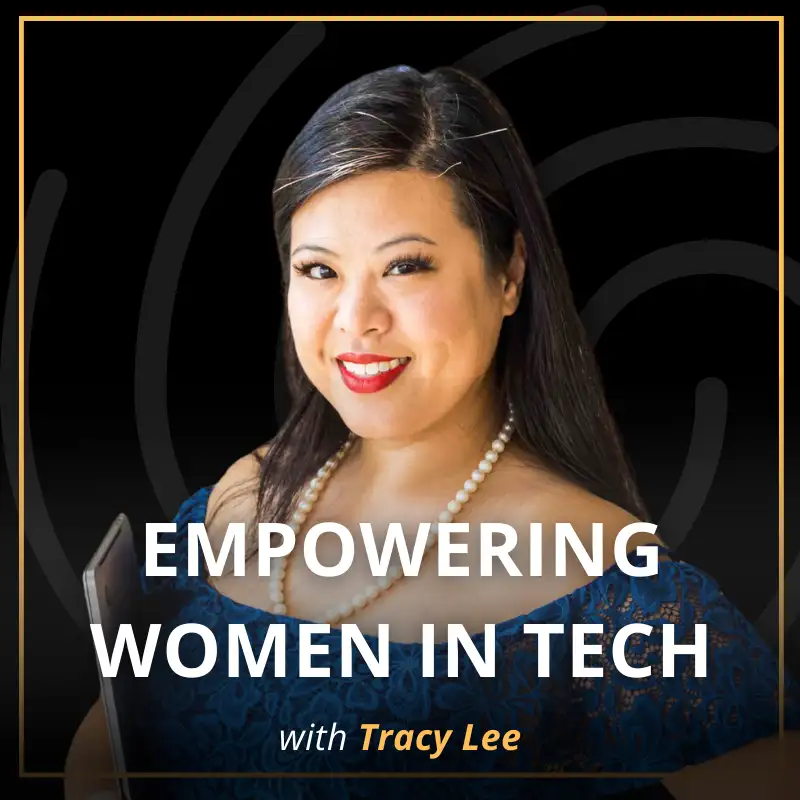
Today we have a truly inspiring guest, Tracy Lee.
Tracy is the CEO and co-founder of This.Labs, a leading software consultancy that helps
businesses solve complex challenges through technology.
With a strong background in both business and engineering, Tracy is not only an
entrepreneur, but also a Google Developer Expert, Microsoft
MVP and GitHub star.
With years of experience leading and scaling engineering teams, she brings valuable
insights into leadership, hiring, and the evolving role of product focused engineering.
Okay.
If you're new to the podcast, welcome to our community.
We are super excited to have you here and we are really grateful that you took time out of
your day to learn and grow with us.
So before you forget take a moment and click that subscribe button to ensure you stay
connected with the badass leaders community And if you leave a comment, you'll get a
personal response from me.
I would be very grateful.
Are you ready?
Let's do this So join me Angela Gill Nelms on today's episode of the badass leaders
podcast where I'm joined each week by industry experts for intimate and eye-opening
discussions about
of the challenges and joys facing the leaders of today.
Listen in and get ready to scale your company, grow your brand, and unlock your full
badass potential.
Listeners I am as I said in the intro very excited to have Tracy here Not only is she an
amazing human being an amazing badass leader as you're going to find out but she's also
your friend of mine so Extra awesome, but why don't we take a moment and why don't you
introduce yourself and tell us why you're here today?
Yes, well, I'm here because you invited me.
My name is Tracy.
I always say you can follow me on Twitter at Lady Elite or on LinkedIn at Tracy S Lee.
You know, it's interesting because I've been doing startup for all my life.
And what I really realized in my last startup was one thing that I really enjoy doing is
bringing people together all the time.
Right.
So I kind of do that.
I mean, this thought is my second successful company, if you will.
I've been doing it for about eight years now and we are a software consultancy.
So
coming from the Silicon Valley, very lucky to have amazing clients.
mean, tons of amazing logos.
Some of my favorite partnerships these days are Wikimedia, DocuSign, Stripe.
You know, if you're kind of like in the tech geeky world, Century, Twilio, Cloudinary,
those types of folks.
And then a lot of really amazing other brands like Mailchimp.
we love just doing application development.
think developers like to solve problems and help people.
And the fact that you can do that through technology, I think is really amazing.
love, this is not one of my prepared questions, but solve problems and help people.
That is huge.
Can you tell me a little bit more about, because as you mentioned, you've been an
entrepreneur your entire career, which is amazing.
You've probably had a lot of ups and downs throughout that journey, so we should talk
about a couple of those.
But how did you land on, because I've worked in software several times and never really
thought about it until you just said that about developers and people liking to solve
problems and help people.
So how did you
really land on that.
How did I land on wanting to use software to help people?
Well once upon a time I had a boyfriend
And he was wearing this shirt and it was like this little squirrel looking thing.
And I was like, what's that?
And he said, that's the, I forgot what it was, like the Ember, Ember.js has this little
mascot, right?
And that's how I got introduced to Java.
I was like, what's JS?
He said JavaScript.
said, like Java, know, like the typical thing that like everybody does.
I had been coming from being a non-technical co-founder at a startup.
That company was getting acquired as that company was getting acquired.
I met him.
And then I still remember because actually, you know, we weren't getting acquired at that
very time.
I think probably like six months into the relationship, then then the company was
acquired.
But at that time, we were trying to figure out how to scale the business and do a little
bit of a pivot.
And as we were going through that pivot, I would come home with these problems.
I would say, my gosh, this is such a hard thing that we're dealing with.
And for about a week, he would
you know, after work, come home, I would tell him a problem and he said, just give me five
minutes and he would write a script to solve my problem.
And like, what year was this?
Because this is pre-AI, so it's not like he was going and, you know...
You literally wrote a script.
Exactly.
This was probably, I think it was 2014.
OK.
Yeah.
Yeah.
Yeah.
And then by the end of that week, he had kind of eliminated one person's job.
And at the time, I was paying that person, I think, $40,000 $50,000.
And I said, my gosh, this is so amazing.
So fast forward, that company got acquired.
And then
through that time, said, well, know, I mean, maybe I should learn how to code.
So, you know, it's not very often when you're kind of grinding and hustling and start up
that you can stop and learn a new skill set, right?
But at that time, you know, for those who are familiar with the web, 2015 is kind of when
the web exploded, when all these opportunities started happening, all these new
technologies, I mean, really a lot of innovation, right?
And so I was very fortunate to learn how to code at that time.
And I don't know.
just, you know, I kind of hung out for a while.
Three weeks into my coding journey, some guy on the internet asked me if I would give a
talk at a conference.
And I said, what are you talking about?
Like, I'm three weeks into this.
Yeah.
And and I said, sure, I guess so.
And so I did.
And, you know, it was well received.
And I was just talking about my journey and learning how to code.
And then I said, okay, well, let's just keep doing this.
So gosh, mean, 2015 on for a few years, I was speaking at like four to eight conferences a
month.
mean, I was just traveling around the world.
Yeah, I was just having fun, right?
Like I didn't really have a job necessarily.
And then about a year and I said, you know what, I should probably do something.
And then I said, well, let's start a consultancy.
So started a consultancy.
And honestly, was just because I surrounded by so many amazing people.
Like all my friends were core team members of different frameworks, technologies.
I love bringing people together.
So I just said, okay, let's all start something together.
And that's kind of how this thought was born.
Yeah, and we should mention that sometimes people love doing things, but they're not great
at it.
And you are great at bringing people together.
You were born as a connector and you will always be a connector.
And it's huge, especially in the Atlanta ecosystem.
We think about a lot of the work you're doing right now and the life sciences space and
helping women bring women together.
So why don't you tell us a little bit about that?
So you run this dot, which is software consultancy, but you also have like 10 other
projects.
that you're working on.
What are some of the other passions that you have?
I mean, I think everything kind of boils down to you know, I think you know, this thought
is a consultancy right like I've never really Sold, you know, we don't have salespeople
right?
guess I am a salesperson if you will, but I don't really you know don't go out and you
know
Beat the streets or you're not cold calling constantly.
Right, right, right, exactly.
And I really believe in the power of building community because like that's how I built my
first company.
That's how I my second company.
You know, I still remember, you going back to this boyfriend, he kept like, you know, we
were dating, he was talking about all these people like, did you know that this guy, you
he's like does all the stuff on the Internet.
And I'm thinking.
Are you just talking about they're on Twitter?
Like, why don't you know, I'm on Twitter.
Like, we just talk to these people.
And that's kind of how it started.
And because I was just building community in the JavaScript ecosystem at the time, that's
kind of what inspired me to, you know, start this company.
Right.
You know, fast forward, I feel like, you know, as entrepreneurs, you know, you kind of
have to reevaluate your late your life every five to 10 years or so.
Yeah.
And so, you know, this thought now.
going on eight years, or going on nine years this year.
A few years ago, I kind of stopped and started to think like, well, what do I want to do?
Do I want to keep doing this thought?
And the answer is yes to this thought.
But then I started thinking, well, what do I want to do?
What kind of impact do I want to make in my current job?
And how do I want to grow in the next five to 10 years?
So I kind of looked at the ecosystem.
At the time, we were working with people like
Moderna, Novartis, Roche, Oro Ring, those types of folks.
And I think that's been some of the most impactful work that we've been able to do.
I think the reason is because you know, generally developers, you like helping people.
But like when you can make impacts, right?
I've been able to see myself make pretty big impacts on the web by just sticking people in
a room and having conversations.
So how do I bring that to the Atlanta ecosystem and do things in the kind of like the
health and life sciences space so that we can all work better together?
What made you focus on the health and life?
And that's how we met was through that because that's been my passion throughout my entire
life is that.
However, your brand for this dot really is across all industries, right?
It's not focused in that.
what really, and I know that you're super focused right now and I'm grateful because it's
very helpful to me and my teams.
But what is it that really was a calling for you that you navigated in that direction?
I think I just, you you just pick and choose sometimes and see what happens.
And so I kind of picked and chose and saw what happened.
You know, we do a lot in the financial services sector as well, right?
But like, again, in health and life sciences, being able to, you know, impact lives in
that sense.
I feel like...
Not only do we, as we get older, start looking for, OK, what's the impact I'm going to
have on this world, if you will.
Exactly.
But also, I think the younger generation that's coming, they don't want to just code.
They want to do something that is meaningful.
Yeah, yeah, they are very, what is the phrase?
Very purpose-driven generation.
yes.
And so I think generally, like, the world is becoming more purpose driven, if you will.
So being in the health and life sciences space, I think really helps that because, you
know, it keeps my developers on my team excited and engaged generally.
And again, I mean, you're able to you're able to make pretty big impacts with what you do
with development.
I used to say when we were, so we were building Florence Healthcare at the same time.
I started in December of 2015 and Florence Healthcare is a document management company in
the life sciences space.
And what I used to say to people is that document management is not sexy.
Advancing cures is sexy.
And I think then when they could make that connection, yes, we're building code to do this
document management for these clinical trials.
that are advancing cures and helping to save lives, then they could use those skills
towards a greater.
good.
Yes, yes.
And I mean, you know, again, I think it's so funny because, you know, baby boomers
complained about millennials, I think it was, right?
And millennials are complaining about.
We all complain about the next generation without realizing that they're living in the
space that they have and thriving in that, right?
Yeah.
Yeah.
But I mean, it's an exciting space to be.
I mean, we still continue to do work outside of the health and life sciences space.
But I think there are so many amazing women in this space, too.
I don't know what it is.
And I also feel like Atlanta's thriving in that ecosystem.
Totally.
I think with AI as well, you're definitely seeing a lot of movement in the health and life
sciences space.
I'm sure other industries as well, but I don't know.
There just seems to be like, I don't know.
I like it.
love it, so I'm grateful for that.
Actually, I want to tie to the woman part because we were earlier this week at an event
for International Women's Day that you helped set up and run.
And I was just thinking about something you mentioned a moment ago when you were talking
about the coding, right?
And your boyfriend would just go and write a script.
Like he did that, probably did that.
And I love the moment when you said you started doing things and then you got asked to
speak at a conference when you were three weeks in.
and I'll just play a stereotype.
A lot of women would say, no, I'm not qualified.
I can't do this.
And historically, a lot of men would jump in and say, absolutely.
And I feel like your personality, you've really crossed both of those barriers and
connected and really helped to empower women to jump in in new ways.
Can you tell me, one,
Where did you find your voice?
Like were you born and you were born to like, I can do these things, I am woman, hear me
war?
Or was there a pivotal moment in your life?
I don't think so.
Honestly, I still remember my first company, right?
So when I was 18, I went to this jewelry show and my friend from high school was actually
there and his parents were actually in the jewelry business.
So was like, I'm gonna buy all these, and it was amethyst and jade and pearls and things
like that.
But I was buying these strands of beads to play with and then he,
He basically gave them to me for free, right?
Because it's all his, you know, uncles in the space.
So they're like, yeah, whatever, take whatever you want.
Right.
And then that weekend, I remember just sitting there and making a ton of jewelry on my
boyfriend's bed.
So we had a queen size bed.
And by the end of the weekend, I had all these all these earrings that I made.
And so I said, well, I guess I'll sell them.
And then I just started a jewelry business.
So I don't know what it is about what I
my personality, but I think it's just, I've just kind of always been like that.
And I think so I can appreciate that because I think the same for me when people say,
know, how did you learn to be resilient or how did you and, you know, my story, you know,
I was raised in a very abusive childhood, but I I'm grateful that I was just like, no, I
can do this.
Like I have three brothers.
I see them put their pants on like they are just like me, right?
Like if they can do this, I can do this.
And I love that.
And actually the thing that I love is the voice that you have in the community to help
empower other women leaders to reach out to that.
So I think that is amazing.
I want to talk a little bit about hiring.
So, you you've built and scaled many teams and not just at this.labs, at all of your
companies, right?
So a common
question I'm getting right now from people are how do you hire?
What techniques do you hire?
What's your secret sauce to hiring?
Right and I'm often thinking I don't really know how to answer this question.
So you because you've done it in different fields multiple times what would you say that
your strategy for hiring is?
I think when I look at hiring these days, I always look for culture ads, not culture fit.
Yeah, tell me more.
That was another question I had.
That was actually the very next question.
You're looking at my note cards.
It's not there.
Yes, yes.
Well, you know, I think like...
There's this idea of group think, right?
And there's this idea of, OK, if everybody is the same, it's obviously not good, right?
Diversity in diversity matters.
But then there's also this idea of you want to hire people who are better than you.
And that's so important because you want to be able to learn from more people around you.
And you can't do that, especially at the top.
Like you need to do that by hiring better people than you.
So we definitely try to do that at this.
I think one of the things that I
made a big mistake on.
my last company, Dishcrawl, we were hiring 20 people a week.
Wow.
Yeah.
So it was really crazy.
We were scaling like crazy.
So how long was the company?
many employees did you have when you sold the company?
What was that?
What did that look like?
It was like I think at a hundred and something when I sold it but we had scaled up to 250
it was a very like You know, we we basically we have this model where we had ambassadors
that we hired full-time all around the US and Canada Okay, and so there were these like
little as little mini Tracy's Well, that's what my my operations person you know about
You know, you're a great operations person, but Amy was my operations person when she came
in.
She was just like, how do I scale Tracy?
Yeah, you know, I love this.
then so she like figured out how to operationalize me, you know, my brain.
And then we just scale.
You know, once we figured out we scale, I mean, from 15 cities to 125 cities.
Wow.
Every single per in like four months.
And that's like.
people on the ground, know, 125 people on the ground.
Wow.
In just a few months.
So it grew like crazy.
You know, once we finally figured out how the heck to do it.
But I think what ended up happening was, you know, so funny because I left corporate
because I was so sick of there were these like older women at the time who, know, eight
o'clock is when we're supposed to be at our desk.
In the morning?
Yes.
And I swear to
a bad day in the morning.
But these women, they were just like, you know, you could see them scowl because I was
five minutes late.
Right.
I was like, oh, my God, do you have anything better to do with your life?
And so I just really hated that environment.
And so I I've really shortly left there after.
But because I, you know, I'm hiring 20 people a week is crazy.
And so because I let kind of like.
that get away from me and I wasn't doing the initial hiring and things like that or doing
a vibe check if you will.
I ended up with this like mean girl situation in my office.
wow.
And so you know kind of like wake up one day and you're like wait a second like I
literally am in the situation in which I didn't like that I left corporate for.
Right, right.
Yeah.
That sucked.
Yes, yeah, yeah, because I know you're a big culture person and I know things I know about
you is you're a huge culture person.
You really care about human beings.
You want to make a big impact in the world and to think, wait, I wouldn't work in this
environment.
How have I somehow created an environment I wouldn't even work in?
the whole like you can't sit with us.
Haha.
We're so it's so cute.
Like no, it's not cute.
No.
Yeah So so that really annoyed me so with with this dot and it took a long time to get
that out Yes, I a long time
lot of drops of vinegar spoiling milk.
my, I remember, unfortunately, finally letting go of somebody who just like, you know, and
then her best friend, were afraid to let her go because her best friend worked there.
And so when we finally let her go, her best friend was like, thank God.
Now I can enjoy my work.
And I'm like, my God, that's so awful.
the reason why we didn't let her go is because we didn't want to let her friend, we didn't
want her to lose her friend who was a very high performer.
So I don't know, it's just, but again, you're like mid to late 20s trying to run a company
that is going so crazy.
These are mistakes that people who are late in their career make to be super clear.
So yes, I mean, I've been in situations where you're like, okay, and I talk a lot on this
podcast with guests about the, that single drop of vinegar, spoiled milk and brilliant
jerks.
you know, brilliant jerks are those people that are really good at numbers, but they are
jerks to everyone else in the company or even to the customers.
don't like all of these different factors, right?
So many companies and
so many individuals for one reason or the other are afraid to get rid of this person.
And yet the studies, the research shows that if you get rid of this brilliant jerk,
everyone else rises to the occasion.
Yes.
Yes.
Well, actually that brings up a really good point because I think a lot of time women were
like, okay, you know, we can't take a vacation.
We're holding everything together.
Like, you know, what's gonna happen?
Like nobody else will do this, this and that or whatever, right?
But you know, sometimes, you know, sometimes you look at I mean, it's not just guys.
Okay, but like let's just take men like a guy, for example, right?
Like my husband, you know, my husband, you know, like, would the world come to an end if I
wasn't there and everything wasn't running?
No, I guess it would kind of just get figured out.
Right.
But like, feels like, no, like you are not doing it right.
I'm talking about like managing all the babies.
Right.
But I think that's the same thing.
Right.
Like if you let go of that, like space will fill in and it'll be OK anyways.
Right.
right, right.
Yeah, we are super paranoid that if we lose this one factor, the world will come to an
end.
And yet we find out that when we get rid of this factor that's a really negative factor,
we're just keeping it for fear, right?
It's like the duct tape holding things together.
That then when we get rid of it, that we actually allow the healthy bonds to form and the
people that maybe need to grow into that responsibility or the reality that, if it's not
done my
Is it really the end of the world?
Probably not.
Kind of thing.
So then let's dig a little bit more then into culture fit versus culture add.
love, I've never heard that philosophy before.
I love it.
So tell us a little bit more.
How do you define the difference between the two?
I think culture fit, you're looking for somebody who's going to fit into your culture
versus somebody who is going to change your culture or add to your culture.
And what I mean by that is, hey, your team might be really good at X, Y, and Z, right?
But you really need expertise in, let's say, product or something, right?
I think a lot of times, for some reason,
A lot of people hire to think like, can I manage this person?
And when they feel like they can't.
no, we should pause on a moment, right?
That is so true.
And oftentimes I think that when, I recently had a conversation with someone that was
talking about something very similar to this.
And I think that...
If you're listening to this and you're having those thoughts, maybe pause for a moment and
think about the fact about how you're holding yourself and your team and your organization
back.
Because that's absolutely not what's going to help you hire the most amazing people.
Yeah, it's not about finding people you can manage because then you're never going to grow
beyond yourself.
Right.
So you're looking for that culture fit or like somebody that fits within an organization
versus, wow, this person is so amazing.
Well, I could really learn from this person.
Like, you know, don't think about managing, but more think about partnering or teaming up
with somebody and figuring out how they're going to teach you.
I think that that's really important.
I, you know, as our team has grown, like I just refuse to, and maybe this is I was burned
in the past from my last startup, right?
But I just have to do the vibe check.
Like I have to do the.
My vibe check is just like literally you can you can tell, right?
Like within five minutes, you can kind of tell if if you know somebody is a jerk or not.
I think there are a few key things how they interact.
love and I can't remember whose book it was in that I recently read but I love the teams
that will like if it's a larger company right check with the receptionist and say how was
this person
Yeah, how was this, how do they treat you and interact, right?
And I love when I get to know someone who like asked them, at your previous company, was,
did you know your genders name or did you know, like, I really want to know, does this
person care about humans as humans or are they just like a means to the end for them?
Yes.
Yes, that is so important.
But you know, I have good instincts.
Do you know what I'm saying?
within 30 seconds or so, I mean, you can really tell.
I remember going on maternity leave and I let the guys take over.
This was for my first.
OK.
So for my first, when.
I went on maternity leave and they're like, okay, we're about to hire this person.
And, you know, I just come back and I met with this person.
I was like, my God, no.
Like I could literally tell in just that second that this is kind of like, I don't know,
kind of a dick.
not everyone has that vibe feeling.
We all make hires and then we look back and we're like, what was I thinking on that day,
right?
So I think even you probably say there are some hires that you've made like that.
what do you, like, if, so aside from it being a vibe, if you're trying to coach someone on
hiring, are there any key things that stand out to you?
Gosh, I'm trying to think, you know, usually I'm just always doing the vibe check to be
honest.
But when I try to coach my people, it's more about checking to see what their motivations
are.
Yes.
So why are you here?
Are you going to be around for a while?
You know, what's going on in your life?
Because I think as
as I've gotten older, I think one of the things you realize is you're just kind of long
for everyone else's journey in life, and you guys are just kind of having your own
journeys.
So what kind of journey is whomever you're going to be hiring on?
And does that fit within, you know, what the company needs at that moment?
Do you have a favorite interview question that you always ask or no?
I think your first book needs to be Tracy's vibe check.
No, but I think I reflect back on something when I'm talking to people, you know, I
reflect back on something that one of my first investors said and he was really trying to
understand me and figure out what made me tick.
And once he figured out what motivated me, then he felt like he could better understand
me.
That's so wise, yes.
kind of what he did for everybody around him, right?
Like he's always trying to figure out, OK, like what motivates you?
Is it fame?
Is it money?
Is it family?
Because I think when you do that, then you can have much more reasonable conversations or
kind of like get down to the nitty gritty when it comes to people.
So I think that that's kind of what I tend to do.
And, getting to know people, you know?
Humans is humans.
You know, in the episode right before this, when I interviewed Steve Garrity, we talked
exactly about that.
And he had just earlier that day or the day before, had just done a quarterly business
review with his team.
And his thing was, okay, I want everyone to go around and say, is your, where do you want
to be a year from now?
What are your goals a year from now?
I'm not going to say it perfectly.
Listeners, you can listen to the episode and see what said.
But he said it was such an amazing team building time as well, because then he really
could see what motivated everyone and how they could all help each of those teams kind of
get to where they needed to go or they wanted to go.
And he talks a lot about trying to find out for each person.
He talked about one employee that she was the breadwinner of her home.
so.
she was motivated by spending time with her family and she needed to make good money so
that then she could spend time with her family.
So in thinking about things to do that would allow her to balance that really helped her.
And also when employees feel that way, they wanna stay with you longer, right?
Yeah, we're super lucky.
mean, there's so many people at this site have been with us for years and years and years.
So it's kind of crazy to think.
I mean, I'm like, oh my God, I've worked with you for how long?
Six years?
Five years?
Well in this day and age, that's a huge long time when no one gets gold watches anymore.
Do you even know, are you young, old enough to know what a
know what a gold watch is.
I this, I love this.
Okay, to be clear, I was lecturing earlier today at Georgia Tech for their PhD program for
biomedical engineering on project management.
And I was like, okay, I'm gonna use three case studies of classic cases of failure of
project management.
It was hysterical because right before the person who I had lecture with me, she's like, I
bet none of the people are old enough to remember any of those, like New Coke versus Coke.
And of course they were all, they looked at me like, what are you talking about?
the gold watch thing though, Simon Sinek talks a lot about this on his podcast.
know, back in the day, people stayed at their companies for 30, 40, 50 years.
And then as their retirement, they would get a gold watch.
That was like.
the standard thing, right?
And so the conversation now is that there's really not loyalty on either side of it.
Like no one, no company keeps you that long, right?
Most companies aren't in business that long.
And additionally, employees don't stay that long.
So my thought is, is that I know someone's never gonna stay for a gold watch in those old
mindset.
Yeah.
But I want while they're there in that period of time to grow and learn through that.
So now you know about the GoldWatts.
Love that.
Okay.
So in here, my next question was, we're talking about keeping employees, is what is your
strategy for maintaining a high performing team while also fostering creativity and
innovation?
Yeah, there's...
I think going back to this idea of keeping people right, we have, I feel like this is a
very family friendly place.
Well, at one point in time, everybody had three year olds.
so, what is it, 2025?
That's been around since, for eight-ish or so years.
So we spent a good portion of our time kind of like through the COVID times.
And so, you're in the Slack channel and like,
You know, people are posting pictures of, know, it's like, guess what this is on my
window.
And it's like, my gosh, is that poop?
You know, like things like that, right?
So and it's funny because some of some of the folks joke, they're like, yeah, you know,
I'm here because hopefully all the baby baby stuff will rub off on me.
They're back to like the water cooler days when people used to say, have you been drinking
from the water cooler?
Cause everyone in this department got pregnant at the same time.
Yes.
That's what they used to say at those times.
I love this generational gap that you and I have.
But yeah, they would say, you know, stay away from the water cooler because Sarah and
Jenna and Mary in this department all got pregnant at the same time.
So it must be in the water at that water cooler.
Well, we actually have, we call it water cooler on Thursdays.
So we have a little water cooler, which is like a 15 minute kind of like get together with
a team.
Just like a check in about casual things and how are you doing?
did your baby that you're potty training poop in the toilet?
Exactly.
But it's a very like, you know, and so what one thing that we kind of do is, you know,
parents have pickups, this and that, or they need to do something and then come back
later.
And so we're pretty, you know, we're pretty, I don't know, family friendly in that sense,
as long as everyone's getting their job done.
And I think that maybe that's why people stay to right from a culture perspective.
We care about our people.
You know, it matters.
Right.
We care about people's growth, what they want.
I don't know.
You're not a micromanager.
I love this.
tell me more.
No, I mean, it's just I think it's really important to know your strengths and your
weaknesses.
so, you know, some people do really well with my management style and some people don't do
really well with my management style.
And I think working in a team is about especially working with other leaders in the
leadership team.
It's about understanding what everybody's management styles are.
And like
which management style works best with, you know, operations or marketing or this or that
and how to get them what they need to be successful.
So yeah, some people work amazing with me and some people don't and that's okay because
then, you know, we figure it out and don't let me mess things up.
Well, I love that because it's also one of the things I like to think about is having team
members work with each other and say, like, there's this idea that you can write your own
instruction manual for working with me.
So for example, I hate talking on the phone.
So send me a text or a Slack message and I am so on it.
But if you're calling me constantly on the phone, I'm just like, my gosh, I don't have the
time to answer this, right?
Versus other people.
If you're texting or slacking or sending them an email, they're never gonna respond.
You have to call to them.
Or, know, I, for example, I'm not a morning person, so don't schedule a meeting before
nine or 930 in the morning for me.
And I will be really on top of it at the meeting at 930.
If you schedule it at eight, A, I won't be there.
Yeah, yeah.
And B, if I was there, I'm just not gonna be highly functioning.
So understanding those things about team members is really important.
I think, okay, one of the things I want to do, because it's been really interesting lately
to hear people's perspective on managers versus leaders.
I wanna do a montage on this.
So tell me, when you think about the difference between a manager and a leader, what do
you think some of the key distinguishing factors are?
I think a manager is more trying to get through, you know, day-to-day tasks, right?
Or driving towards, you know, whatever goal has been set forward, but a leader is really
trying to inspire a vision and allow people to figure out how to do it themselves, if you
will, right?
A leader might say, hey, this is the vision for what I need to do.
And then a manager, you know, is typically trying to implement that vision, right?
By kind of managing on a day-to-day to like, okay, here's the action items we need to do.
to kind of meet this vision or work towards this vision.
Yeah, yeah, I love that.
I love that.
Okay.
So let's talk a little bit about being a CEO and a technologist.
How do you balance technical excellence with meeting your business goals?
That is very hard.
I mean, I think when starting this thought, so when I was starting this thought, I was
able to just hang out in code 24 seven.
It was amazing.
And, you know, two years in, said, okay, I can only do it half the time.
in three years in, it's like less and less and less and less and less.
I think one of the things I spend a lot of time doing is speaking at conferences and
giving technical talks.
And so last year I talked a lot about AI, talked about RAG.
know, I.
Yeah, what is that?
It's retrieval.
Retrieval augmented generation.
And so rag is basically what everybody does.
So when you have a chat bot, for example, right?
And you know, you don't want this chat bot to just be chat GPT needs to know.
Let's say we're creating an Angela chat bot.
It needs to know like all of your whatever.
So, you know, what people will do is they'll basically upload all of your podcasts to a
vector database and then
before ChatGPT responds, like who is Angela, or hi, I'm Angela, and whatever, they'll pull
actually from the vector database all of the information from that podcast.
So that's the retrieval part, right?
Like they're pulling before they're actually responding.
The augmented part is instead of ChatGPT saying, hi, I'm ChatGPT, they're like, hi, I'm
Angela.
And so you actually tell ChatGPT what it is.
You are.
Angela and you are blah, blah, whatever, right?
Right, right, right.
And then the generation part is just a chat GPT part of it.
Right.
OK.
So that's kind of how, you know, these all these chat bots that we're seeing these days,
that it's just basic rag.
like you give it more information to understand the context.
You tell it what it actually is.
Right.
And then you're basically building any chat bot that you see out there these days.
Yeah, that is amazing.
Okay.
So, you had to transition from, and I think this is actually a pivot a lot of leaders
struggle with, a lot of entrepreneur leaders struggle with is the pivot from being the
person building to the person kind of running, growing and leading the company and the
vision.
So can you talk a little bit about like, was there a pivotal moment where you suddenly
realized, wow, I am only coding never at
anymore.
I don't know.
I mean, I think it just comes naturally, right?
Like you only have so many hours in the day and there's only so much you can do.
So from a coding perspective, that's kind of what led me to not code so much anymore,
right?
Every year it's like, okay, I'm doing it less and less and less.
Right.
I think one of the pivotal points for me when it came to managing the development team was
that I remember I was managing a project.
It was a very high profile project.
I was talking to one of the smartest engineers we had.
He was so great, this guy, okay?
And it was right before Christmas break, and I don't remember the conversation I had, but
it was really difficult.
Like, we were not doing as well as I wanted on this specific project, and I was leaning on
him as the lead to kind of give me the information to try to figure out how to make this
better, right?
But like, I somehow said something, and so he quit after Christmas break.
And what he said to...
What he said to whoever he downloaded with was like he couldn't sleep all Christmas break
because I said that I only trusted him 80 percent.
and like, I don't remember the exact words.
OK, is that I said, but I think it's awful that somebody like basically didn't enjoy their
Christmas break because they thought I only trusted them 80 percent, which is not what I
had intended.
But it was at that point in time where my team was like, you cannot.
to the engineers anymore, they're scared of you, like the business has grown to a size to
where if I'm managing them directly, it's terrifying, right?
Because it's coming from the CEO.
So that was a pretty big pivotal point for me.
So I don't manage the engineers anymore.
Yeah.
And I think it also ties to us realizing that or having a sounding board of other people
to say, is how you're presenting yourself.
And it's not the way that you intend to.
I had a similar experience when I was at Florence and I was managing like two thirds of
the company.
And as a COO, you're constantly going from like marketing to sales to then project
management to then going into product and then sprint reviews.
your context switching.
constantly.
And I found that what I would do because my meetings were like back to back to back to
back back is then I would just walk into a meeting in problem solving mode.
And I would just end up being this bitch that was like, okay, here's what we need to do.
And through leadership coaching, which is one of the reasons I'm really big about hiring
coaches for companies to come in, have the external view, this really came out.
And so it allowed me then to say to people, if you see me, first off, stop booking me.
back to to back back.
Like I need, I need like five minute context switching peacetime, box breathing or
something.
don't know.
And secondly, if you see me coming in and going into this mode, then it's not me being my
best self.
How was your day?
Like,
So how are you doing, Angela?
I cannot remember.
We had a code word.
I cannot remember what it was because this was several years ago.
yeah, and some people use the code word.
And then as a leader, I would thank them publicly.
Thank you so much for saying that right now because now I realize that I am going into
bitch mode and that's not helping any of us.
And so I think that was really awesome.
I can see, I can see with our personalities how that can.
Because let me tell you I've recently had some feedback actually with my nannies You know,
cuz I'm just running from meeting to meeting and I'm like, by the way, can you do this?
Can you do that?
Can you do this?
Can you do that?
And then one of them finally wrote me this really long text message and I was like And I
sat down with I was like, I'm so sorry
It's not because whatever, like I know I need to write it down.
Like I love you with my babies.
But you know, she was giving me the same feedback, right?
Because I was just running around.
Yeah.
So I think it's the same thing, right?
Like stopping and making sure you're like building rapport.
Yeah, exactly.
Okay, scaling and innovation.
So what are some of the biggest challenges that you think companies face when scaling
their engineering teams?
my goodness.
I think it's really important to have teams that you can trust and
More than 80 % can resist.
True.
So true.
But no, the idea of...
So engineers love to tinker, right?
There's a new technology.
we should rebuild this thing.
We should do this.
The kings and queens of Scope Crepe.
Right.
But the other thing is, you know, they genuinely believe that.
And a lot of times, right, like when you're passionate about something, you genuinely
believe you should do this.
But I think it's the engineers and leaders that can take a step back and say, OK, is this
contributing to the strategy or the vision that the CEO has put out or the vision of, you
know, whatever we've been set out to do this quarter or this year is really important.
I think another thing that's really important is having engineers that ask questions.
Love, this, tell me more.
So how do you encourage them to ask questions?
You know, I think it's a type of personality, to be honest.
So, you you have engineers who are like, you know, they, you know, they really care about
quality code.
They really care about this.
They're, really like, this isn't good enough because of this, but like, I'll do it
anyways.
And, know, different types of engineers work better in different types of scenarios.
Right.
But I feel like with the economy, like the tech economy kind of, you know, changing in the
past few years or so.
What I found is that people who are more product focused, who will ask questions, who kind
of care more, care less about how it gets done, but more that it gets done and achieves a
business goal.
Those are the types of engineering teams that will be more successful in the future and be
more successful right now.
So that's kind of what we found.
It's, you know, I think it's a difficult lesson to learn for some engineers who are just
like,
really passionate about the craft.
I always like to give this one example.
So designers, right?
I'm working with a designer right now.
He's a new guy I've been working with.
And I'm like, I'm so sorry, this feedback sucks.
Because I'm like, we'll just make it more interesting.
But I've worked with my design team for quite some time, the Stots Design Team.
And the thing I love about them is I will tell them what I want.
and then they'll come back to me with what I actually wanted.
think that's very important.
really hard to do because the thing is that oftentimes customers lie to you, meaning they
think they know or they may phrase it one way, but really good designers and engineers are
able to break it down into what success really looks like in delivering that.
Yes, and that's like magical because you never know, you know, having been the, you know,
the the the client, you never actually know what you really want.
Like, you think you know what you want, but it takes that person, that engineer or that
designer to get into your head and gather the requirements and present to you what you
actually wanted.
Right.
Solve the problem you're actually trying to solve.
those are the ones that are the most successful.
And that's kind of what I love about our team, because everybody on our team, whether
they're junior, or mid, senior, or whatever, kind of think that way.
So that's the biggest thing, I think, that teams and leaders need to make sure that their
engineering teams are doing.
I love that focus on asking questions, right?
Because otherwise, if you're not asking questions, you might be on a team and you say,
well, the customer said we need to build this super sexy widget that does these things.
And someone who's gonna ask questions is going to then go back and say, okay, what are you
wanting to accomplish with this?
tell us who all of your end users are and what are they doing in their day?
And thinking through, also, when you're building something, someone who doesn't ask
questions may see something that's a little off but they're like I was told to build this
so I'm just gonna continue to the end, endure to the end on this and then the ones that
are gonna ask questions may pause and say oh wait now that we're at this stage is this are
we going in the right direction?
Yes, and it's so important because most projects are not one two months one week two
weeks, but they go on for a year or two years, right and so as Requirements change as the
economy changes as business needs change you constantly have to be stopping and asking
yourself Is this project that had a three-year timeline something that we're still aiming
to do like what's changed about the business?
that maybe we need to change what we initially set out to do.
And that's why you see a lot of projects fail, right?
Like you go into a hole for three years and then you end up with like something that
doesn't even matter.
We were just lecturing so much on this today in this class because you know have these PhD
students and several of the focuses that we had were on monitoring and progress updates
and the moment to look and say okay wait if we were supposed to do this by this time
period and we haven't and we have these dependencies lined up on it well then everything's
gonna shift right or okay here's where we're at right now does the market
still align with this?
Yes, yes.
You know, having those critical questions and those time points.
And if you're not making those progress status updates, you're not continually monitoring,
you're not pausing a little bit, at least having a little bit of agile methodology.
And we talked a little bit about waterfall versus agile.
Then you could get to the end of a three year deal and that everything you just built is
now not even relevant anymore.
Which is very sad, to be honest.
happens.
Yeah, and I think we talk a lot about, you know, this idea of leadership changing and
needs changing and, especially people who are product managers or engineering manager,
director, VP, you know, a lot of times, you know, if you're like not in the C suite and
kind of, know, one like, gosh, what is it?
Southwest is just changing around their board right now, right?
There's like a lot of change.
All these a lot of these changes that you're seeing is coming from the board.
And so
If you're not part of that, you can kind of feel like thrown around, know, when you're
within a large organization.
And I think, you know, it's really hard to keep people motivated when you're like, okay,
does my work even matter anymore?
or is it gonna matter in six months?
Exactly, and so having those checkpoints, having those conversations and really pushing,
my CTO is so funny because we were talking to this one non-technical company, right?
And he just kept pushing them, because they wanted to basically move everything away from
PHP, because they were sold that PHP is the worst.
Okay, and tell the audience what PHP is.
is just a back end language, right?
And so, you know, it's considered, I don't know, I guess it's considered outdated, which
is, I don't know, kind of silly.
But the other thing is, if it's not broken, like, don't fix it.
And so it's not like it was broken, but the leadership was convinced that, you know, was
convinced by another person that came in that like everything's broken, we have to rewrite
it all.
And we kept pushing them like,
You really want to spend, know, and they were also sold that this was going to take like
less than six months.
And we're like, this is like a three year project.
Do you really want to do this?
Like what business value is it contributing?
Like you can add new features.
What like why are you?
can't do anything during that period of time because you have to completely redo the back
end.
Well, you can if you do it the right way.
But like in the way that they were proposing it, was, you you wouldn't just you're exactly
right.
Like you wouldn't be able to do so.
So we almost kind of like got ourselves, you know, one of my VPs told him was like, dude,
sometimes you just need to shut up and like do it because we're about to lose this deal
because we didn't want to do we didn't want them to hurt themselves.
Right.
Well.
And it was so funny because we went through the process and then, you know, about a year
later, they're like, well, you didn't tell us.
We're like, we literally almost like didn't win this contract because we were telling you
not to do this.
So sometimes it's hard to save people from themselves.
Yeah.
Yeah.
Yeah.
But I think that continuing to do that and to create a culture to do that, because if
you're creating a culture where everyone really wants what's best for the customer, then
you can, once again, the customers are not always right in this instance.
Yeah.
Yeah.
Yeah.
I love that.
Okay.
So with AI and automation reshaping the tech landscape, how do you see leadership and tech
evolving?
I think that everybody just needs to embrace it.
I always say 2024 was the year of the POC, but I think we're getting very much past now
the first movers.
Proof of concept, yes.
You're getting past the early adopter phase.
People are using AI in their everyday lives.
It is crazy to see what you can do with tools like Cursor, for example.
I think the way you communicate with teams and across teams is changing as well.
Like, for example, v0.dev, you can go to the website v0.dev.
You can just type in and say, hey, me this, you know, build me this chatbot or build me
this whatever, you know, and you can actually tell it like, make it blue, make it rainbow,
have some unicorns on it, you know, whatever you want.
That's what I like to build in my free time.
But what it allows you to do, though, is allows you to visualize.
Because remember, we talk about a lot of business folks who are not technical, don't
really know how to verbalize what they actually want.
So the fact that you can just quickly build something and show your design team or show
your dev team exactly what you're trying to build, and you're communicating in a way.
I think it changes how people communicate with each other and makes it much easier for
people to communicate and much easier for people to like not get blocked by one or doing
this or one or doing that.
So I think things will be sped up much faster.
And I think that unfortunately engineers who are not just using AI to do the annoying
things, the tedious things you don't want to do or don't enjoy doing are going to
unfortunately just take so much longer and that kind of sucks too.
Yeah.
Yeah.
I remember when Georgia Tech was really doing a big push of this is why we're embracing
AI.
Several of the board members on the College of Engineering.
remember one in particular where he said, I don't want to hire someone who's not willing
to use AI.
It's going to take them three times longer to do something that someone else.
And I mean, another thing that I really like about AI as well is that was to put in
something and have it give you an output and then say, okay, say it in a different way.
Yes.
And I think that's powerful because none of us speak the same language and we don't
receive things the same way.
And if you can put something in and have it give you an output in multiple different,
let's say, cultural phrasings or multiple different ways, then when you're working with a
client, you can test out different ones so that you can see what resonates with them.
And you can teach yourself too.
Like for example, I have a few Airbnbs and the feedback in the reviews is like, wow, she's
so strict.
And I'm like, OK, look, I wouldn't be so strict if somebody didn't smoke pot all over my
house.
And I had to say, don't smoke pot over my house or, hey, maybe don't play beer pong and
get my floors all sticky.
So I have these rules from bad actors.
Right, right.
So I put it in chat, you be and I was like, make me sound less whatever.
But I think like for some people, right?
Like if you're getting the feedback of like, hey, you sound like, you know, you sound like
a jerk.
You know, you can before you write an email.
Yes.
Ask you to be like, OK, this is right.
The email and then just be like, make me sound less like a jerk.
And then what will end up happening is you'll kind of like through chat, you need to learn
what you were saying.
Or you can actually even say like,
Why do I sound like a jerk in this email?
And Chashie Beattie will tell you.
Which I think is amazing.
I I've used Grammarly in emails for years and written it and then said, okay, and you can
say make it more assertive or make it shorter.
And there's so much that you learn over time just by doing that.
So I love that.
Okay, what is your vision for the future of software consulting and business leadership in
the tech industry?
my gosh, that's such a hard question.
The future is really, I think, just...
my god, don't, I feel like the future is just AI right now.
I feel like everyone is just very, very, very focused on AI.
I think there's gonna be a lot of shifts in the next five to 10 years on just like how
everything is done.
So that's kind of been my big focus and kind of what I feel like everybody is focused on.
I think it's taken us a few years to kind of get on the train.
But I think that changes, again, you know, I told you, it changes how people communicate.
It changes timelines.
changes how things are built.
I think people who are scared of AI, it's just a tool.
It's just another tool in your tool belt.
It's nothing crazy.
I mean, remember when they were afraid of calculators and because we were never going to
be able to do math, which I guess is true.
I really can't do math.
Or typing and you can't write so well anymore
exactly.
There are so many instances of that.
you know, had Eric on the show and we talked about AI and we talked about it specifically
in healthcare because I really wanted in a healthcare perspective to help teams and
organizations think about how they're structuring their data.
in certain ways so that when you're thinking about the use of AI, how it could impact
privacy and some of that.
So we talked a lot about those types of things.
So I think it's also collaborating with experts that can help you set your systems up to
be successful and then just lean in.
Yeah.
Yeah, there's a lot of things like the way you architect an application that is using AI
or something like that.
Things are changing so fast.
mean, things change weekly when it comes to the AI world.
And so you just need to make sure everything is kind of composable.
So you can very easily switch out a model or something like that or switch out a database.
Things, again, I mean, it's crazy.
I was giving talks last year again about RAG and just
the ease of use of how to do it.
And the demos I built for my talks in January, like every single month, like I had to
stitch together like three or four different things for my demo.
But by the end of the year, OpenAI basically had everything in there for me.
So I didn't even have to stitch together these other three different little APIs or
whatever.
And that's how fast things are moving, right?
So we just have to be ready for that.
I think just embrace it and see what happens.
I mean, I'm not talking about the regulatory X, Y, and Z that's happening these days and
right now.
But that's a conversation for us.
Yeah, but no, the AI, the AI piece of that.
And I think it's just the reminder that once again, it is a tool.
so I think the best way to not be afraid of something is to lean in and learn more about
it.
oftentimes fear just comes from not knowing ignorance and that kind of stuff.
So be one of those people that digs in and watch some of your episodes and that kind of
stuff.
Okay.
one leadership lesson that you could leave with our listeners, what would it be?
I would say listen more and try to be more introspective.
I think as leaders, you also need to just make space for yourself.
If you don't make space for yourself, just like you said, running from one meeting to
another to another to another, you're not going to have the time to be introspective and
learn lessons and reflect back and show up as your best self.
Amazing, amazing.
Okay, so tell all the listeners how they can find you and all the amazing things that
you're doing.
Well, you can follow me on Twitter at Lady Elite, or you can find me on LinkedIn at Tracey
S.
Lee.
This dot is T-H-I-S-D-O-T dot C-O.
So that's this dot dot C-O.
And then, gosh, we have a leadership podcast as well, which you've been on.
So on YouTube, it's called the Leadership Exchange.
So you can check that out.
And then we have a top 10 JavaScript podcast, too, called Modern Web.
And then I don't know if you're in Atlanta and you're doing stuff and you're a woman in
tech or in health and life sciences.
I'd love to connect with you and connect you into just the 10 million things.
I don't know how many like random spreadsheets I have.
like, add this person to this spreadsheet, to that spreadsheet, to that spreadsheet.
Because you know, how else do you keep up with everything,
It's all over the place.
love it.
Love it.
Tracy just at the beginning of year was like, I'm sending you all the invites for all of
the things throughout the year.
And my email is just like, this is amazing.
I am in the know.
So, okay.
Now a requirement, the podcast is to share your favorite motivational quote.
So what is your favorite motivational quote?
I forgot.
So listeners, will tell you, this is the challenge when you have your friend coming on the
podcast because we were chatting and taking photos before.
Normally, I remind guests.
So what do you think a motivational quote is that you want to leave listeners with?
Okay, well, you know, I'll just, I used to work in a motivational quote store.
Really?
I think it still exists.
It's called Successory.
You know success stories?
Yes, I do.
my god!
You know, actually, one last story is like, actually, there was this boy that I thought
was cute.
And so was like, what is this?
So many of your stories are like, my boyfriend and my boy.
That's like I don't know what it is, but yeah, there's this boy He was cute and he worked
at this poster store and I was like, what's this poster store in the mall?
But oh you guys are hiring I want to work with a cute boy and so then I started working
there and I started looking around I'm like, whoa There's inspiration everywhere and I was
working at success
love this!
Oh my gosh, I have bought so many successory signs.
Yes!
I don't know if you noticed in my office, I have quotes like all throughout the house and
stuff.
Okay, so I'm going to take one from success.
There we go.
Okay, I think this is a canoe.
It's a picture of a canoe with a sunset.
Success is a journey, not a destination.
So really enjoy the ride you're on.
You know, this is your life.
Like don't just wake up one day, whatever goal you're trying to achieve, like enjoy the
days, enjoy the weeks and you know, be proud of what you're accomplishing.
I love it.
Well, thank you so much for putting the badass in this leadership podcast.
I'm really grateful.
Absolutely.
Thank you.
Thanks for joining me for today's episode of the Badass Leaders podcast.
To hear more interviews with industry experts and learn how to grow your career and
leadership potential, be sure to like, subscribe, and turn on notifications to ensure you
do not miss future episodes.
This podcast is a production of the AGN Group.
To learn more about the AGN Group, visit our website at theagngroup.com.
There you can discover
more about our services which include posting workshops, management consulting, brand
strategy, keynote speaking, and more.
Follow us on all social media channels shown on the screen and displayed in the show
notes.
And until next week, be brave and be badass.
Creators and Guests